Other10 recipes
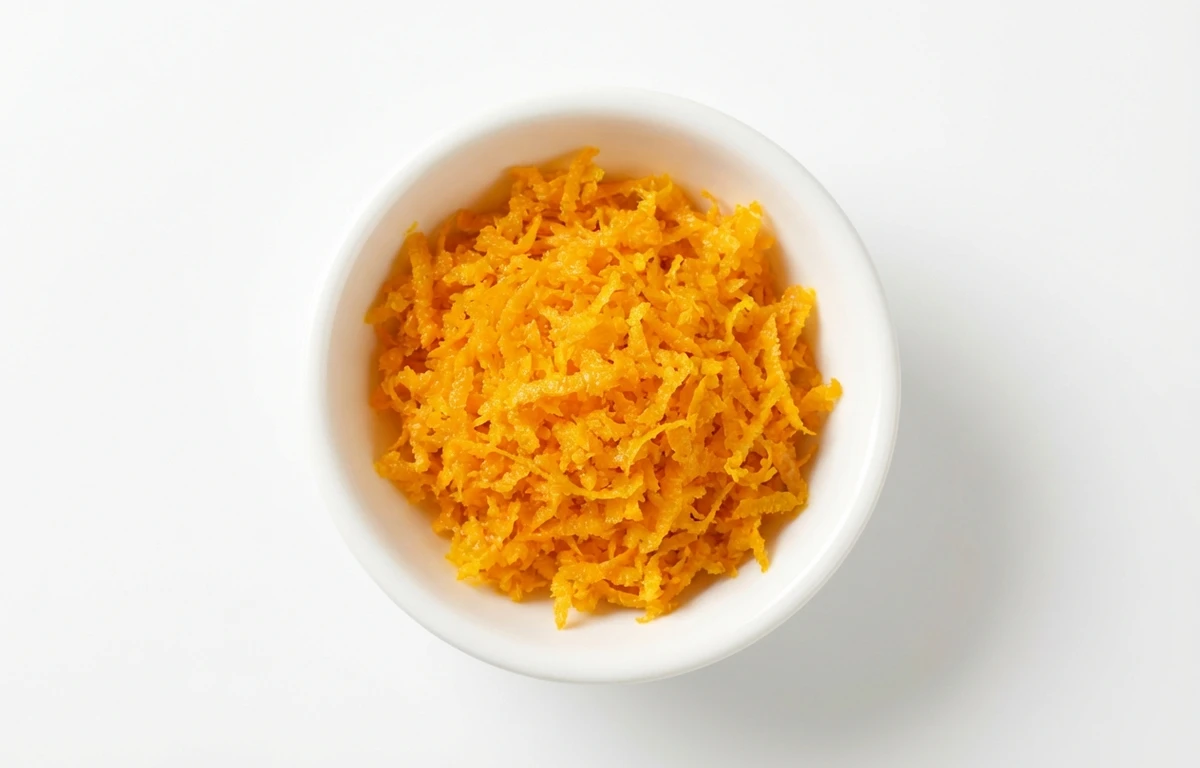
orange zest.
VegetarianVeganGluten-freeDairy-freeNut-freePeanut-freeSoy-freeEgg-freeShellfish-freeHoney-freeAlcohol-freeHalalKosher
ALSO KNOWN AS
orange peel zest
SERVING
CALORIES
97
PROTEIN
1.5g
CARBS
25g
FAT
0.20g
FIBER
10.6g
This ingredient is flagged as naturally gluten-free.
NUTRITION PROFILE · per 100 g
Everything in this ingredient.
MACRONUTRIENTS
Calories97kcal—
Protein1.5g3%
Carbohydrates25g9%
Fiber10.6g38%
Sugar2.5g5%
Total fat0.20g0%
Saturated fat0.02g0%
Trans fat0g—
Cholesterol0mg0%
Water72.5g—
MINERALS
Sodium3.0mg0%
Potassium212mg5%
Calcium161mg12%
Iron0.80mg4%
Magnesium22mg5%
Phosphorus21mg2%
Zinc0.25mg2%
Copper0.09mg10%
Selenium1.0µg2%
VITAMINS
Vitamin A21µg2%
Vitamin C136mg151%
Vitamin D0µg0%
Vitamin E0.25mg2%
Thiamin (B1)0.12mg10%
Riboflavin (B2)0.09mg7%
Niacin (B3)0.90mg6%
Pantothenic acid (B5)0.49mg10%
Vitamin B60.18mg11%
Folate (B9)30µg8%
Vitamin B120µg0%
%DV based on a 2,000 cal diet. Source: USDA FoodData Central. A dash in the %DV column means there’s no established Daily Value for that nutrient.
MEASUREMENT CONVERSIONS
How much is what.
1 cup96g
1 tablespoon6g
1 teaspoon2g
1 ml0.4g
1 liter400g
COOKING TIPS
In the kitchen.
- 1Use a microplane or fine grater to remove only the colored outer layer (flavedo), avoiding the bitter white pith (albedo) underneath.
- 2Add zest towards the end of the cooking process or as a garnish to preserve its volatile oils and maximize its fresh, bright aroma and flavor.
- 3Rub orange zest into sugar or salt to create infused citrus sugar for baking or citrus salt for seasoning savory dishes and cocktail rims.
- 4Incorporate into marinades, dressings, baked goods, and sauces to add a complex citrus note without the acidity of orange juice.
STORAGE
Keep it fresh.
- For short-term storage, place fresh zest in an airtight container or zip-top bag and refrigerate for up to one week.
- For long-term storage, freeze the zest by spreading it on a baking sheet, then transferring the frozen zest to a freezer-safe container. It will keep for up to 6 months.
- Dried orange zest can be made by air-drying or using a dehydrator. Store it in an airtight jar in a cool, dark place for up to a year.
FAQ
Frequently asked questions.
Is orange zest vegan and gluten-free?
Yes, orange zest is naturally vegan and gluten-free. It is simply the outer peel of an orange, which is a fruit, making it suitable for most dietary restrictions.
Is orange zest keto-friendly?
In small amounts, orange zest can be used on a keto diet. While 100g contains 25g of carbs, a typical serving (e.g., 1 teaspoon) is very low in carbs and primarily used for flavor, not bulk. Always consider the total carb count of your recipe.
How do you properly zest an orange?
To zest an orange, wash it thoroughly and use a microplane, fine grater, or vegetable peeler. Grate or peel only the outermost colored layer (the zest), avoiding the bitter white pith underneath. Rotate the orange as you go to get all the zest.
What are common culinary uses for orange zest?
Orange zest is incredibly versatile, adding bright, aromatic flavor to both sweet and savory dishes. It's commonly used in baked goods, marinades, salad dressings, cocktails, and to finish roasted vegetables or seafood. It pairs well with chocolate, poultry, and various spices.
How should orange zest be stored?
Fresh orange zest can be stored in an airtight container in the refrigerator for up to 3-5 days. For longer storage, you can freeze it in a freezer-safe bag or ice cube tray (mixed with a little water or oil) for several months, or dry it for extended shelf life.
Can orange zest be eaten raw?
Yes, orange zest can be eaten raw and is often used as a garnish or mixed into uncooked dishes like salads, yogurts, or smoothies. Ensure the orange is thoroughly washed to remove any potential residues before zesting and consuming.
Does orange zest have any potential side effects or concerns?
While generally safe, it's crucial to wash oranges thoroughly before zesting to remove pesticides or waxes. In very large quantities, the D-limonene in zest might cause mild digestive upset in sensitive individuals, but this is rare with typical culinary use.
RECIPES
Cook with orange zest.
10 recipes · sorted by what’s quick