
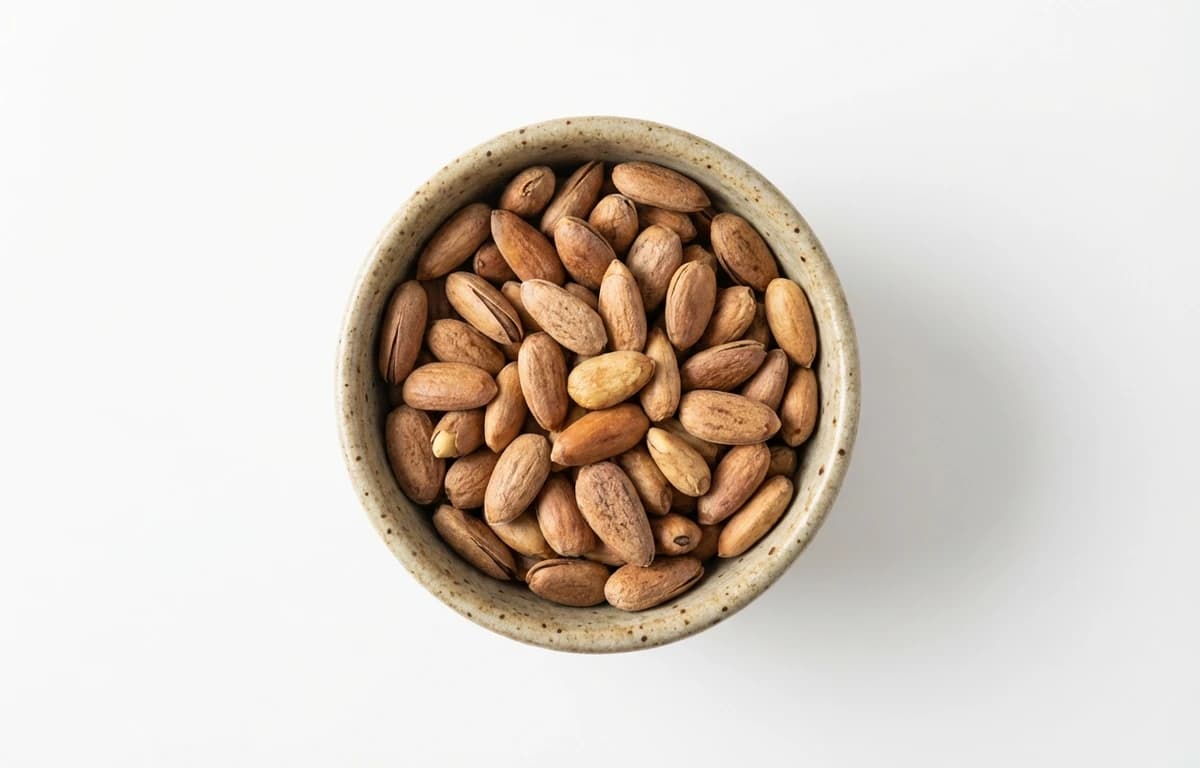
piñon nuts
Also known as: pine nuts, pinyon nuts
Loading...
Also known as: pine nuts, pinyon nuts
Per 100g
Nutrition data source: USDA FoodData Central
Common measurement equivalents in grams
A classic Southwestern snack, these piñon nuts are lightly tossed in oil and salt, then roasted to a perfect golden brown. Their rich, buttery, and slightly sweet flavor makes them an addictive treat or a wonderful addition to salads, pesto, and baked goods.
Enjoy a taste of the Southwest with these fluffy, nutty blue corn pancakes. Made with authentic blue cornmeal, they have a beautiful color and a hearty, satisfying texture. Perfect for a special weekend breakfast, especially when topped with piñon nuts and warm maple syrup.

A warm and hearty bowl of oatmeal with a delightful Southwestern twist. Toasty piñon nuts and sweet-tart dried cherries create a perfect balance of flavor and texture for a satisfying breakfast.
Yes, piñon nuts are very healthy. They are rich in heart-healthy monounsaturated fats, which can help lower LDL (bad) cholesterol. They also contain pinolenic acid, which may help suppress appetite, and are a good source of essential minerals like magnesium and zinc, along with antioxidants for eye health.
Per 100 grams, piñon nuts are quite calorie-dense, providing approximately 673 calories. They contain about 13.7 grams of protein, 13.1 grams of carbohydrates, and a significant 68.4 grams of fat, primarily heart-healthy monounsaturated fats.
Piñon nuts can be beneficial for weight management due to their pinolenic acid content, which may help stimulate satiety hormones and reduce appetite. However, they are high in calories, so portion control is crucial. Enjoying them in moderation as part of a balanced diet can support weight goals.
Yes, piñon nuts are naturally vegan as they are a plant-based food. They are also inherently gluten-free, making them suitable for individuals following vegan or gluten-free diets, provided there is no cross-contamination during processing.
Piñon nuts are relatively high in fat and moderate in carbohydrates (13.1g per 100g), making them suitable for a ketogenic diet in controlled portions. Their high fat content can contribute to satiety and provide energy, but it's important to monitor carb intake to stay within daily limits.
Piñon nuts are often enjoyed raw, but toasting them lightly in a dry pan over medium heat for a few minutes enhances their flavor and aroma. Be careful not to burn them, as they can go from toasted to burnt very quickly. They can be added to salads, pesto, baked goods, or used as a garnish.
piñon nuts is a versatile ingredient found in cuisines around the world. With 673 calories per 100g and 13.7 grams of protein, it's a nutritious addition to many dishes.
Explore more ingredients in the other category with complete nutrition information.
View all other →Piñon nuts have a distinct buttery, slightly sweet, and subtly resinous flavor. When toasted, their nutty notes become more pronounced and they develop a richer, more complex taste. They are often described as having a delicate, earthy aroma.
Due to their high oil content, piñon nuts can go rancid if not stored properly. Keep them in an airtight container in a cool, dark place for up to a month. For longer storage, refrigerate them for several months or freeze them for up to a year to maintain freshness.
Piñon nuts are versatile in the kitchen. They are famously used in pesto, but also shine in salads, pasta dishes, and as a crunchy topping for roasted vegetables. They are excellent in baked goods like cookies and breads, and can be enjoyed simply as a nutritious snack.
Yes, like other varieties of pine nuts, piñon nuts can occasionally cause a temporary taste disturbance known as 'pine mouth' or 'pine nut syndrome.' This condition is characterized by a bitter or metallic taste that can last for days or weeks after consumption, though the exact cause is still unknown.