Protein2 recipes
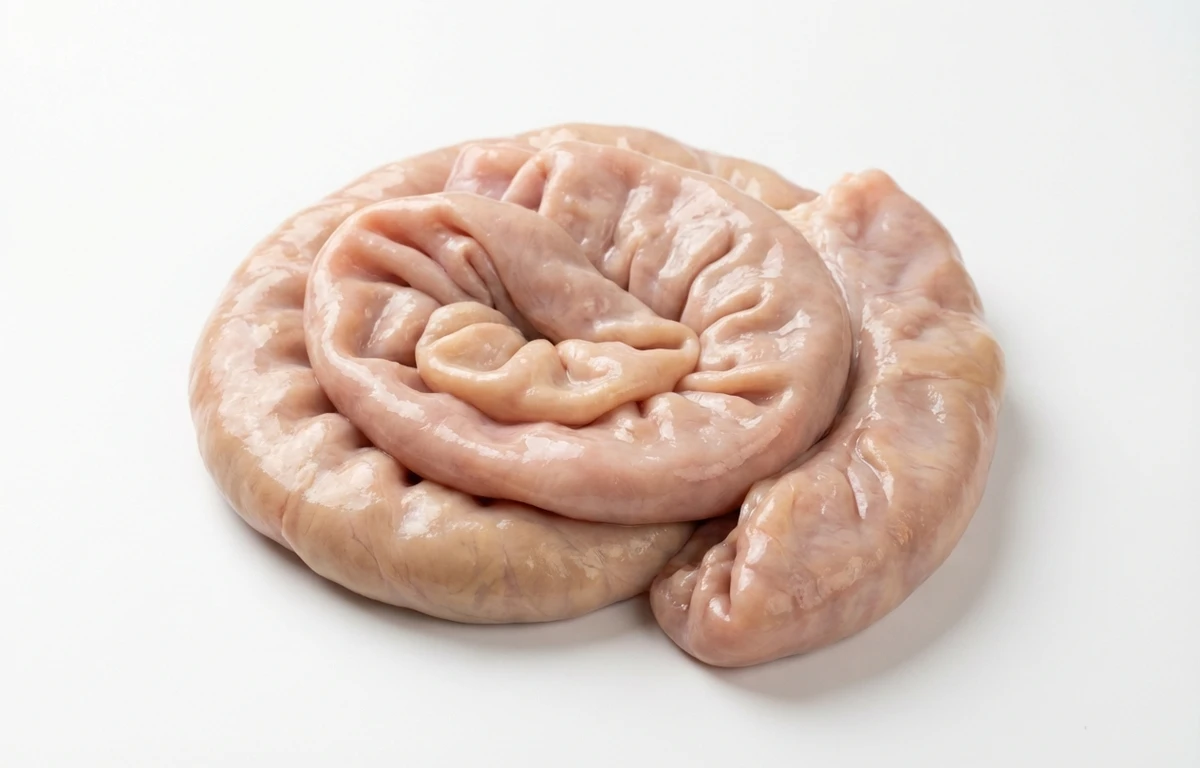
pork intestines.
VegetarianVeganGluten-freeDairy-freeNut-freePeanut-freeSoy-freeEgg-freeShellfish-freeHoney-freeAlcohol-freeHalalKosher
ALSO KNOWN AS
chitterlingschitlinspork casings
SERVING
CALORIES
157
PROTEIN
14.4g
CARBS
0g
FAT
11.6g
FIBER
0g
NUTRITION PROFILE · per 100 g
Everything in this ingredient.
MACRONUTRIENTS
Calories157kcal—
Protein14.4g29%
Carbohydrates0g0%
Fiber0g0%
Sugar0g0%
Total fat11.6g15%
Saturated fat4.1g20%
Cholesterol140mg47%
Water72.8g—
MINERALS
Sodium100mg4%
Potassium190mg4%
Calcium10mg1%
Iron1.6mg9%
Magnesium12mg3%
Phosphorus105mg8%
Zinc1.2mg11%
Copper0.11mg12%
Manganese0.01mg0%
Selenium10.2µg19%
VITAMINS
Vitamin A0µg0%
Vitamin C0mg0%
Vitamin D0.20µg1%
Vitamin E0.08mg1%
Vitamin K0.10µg0%
Thiamin (B1)0.06mg5%
Riboflavin (B2)0.17mg13%
Niacin (B3)2.1mg13%
Pantothenic acid (B5)0.60mg12%
Vitamin B60.08mg5%
Folate (B9)1.0µg0%
Vitamin B120.80µg33%
%DV based on a 2,000 cal diet. Source: USDA FoodData Central. A dash in the %DV column means there’s no established Daily Value for that nutrient.
MEASUREMENT CONVERSIONS
How much is what.
1 cup140g
1 oz28.4g
1 lb453.6g
1 piece120g
HEALTH BENEFITS
Why eat it.
- ✓Excellent source of high-quality protein, essential for muscle repair and growth.
- ✓Rich in collagen, which supports joint health, skin elasticity, and gut lining integrity.
- ✓Provides significant amounts of Vitamin B12, crucial for nerve function and red blood cell formation.
- ✓Good source of minerals like iron for preventing anemia, zinc for immune support, and selenium, a powerful antioxidant.
COOKING TIPS
In the kitchen.
- 1Thorough cleaning is paramount. Turn them inside out, rinse extensively under cold water, and scrub with salt or cornstarch to remove impurities and odor.
- 2Parboil or simmer with aromatics like ginger, scallions, star anise, and cooking wine before the main cooking process to tenderize and neutralize any strong smells.
- 3Best suited for slow-cooking methods such as braising or stewing to break down the tough connective tissues, resulting in a tender texture.
- 4After tenderizing, they can be grilled, deep-fried, or stir-fried to achieve a crispy exterior while maintaining a soft interior.
STORAGE
Keep it fresh.
- Store fresh, cleaned intestines in the coldest part of the refrigerator (below 40°F or 4°C) in a sealed container and use within 1-2 days.
- For long-term storage, blanch the cleaned intestines, cool them completely, and freeze in airtight, vacuum-sealed bags for up to 3 months.
FAQ
Frequently asked questions.
Are pork intestines healthy?
Pork intestines are a good source of high-quality protein, essential for muscle repair and growth. They also provide collagen for joint and skin health, and are rich in Vitamin B12, iron, zinc, and selenium. However, they are relatively high in fat and calories, so moderation is advised.
What is the nutritional value of pork intestines?
Per 100g, pork intestines contain approximately 157 calories, 14.4g of protein, 0g of carbohydrates, and 11.6g of fat. This makes them a protein-rich food with a significant fat content.
Are pork intestines good for weight loss?
While pork intestines are high in protein, which can aid satiety, their relatively high fat and calorie content means they should be consumed in moderation for weight loss. Portion control is key to incorporating them into a calorie-controlled diet.
Are pork intestines gluten-free?
Yes, naturally, pork intestines are gluten-free as they are an animal product and do not contain wheat, barley, or rye. However, always check for cross-contamination or added ingredients if purchasing processed versions.
Are pork intestines keto-friendly?
Yes, pork intestines are generally considered keto-friendly. They contain zero carbohydrates and a good balance of protein and fat, aligning well with the macronutrient requirements of a ketogenic diet.
Are pork intestines halal or kosher?
No, pork intestines are neither halal nor kosher. Both Islamic dietary laws (halal) and Jewish dietary laws (kosher) prohibit the consumption of pork and any products derived from pigs.
How do you clean and prepare pork intestines for cooking?
Thorough cleaning is crucial. Rinse them extensively under cold water, then turn them inside out to scrape away any remaining membranes or waste. Soaking in vinegar or lemon juice can help reduce odor, followed by blanching in boiling water before final cooking.
What do pork intestines taste and feel like?
Pork intestines have a distinct, somewhat gamey flavor and a chewy, rubbery texture when cooked properly. They absorb flavors well from marinades and sauces, often becoming tender and slightly gelatinous with slow cooking.
How should I store fresh pork intestines?
Fresh pork intestines should be stored in the coldest part of your refrigerator, ideally in an airtight container or sealed bag, and cooked within 1-2 days. For longer storage, they can be frozen for up to 3-4 months.
How long do pork intestines last in the refrigerator or freezer?
In the refrigerator, fresh pork intestines should be used within 1-2 days. If frozen, they can maintain quality for about 3-4 months. Always ensure they are properly sealed to prevent freezer burn and maintain freshness.
RECIPES
Cook with pork intestines.
2 recipes · sorted by what’s quick