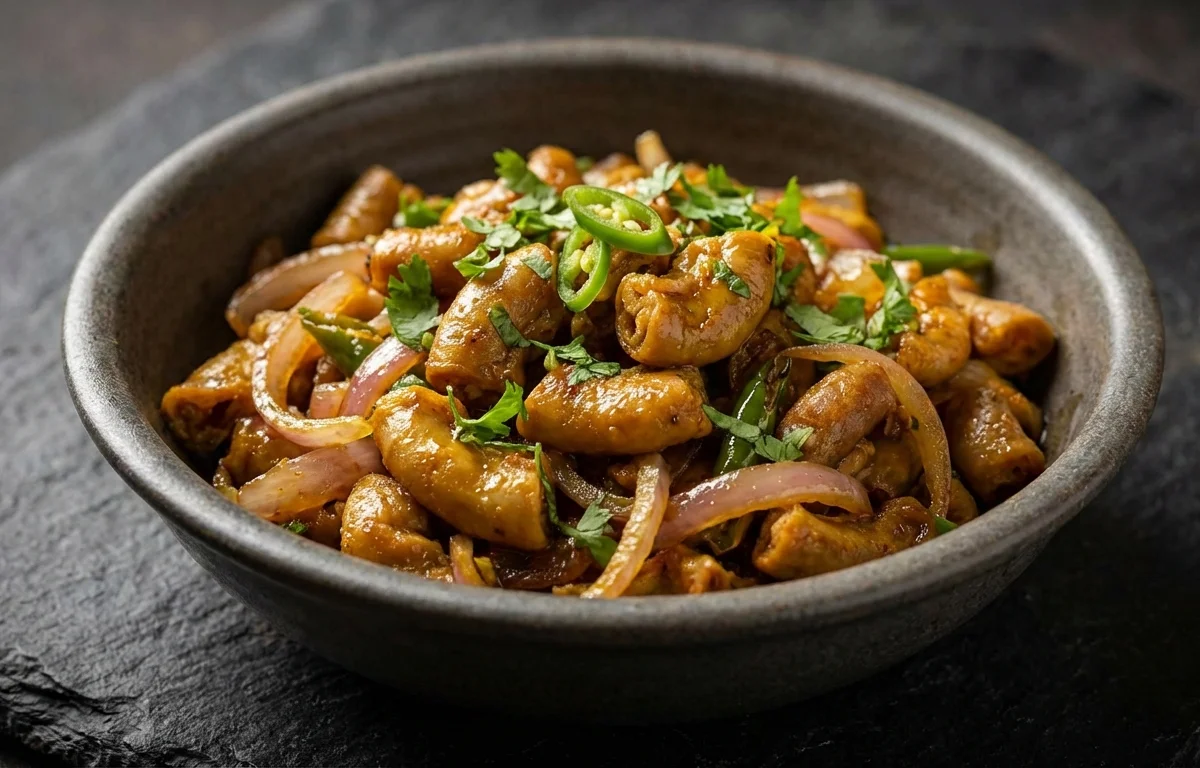
Gahorir Karang Bhaja
Succulent pork spare ribs marinated with ginger, garlic, and fragrant Assamese spices, then pan-fried until the edges turn beautifully crisp. A bold and rustic dish from Assam that pairs wonderfully with steamed rice and khar for an authentic meal experience.
For 4 servings
- prep
Clean and cut the pork spare ribs.
Wash 500g pork spare ribs thoroughly. Pat them dry and cut into 2-inch pieces using a heavy cleaver or knife. Trim any excess fat if needed.
- pressure cook · ~20 min
Parboil the ribs until just tender.
Place the rib pieces in a pressure cooker. Add 3 cups water, 1 pinch turmeric powder, and 1 pinch salt. Close the lid and cook for 2 whistles over medium heat. Let the pressure release naturally.
TIPDo not overcook the ribs at this stage — they will finish cooking in the pan. Overcooked ribs turn mushy when fried. - prep
Drain and reserve the ribs.
Open the cooker once pressure has released. Drain the ribs completely using a colander. Reserve the cooking liquid for another use or discard. Pat the ribs dry to ensure good browning.
TIPEven a little moisture on the ribs will cause dangerous splattering when they hit the hot oil. - fry · ~10 min
Sear the onions until golden.
Heat 2 tbsp oil in a wide, heavy frying pan over medium heat. Add 2 thinly sliced onions and fry, stirring regularly, until they turn deep golden brown and crisp around the edges.
TIPTake your time browning the onions. The deep caramelisation builds the rich, savoury base that defines this dish. - fry · ~2 min
Add ginger, garlic, and green chili.
Add 1 inch grated ginger, 6 minced garlic cloves, and 3 slit green chilies to the pan. Fry for 1 to 2 minutes until the raw smell disappears and the mixture is fragrant.
TIPKeep the heat medium. High heat burns the ginger and garlic quickly and makes the dish bitter. - fry · ~15 min
Fry the parboiled ribs until crisp.
Add the drained rib pieces to the pan. Increase the heat slightly to medium-high. Fry the ribs, turning them every 2 to 3 minutes, for 12 to 15 minutes. You want the edges to become deeply browned and crisp while the meat stays juicy.
TIPDo not crowd the pan. Fry in batches if needed. Crowding steams the meat instead of searing it. - mix
Season with salt and pepper, then finish with lemon.
Turn off the heat. Sprinkle 1 pinch salt and 1 pinch freshly ground black pepper over the ribs. Squeeze 1 tbsp fresh lemon juice on top and toss everything together in the hot pan.
- serve
Serve immediately with steamed rice.
Transfer the Gahorir Karang Bhaja to a serving plate. Serve it piping hot alongside steamed white rice and a wedge of fresh lime.
TIPThis dish tastes best right from the pan when the edges are still crackling-crisp.
What to keep in mind.
6 tips from the recipe — small details that make a real difference to the final dish.
- 1Pat the parboiled ribs completely dry before frying to achieve a crisp, crackling crust.
- 2Reserve the rib cooking liquid—it makes a flavourful base for dal or a light soup.
- 3For deeper caramelisation, cook the onions on medium-low heat until sticky and bronze, not burnt.
- 4Fry the ribs in a single layer; overcrowding lowers the pan temperature and steams the meat.
- 5Use mustard oil for authentic Assamese flavour—its pungent edge mellows during cooking.
- 6Add the lemon juice only after turning off the heat to preserve its bright, fresh acidity.
Adapt it for your goals.
Low-oil
Replace pan-frying with air-frying: spray the parboiled ribs lightly with oil and air-fry at 200°C (400°F) for 12–15 minutes, shaking halfway. This cuts fat while keeping the edges crisp.
high proteinHigh-protein
Substitute pork spare ribs with chicken drumsticks or lamb chops. Adjust parboiling time: chicken needs only 1 whistle; lamb requires 3–4 whistles for tenderness.
jainJain
Replace onion and garlic with asafoetida (hing) and finely chopped fennel or celery for a Jain-friendly version. Omit garlic and onion entirely, and use ginger and green chili for heat.
vegetarianVegetarian
Use large portobello mushroom caps or cauliflower steaks in place of pork. Parboil mushrooms briefly to soften, then sear until golden. The spice paste pairs well with umami-rich vegetables.
Why this is on our healthy list.
Rich in Collagen
Pork spare ribs naturally contain collagen from the connective tissue, which supports joint health and skin elasticity when simmered gently.
Anti-Inflammatory Spices
Turmeric and ginger both possess curcumin and gingerol, compounds studied for their anti-inflammatory and antioxidant properties.
Good Source of B Vitamins
Pork is particularly rich in thiamine (vitamin B1), niacin (B3), and vitamin B12, which help convert food into energy and support nerve function.
Low-Carb Friendly
With no added sugar or starch and only a small amount of onion, this dish fits well into low-carb and ketogenic dietary patterns.
Frequently asked questions
Yes, simmer the ribs in a covered pot for 45–60 minutes until just fork-tender, then drain. Cooking time depends on rib thickness.