Protein2 recipes
pork spareribs.
VegetarianVeganGluten-freeDairy-freeNut-freePeanut-freeSoy-freeEgg-freeShellfish-freeHoney-freeAlcohol-freeHalalKosher
ALSO KNOWN AS
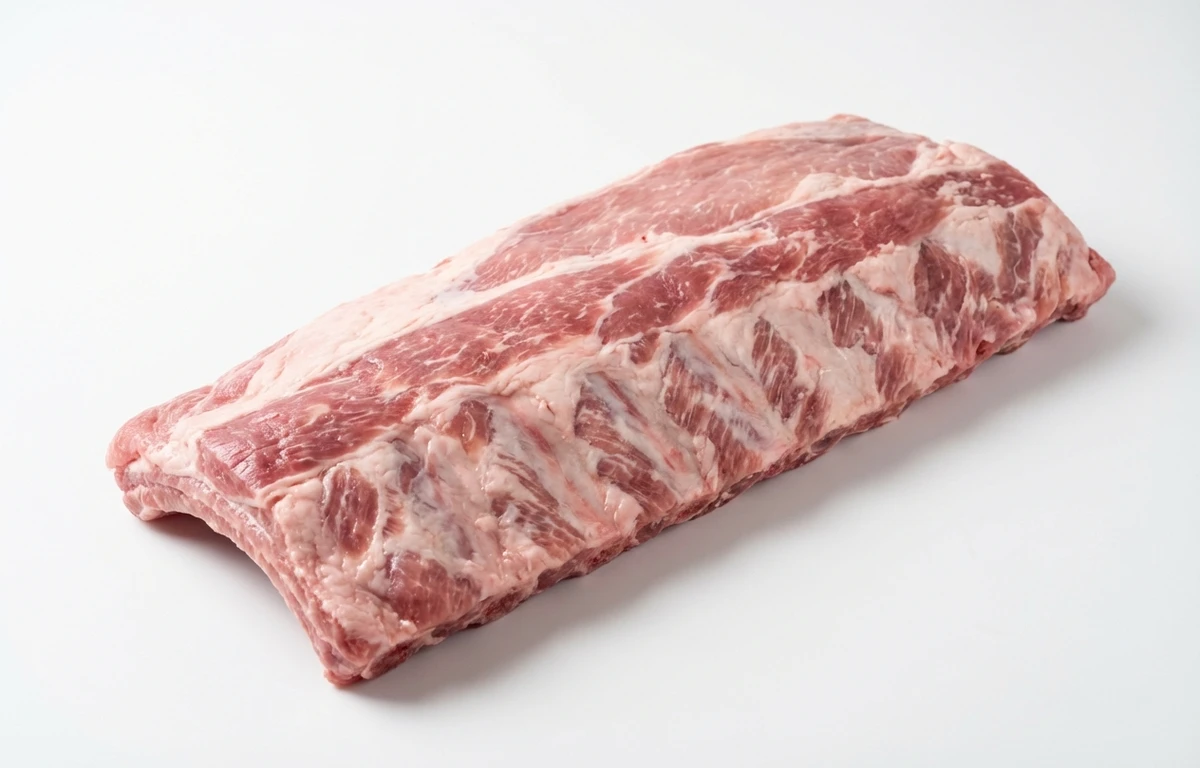
pork spareribsraw pork spareribs
SERVING
CALORIES
277
PROTEIN
15.5g
CARBS
0g
FAT
23.4g
FIBER
0g
This ingredient is flagged as naturally gluten-free. Per 100 g, it provides 0 µg of vitamin K.
NUTRITION PROFILE · per 100 g
Everything in this ingredient.
MACRONUTRIENTS
Calories277kcal—
Protein15.5g31%
Carbohydrates0g0%
Fiber0g0%
Sugar0g0%
Total fat23.4g30%
Saturated fat7.5g38%
Trans fat0.22g—
Cholesterol80mg27%
Water59.8g—
MINERALS
Sodium81mg4%
Potassium242mg5%
Calcium15mg1%
Iron0.91mg5%
Magnesium16mg4%
Phosphorus141mg11%
Zinc2.5mg23%
Copper0.08mg9%
Manganese0.01mg0%
Selenium22µg40%
VITAMINS
Vitamin A0µg0%
Vitamin C0mg0%
Vitamin D2.3µg12%
Vitamin E0.37mg2%
Vitamin K0µg0%
Thiamin (B1)0.32mg27%
Riboflavin (B2)0.25mg19%
Niacin (B3)4.7mg29%
Pantothenic acid (B5)0.63mg13%
Vitamin B60.57mg34%
Folate (B9)0µg0%
Vitamin B120.38µg16%
%DV based on a 2,000 cal diet. Source: USDA FoodData Central. A dash in the %DV column means there’s no established Daily Value for that nutrient.
MEASUREMENT CONVERSIONS
How much is what.
1 oz28.4g
1 lb453.6g
1 piece120g
HEALTH BENEFITS
Why eat it.
- ✓Excellent source of high-quality complete protein, essential for muscle building, tissue repair, and enzyme production.
- ✓Rich in B vitamins, particularly thiamine (B1), niacin (B3), and B12, which are crucial for energy metabolism and nervous system function.
- ✓Contains choline, a nutrient vital for brain health, memory, and mood regulation.
COOKING TIPS
In the kitchen.
- 1For maximum tenderness, remove the thin, tough membrane (silverskin) from the bone-side of the rack before seasoning and cooking.
- 2Employ a low-and-slow cooking method such as smoking, braising, or slow-roasting to allow the connective tissue and fat to render, resulting in fall-off-the-bone meat.
- 3Apply a dry rub several hours or overnight before cooking to infuse flavor. If using a barbecue sauce, brush it on during the last 20-30 minutes of cooking to prevent the sugars from burning.
- 4Cook ribs until the internal temperature reaches 195-203°F (90-95°C), which ensures the collagen has broken down into gelatin, creating a moist and tender texture.
STORAGE
Keep it fresh.
- Refrigerate raw spareribs in their original packaging or a sealed container at or below 40°F (4°C) and use within 3-5 days.
- For longer storage, wrap tightly in plastic wrap and heavy-duty foil or place in a freezer bag, and freeze at 0°F (-18°C) for up to 6 months for optimal quality.
FAQ
Frequently asked questions.
Are pork spareribs healthy?
Pork spareribs are an excellent source of high-quality protein, essential B vitamins (B1, B3, B12), and vital minerals like zinc, selenium, and iron. However, they are also high in calories and fat, particularly saturated fat, so they are best enjoyed in moderation as part of a balanced diet.
How many calories and how much protein are in pork spareribs?
Per 100g, pork spareribs contain approximately 277 calories and 15.47g of protein. They also provide 23.4g of fat and 0g of carbohydrates, making them a dense source of energy and protein.
Are pork spareribs keto-friendly or low-carb?
Yes, pork spareribs are naturally keto-friendly and low-carb, as they contain 0g of carbohydrates per 100g. Their high fat and protein content makes them suitable for ketogenic and low-carb diets, provided portion sizes are managed to fit caloric goals.
Are pork spareribs gluten-free?
Yes, plain pork spareribs are naturally gluten-free. However, always check marinades, rubs, or sauces used in preparation, as they may contain gluten-containing ingredients like soy sauce (unless tamari is used) or thickeners.
How do you best cook pork spareribs to make them tender?
For tender spareribs, slow cooking methods are ideal. You can bake them low and slow in the oven (around 275-300°F or 135-150°C) for 2-3 hours, smoke them, or use a pressure cooker for faster results. Finishing them on a grill or under a broiler can add a delicious caramelized crust.
What's the best way to store raw and cooked pork spareribs?
Raw spareribs should be stored in the coldest part of your refrigerator for 3-5 days, or frozen for up to 6-12 months. Cooked spareribs should be refrigerated within two hours of cooking and consumed within 3-4 days, or frozen for up to 2-3 months.
How can you tell if pork spareribs are fresh?
Fresh pork spareribs should have a reddish-pink color, firm texture, and a mild, fresh smell. Avoid ribs that appear grayish, have a slimy texture, or emit a strong, off-putting odor, as these are signs of spoilage.
Are pork spareribs suitable for a Halal or Kosher diet?
No, pork spareribs are not suitable for Halal or Kosher diets. Both Islamic (Halal) and Jewish (Kosher) dietary laws prohibit the consumption of pork and pork products.
RECIPES
Cook with pork spareribs.
2 recipes · sorted by what’s quick