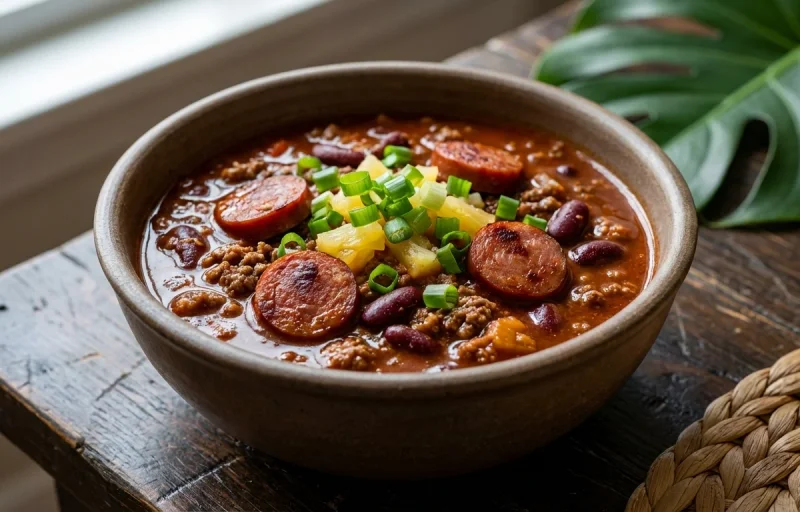
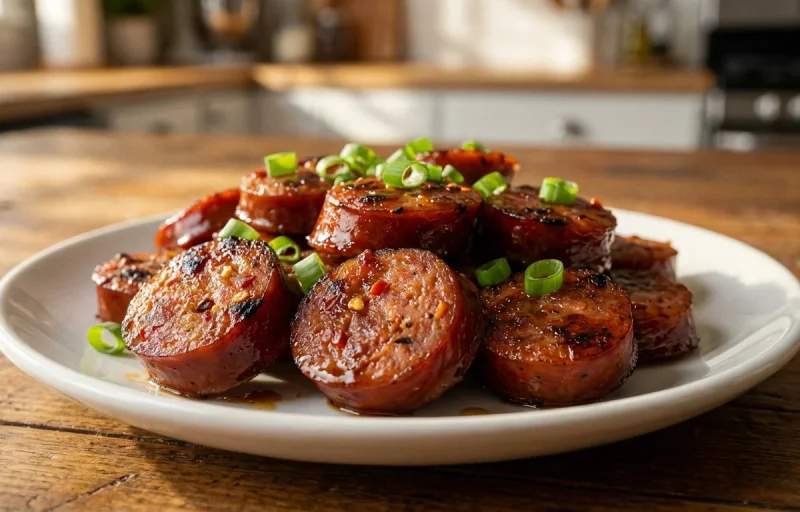
Protein2 recipes
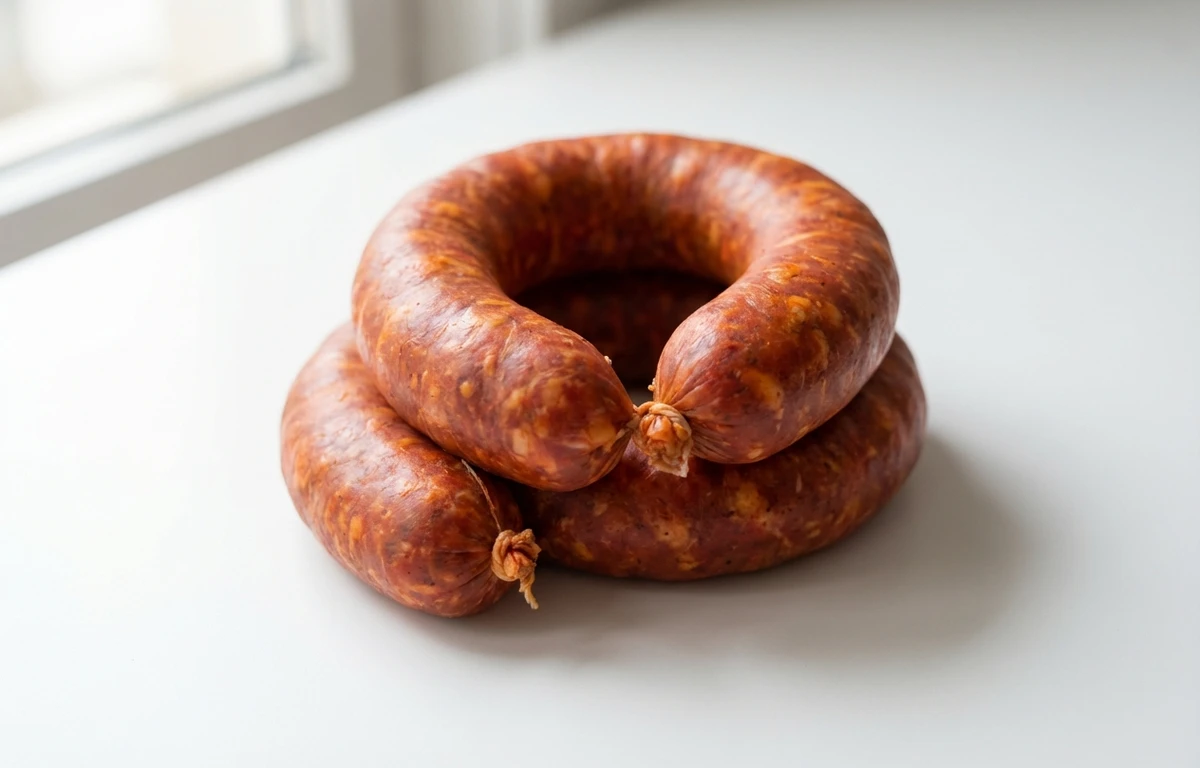
portuguese sausage.
VegetarianVeganGluten-freeDairy-freeNut-freePeanut-freeSoy-freeEgg-freeShellfish-freeHoney-freeAlcohol-freeHalalKosherFermented
ALSO KNOWN AS
chouriço
SERVING
CALORIES
309
PROTEIN
12g
CARBS
0.94g
FAT
28.2g
FIBER
0g
This ingredient is flagged as naturally gluten-free. Per 100 g, it provides 0 µg of vitamin K.
NUTRITION PROFILE · per 100 g
Everything in this ingredient.
MACRONUTRIENTS
Calories309kcal—
Protein12g24%
Carbohydrates0.94g0%
Fiber0g0%
Sugar0.94g2%
Total fat28.2g36%
Saturated fat9.3g47%
Trans fat0.23g—
Cholesterol61mg20%
Water56.5g—
MINERALS
Sodium827mg36%
Potassium483mg10%
Calcium11mg1%
Iron0.59mg3%
Magnesium11mg3%
Phosphorus157mg13%
Zinc1.3mg12%
Copper0.18mg20%
Manganese0.01mg0%
Selenium18.3µg33%
VITAMINS
Vitamin A0µg0%
Vitamin C0mg0%
Vitamin D1.1µg6%
Vitamin E0.25mg2%
Vitamin K0µg0%
Thiamin (B1)0.21mg18%
Riboflavin (B2)0.18mg14%
Niacin (B3)2.8mg18%
Pantothenic acid (B5)0.54mg11%
Vitamin B60.18mg11%
Folate (B9)1.0µg0%
Vitamin B120.66µg28%
%DV based on a 2,000 cal diet. Source: USDA FoodData Central. A dash in the %DV column means there’s no established Daily Value for that nutrient.
MEASUREMENT CONVERSIONS
How much is what.
1 cup150g
1 oz28.4g
1 lb453.6g
1 piece100g
HEALTH BENEFITS
Why eat it.
- ✓Rich source of complete protein, essential for muscle repair and growth.
- ✓Provides essential B vitamins, particularly B12 and thiamin, which support energy metabolism and nerve function.
COOKING TIPS
In the kitchen.
- 1Before pan-frying or grilling, prick the casing in a few places to allow fat to render and prevent it from bursting.
- 2Cook over medium-low heat to allow the fat to render slowly and prevent the outside from burning before the inside is cooked.
- 3Slice and add to soups like Caldo Verde, stews, rice dishes, or scrambled eggs to impart a smoky and savory flavor.
- 4For a traditional preparation, try 'chouriço à bombeiro,' where the sausage is flambéed in a terracotta dish over aguardente (a strong spirit).
STORAGE
Keep it fresh.
- Store unopened, vacuum-sealed sausage in the refrigerator for up to 2-3 weeks or until the 'use-by' date.
- Once opened, wrap tightly in plastic wrap or place in an airtight container in the refrigerator and consume within 5-7 days.
- For longer storage, freeze for up to 3 months. Thaw completely in the refrigerator before cooking.
FAQ
Frequently asked questions.
Is Portuguese sausage healthy?
Portuguese sausage offers benefits like being a rich source of complete protein, essential B vitamins (B12, thiamin), and minerals like selenium and zinc. However, it is high in calories, saturated fat, and sodium. Therefore, it should be consumed in moderation as part of a balanced diet.
What are the nutritional values of Portuguese sausage?
Per 100 grams, Portuguese sausage typically contains about 309 calories, 11.98 grams of protein, 0.94 grams of carbohydrates, and 28.23 grams of fat. It's a calorie-dense food, providing significant energy and fat.
Is Portuguese sausage gluten-free?
Most traditional Portuguese sausages are naturally gluten-free, as they are made from pork, spices, and sometimes wine or vinegar. However, it's always best to check the ingredient label for specific brands, as some may contain fillers or additives with gluten, or be subject to cross-contamination.
Is Portuguese sausage keto-friendly?
Yes, Portuguese sausage can be keto-friendly. With only about 0.94 grams of carbohydrates per 100 grams and a high fat content (28.23g), it fits well into a ketogenic diet. It provides a good source of fat and protein while keeping carb intake low.
How do you cook Portuguese sausage?
Portuguese sausage is versatile and can be cooked in several ways. Common methods include pan-frying until browned and cooked through, grilling for a smoky flavor, or baking in the oven. It's also frequently sliced and added to soups, stews, or rice dishes.
What does Portuguese sausage taste like?
Portuguese sausage, often known as linguica or chouriço, typically has a rich, savory, and smoky flavor with a hint of garlic and paprika. Some varieties can be mildly spicy, while others are sweeter. The texture is firm and meaty.
What are common uses for Portuguese sausage in dishes?
Portuguese sausage is a staple in many dishes, including traditional Portuguese and Hawaiian cuisine. It's excellent in soups like Caldo Verde, stews, breakfast scrambles, sandwiches, or simply grilled and served with rice. It adds a deep, savory flavor to any meal.
How should I store Portuguese sausage?
Uncooked Portuguese sausage should be stored in the refrigerator and consumed by the 'use-by' date. For longer storage, it can be frozen for several months. Once cooked, refrigerate leftovers promptly in an airtight container and consume within 3-4 days.
How long does Portuguese sausage last?
Unopened, raw Portuguese sausage typically lasts for about 1-2 weeks in the refrigerator, depending on the packaging and 'best by' date. Once opened or cooked, it should be consumed within 3-4 days when refrigerated. Frozen, it can last for 2-3 months for best quality.
RECIPES
Cook with portuguese sausage.
2 recipes · sorted by what’s quick