Other6 recipes
prepared horseradish.
VegetarianVeganGluten-freeDairy-freeNut-freePeanut-freeSoy-freeEgg-freeShellfish-freeHoney-freeAlcohol-free
ALSO KNOWN AS
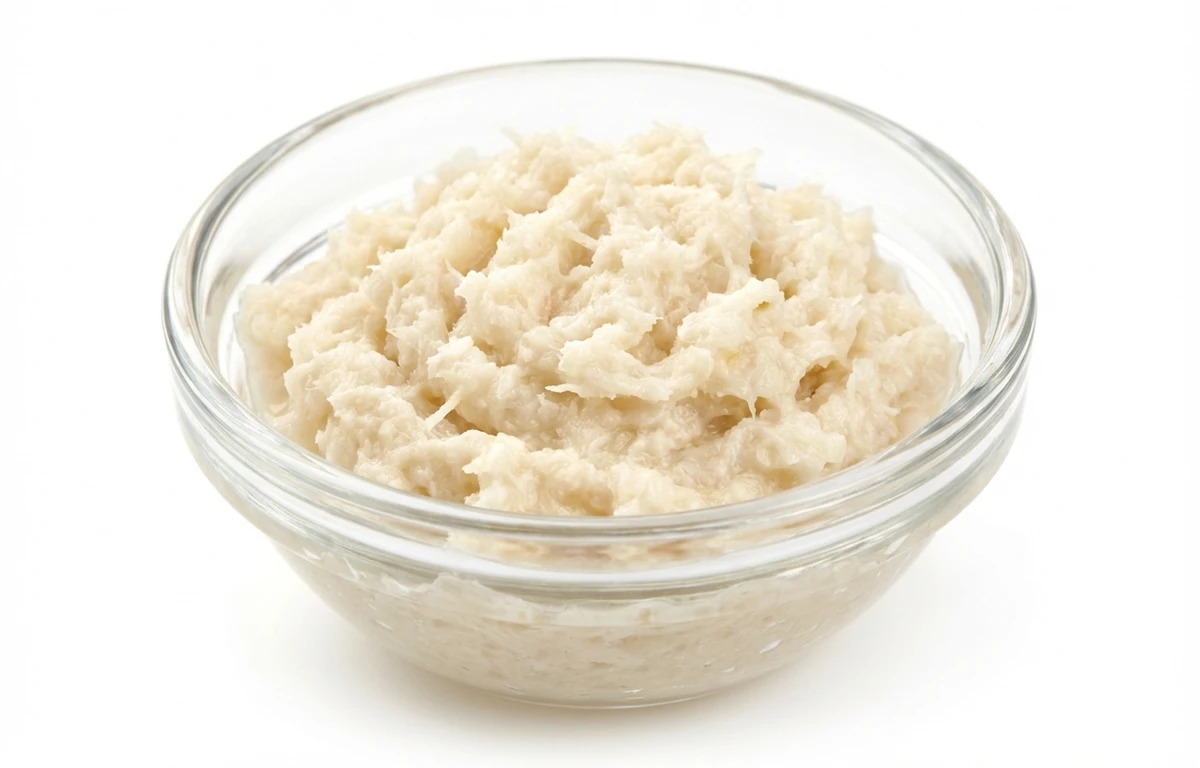
grated horseradish in vinegar
SERVING
CALORIES
48
PROTEIN
1.2g
CARBS
11.3g
FAT
0.69g
FIBER
3.3g
This ingredient is flagged as naturally gluten-free. Per 100 g, it provides 1.3 µg of vitamin K.
NUTRITION PROFILE · per 100 g
Everything in this ingredient.
MACRONUTRIENTS
Calories48kcal—
Protein1.2g2%
Carbohydrates11.3g4%
Fiber3.3g12%
Sugar8.0g16%
Total fat0.69g1%
Saturated fat0.09g0%
Trans fat0g—
Cholesterol0mg0%
Water82g—
MINERALS
Sodium420mg18%
Potassium290mg6%
Calcium56mg4%
Iron0.42mg2%
Magnesium27mg6%
Phosphorus31mg2%
Zinc0.83mg8%
Copper0.06mg7%
Manganese0.13mg6%
Selenium2.8µg5%
VITAMINS
Vitamin A0µg0%
Vitamin C24.9mg28%
Vitamin D0µg0%
Vitamin E0.01mg0%
Vitamin K1.3µg1%
Thiamin (B1)0.01mg1%
Riboflavin (B2)0.02mg2%
Niacin (B3)0.39mg2%
Pantothenic acid (B5)0.12mg2%
Vitamin B60.07mg4%
Folate (B9)57µg14%
Vitamin B120µg0%
%DV based on a 2,000 cal diet. Source: USDA FoodData Central. A dash in the %DV column means there’s no established Daily Value for that nutrient.
MEASUREMENT CONVERSIONS
How much is what.
1 cup250g
1 tablespoon15g
1 teaspoon5g
1 oz28.4g
1 lb453.6g
1 ml1.1g
1 liter1050g
HEALTH BENEFITS
Why eat it.
- ✓Natural sinus and nasal decongestant
- ✓Contains glucosinolates which may have anticancer properties
- ✓Possesses natural antibacterial and antimicrobial properties
- ✓Low in calories and fat compared to creamy condiments
COOKING TIPS
In the kitchen.
- 1Add at the very end of cooking as heat destroys the signature spicy kick
- 2Drain excess vinegar liquid before adding to creamy sauces to prevent thinning
- 3Mix with lemon juice or sour cream to create a quick, balanced dipping sauce
STORAGE
Keep it fresh.
- Always store in the refrigerator after opening to maintain pungency
- Keep the lid tightly sealed to prevent the volatile oils from evaporating
- Discard if the color turns significantly dark brown or the aroma fades
FAQ
Frequently asked questions.
How long does prepared horseradish last in the fridge?
It typically maintains its peak flavor and pungency for 3 to 4 months. While it may be safe to eat longer, it will lose its 'heat' over time.
Why does horseradish lose its spice?
The heat comes from isothiocyanates, which are volatile oils. Exposure to air and heat causes these oils to dissipate, leading to a milder flavor.
Is prepared horseradish the same as horseradish sauce?
No. Prepared horseradish is just grated root, vinegar, and salt. Horseradish sauce usually contains mayonnaise, cream, or oil, making it milder and higher in fat.
Can I freeze prepared horseradish?
Yes, you can freeze it for up to 6 months, though it may lose some of its original pungency upon thawing.
What is a good substitute for prepared horseradish?
Freshly grated wasabi or hot spicy mustard are the best substitutes for achieving a similar nasal-clearing heat.
How can I tell if prepared horseradish has gone bad?
Look for a dark brown color, a lack of pungent aroma, or any signs of mold. If it smells flat or sour rather than sharp, discard it.
Is prepared horseradish gluten-free?
Generally yes, as it is made with distilled vinegar. However, always check the label to ensure the vinegar source or thickeners are gluten-free.
Why is vinegar added to horseradish?
Vinegar stops the enzymatic reaction that creates the heat. Adding it immediately results in a milder flavor, while waiting a few minutes before adding it results in a hotter product.
RECIPES
Cook with prepared horseradish.
6 recipes · sorted by what’s quick