grain1 recipes
Puffed Amaranth.
VegetarianVeganGluten-freeDairy-freeNut-freePeanut-freeSoy-freeEgg-freeShellfish-freeHoney-freeAlcohol-freeWhole grain
ALSO KNOWN AS
popped amaranthrajgira puffedramdana puffedcholai puffedpuffed rajgirapuffed ramdana
SERVING
CALORIES
380
PROTEIN
14.5g
CARBS
66g
FAT
6.5g
FIBER
9.5g
NUTRITION PROFILE · per 100 g
Everything in this ingredient.
MACRONUTRIENTS
Calories380kcal—
Protein14.5g29%
Carbohydrates66g24%
Fiber9.5g34%
Sugar1.5g3%
Total fat6.5g8%
Saturated fat1.5g8%
Trans fat0g—
Cholesterol0mg0%
Water3.0g—
MINERALS
Sodium5.0mg0%
Potassium480mg10%
Calcium160mg12%
Iron7.6mg42%
Magnesium250mg60%
Phosphorus550mg44%
Zinc2.9mg26%
Copper0.50mg56%
Manganese3.3mg143%
Selenium18µg33%
VITAMINS
Vitamin A0µg0%
Vitamin C0mg0%
Vitamin D0µg0%
Vitamin E2.1mg14%
Vitamin K0µg0%
Thiamin (B1)0.10mg8%
Riboflavin (B2)0.20mg15%
Niacin (B3)0.90mg6%
Pantothenic acid (B5)1.4mg28%
Vitamin B60.60mg35%
Folate (B9)82µg21%
Vitamin B120µg0%
%DV based on a 2,000 cal diet. Source: USDA FoodData Central. A dash in the %DV column means there’s no established Daily Value for that nutrient.
MEASUREMENT CONVERSIONS
How much is what.
1 cup20g
1 tablespoon1.3g
1 teaspoon0.4g
1 oz28.4g
1 lb453.6g
1 ml1250g
1 liter1.3g
HEALTH BENEFITS
Why eat it.
- ✓Naturally gluten-free, making it safe for Celiac diets
- ✓High in lysine, an essential amino acid often missing in other grains
- ✓Rich in manganese, which is vital for brain function and bone health
- ✓Contains significant amounts of magnesium to support heart health
- ✓High fiber content aids in digestion and weight management
COOKING TIPS
In the kitchen.
- 1Use as a ready-to-eat breakfast cereal by adding milk or yogurt
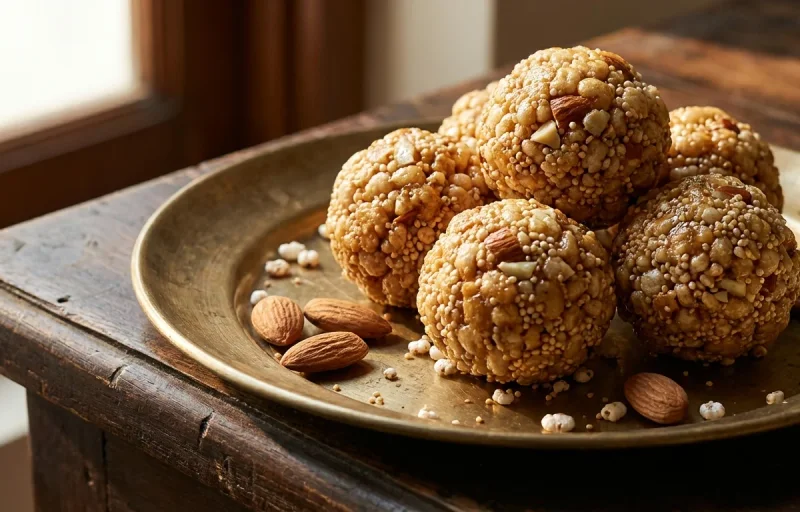
- 2Mix with melted jaggery or honey to make traditional energy bars or laddoos
- 3Use as a gluten-free breading for tofu or vegetables for a light, crunchy texture
STORAGE
Keep it fresh.
- Store in an airtight container to prevent the puffs from becoming soft or stale
- Keep in a cool, dry, and dark place away from direct sunlight
- Can be stored for up to 6 months if kept moisture-free
FAQ
Frequently asked questions.
How long does puffed amaranth last?
When stored in an airtight container in a cool, dry place, it typically lasts for 3 to 6 months. If it loses its crunch, it can be lightly toasted in a dry pan.
Is puffed amaranth gluten-free?
Yes, amaranth is naturally gluten-free, making puffed amaranth an excellent choice for those with gluten sensitivities or Celiac disease.
Can I puff amaranth at home?
Yes, you can pop raw amaranth seeds in a very hot, dry skillet in small batches. They pop almost instantly like tiny popcorn.
What is a good substitute for puffed amaranth?
Puffed quinoa is the closest substitute in terms of size and nutrition. Puffed rice or puffed millet can also be used, though they have different flavor profiles.
How do I know if puffed amaranth has gone bad?
Check for a rancid or musty smell. Because amaranth contains natural oils, it can go rancid if exposed to heat and air for too long.
Is puffed amaranth healthy for weight loss?
Yes, it is very light and voluminous, meaning you can eat a large portion for relatively few calories, and its high fiber content helps keep you full.
What does puffed amaranth taste like?
It has a mild, nutty, and slightly earthy flavor with a light, airy texture.
Can puffed amaranth be frozen?
It is not recommended to freeze puffed amaranth as the moisture in the freezer can make it soggy upon thawing.
Is puffed amaranth a complete protein?
While not technically a complete protein on its own, it contains all nine essential amino acids, including high levels of lysine, which is rare for a grain.
How is puffed amaranth used in Indian cuisine?
It is commonly known as Rajgira or Ramdana and is frequently used to make 'Rajgira Ladoo' or 'Chikki', especially during fasting periods (vrat).
RECIPES
Cook with puffed amaranth.
1 recipes · sorted by what’s quick