grain1 recipes
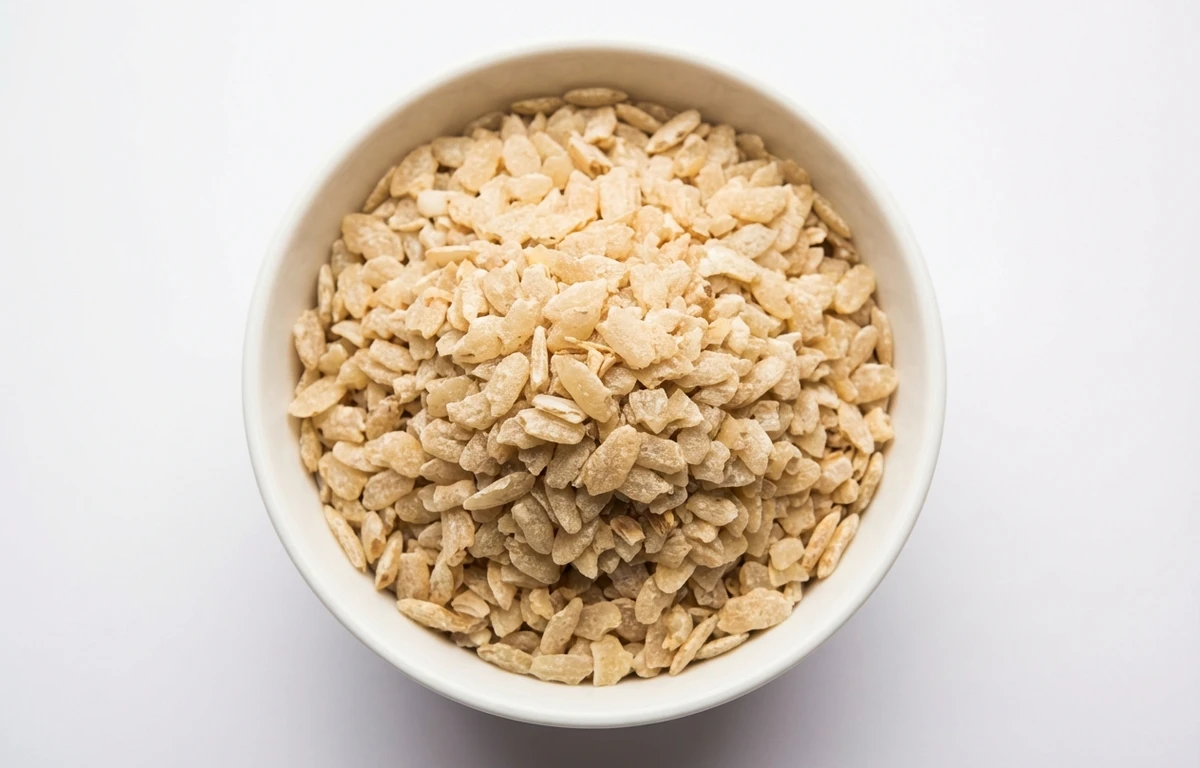
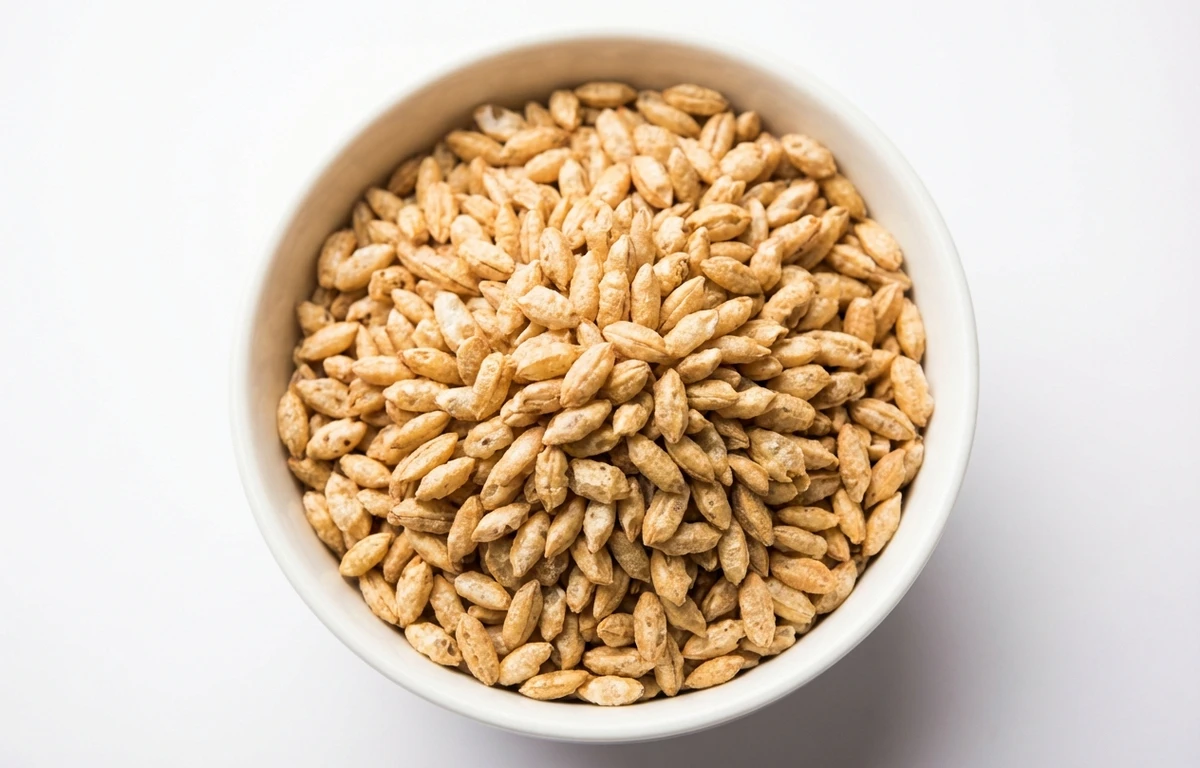
Puffed Paddy.
VegetarianVeganGluten-freeDairy-freeNut-freePeanut-freeSoy-freeEgg-freeShellfish-freeHoney-freeAlcohol-freeWhole grain
ALSO KNOWN AS
kheellaaikhoinel poripuffed rice with huskpaddy puffs
SERVING
CALORIES
360
PROTEIN
6.5g
CARBS
82g
FAT
0.80g
FIBER
1.5g
NUTRITION PROFILE · per 100 g
Everything in this ingredient.
MACRONUTRIENTS
Calories360kcal—
Protein6.5g13%
Carbohydrates82g30%
Fiber1.5g5%
Sugar0.20g0%
Total fat0.80g1%
Saturated fat0.20g1%
Trans fat0g—
Cholesterol0mg0%
Water8.0g—
MINERALS
Sodium5.0mg0%
Potassium110mg2%
Calcium10mg1%
Iron4.5mg25%
Magnesium35mg8%
Phosphorus150mg12%
Zinc1.2mg11%
Copper0.20mg22%
Manganese1.1mg48%
Selenium15µg27%
VITAMINS
Vitamin A0µg0%
Vitamin C0mg0%
Vitamin D0µg0%
Vitamin E0.10mg1%
Vitamin K0µg0%
Thiamin (B1)0.15mg13%
Riboflavin (B2)0.04mg3%
Niacin (B3)3.5mg22%
Pantothenic acid (B5)0.50mg10%
Vitamin B60.20mg12%
Folate (B9)12µg3%
Vitamin B120µg0%
%DV based on a 2,000 cal diet. Source: USDA FoodData Central. A dash in the %DV column means there’s no established Daily Value for that nutrient.
MEASUREMENT CONVERSIONS
How much is what.
1 cup15g
1 tablespoon1g
1 teaspoon0.3g
1 oz28.4g
1 lb453.6g
1 ml0.1g
1 liter60g
HEALTH BENEFITS
Why eat it.
- ✓Extremely easy to digest and gentle on the stomach
- ✓Naturally gluten-free, making it safe for celiac diets
- ✓Low in fat and calories, helpful for weight management
- ✓Provides a quick source of energy through complex carbohydrates
- ✓Contains essential minerals like iron and magnesium
COOKING TIPS
In the kitchen.
- 1Always sift or clean before use to remove any leftover hard husk bits
- 2Can be dry roasted with spices for a healthy, low-calorie snack
- 3Commonly used in sweet preparations with jaggery or as a breakfast cereal
STORAGE
Keep it fresh.
- Store in an airtight container to prevent it from becoming soggy
- Keep in a cool, dry place away from direct sunlight and moisture
- If it loses crispness, dry roast lightly for a minute to restore texture
FAQ
Frequently asked questions.
What is the difference between puffed paddy and puffed rice?
Puffed paddy (Kheel) is made by puffing the whole grain with the husk still on, which is later removed. Puffed rice (Murmura) is made from parboiled rice that has already been dehusked.
How long does puffed paddy stay fresh?
When stored in an airtight container in a dry environment, it can stay fresh and crisp for up to 4-6 months.
Is puffed paddy gluten-free?
Yes, puffed paddy is naturally gluten-free as it is derived from rice.
Can I freeze puffed paddy?
Freezing is not recommended as it can introduce moisture, which will make the grain soft and lose its characteristic crunch.
How do I pick the best quality puffed paddy?
Look for grains that are bright white, very crisp to the touch, and free from excessive broken pieces or dark spots.
What can I use as a substitute for puffed paddy?
Puffed rice (Murmura) or flattened rice (Poha) are the best substitutes, though the texture and flavor profile will vary slightly.
Is puffed paddy good for weight loss?
Yes, because it is very light and high in volume, you can eat a large portion for very few calories, making it a great snack for weight management.
Does puffed paddy need to be washed before eating?
No, it should not be washed as it will immediately become soggy. However, it should be winnowed or sifted to remove any stray husks.
Is it safe for babies?
Yes, it is often one of the first solid foods given to infants in some cultures because it is very easy to digest, though it should be softened or powdered for very young children.
What are the common uses for puffed paddy?
It is widely used in Indian festivals like Diwali as an offering, made into 'Kheel Batasha', or used to make savory snacks (Chivda) and sweet balls (Ladoo).
RECIPES
Cook with puffed paddy.
1 recipes · sorted by what’s quick