
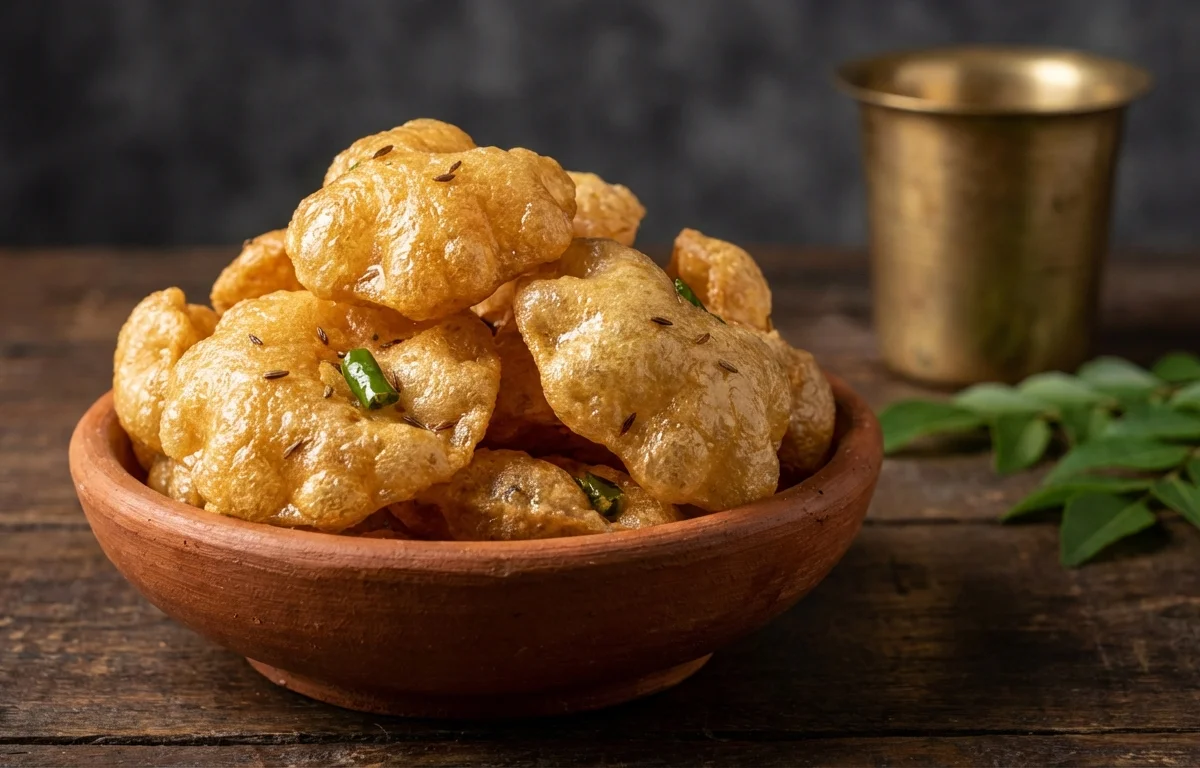
Aralu Sandige
Crispy, light, and airy sun-dried fryums from Karnataka made with puffed paddy and a hint of spice. These traditional 'sandiges' are deep-fried to golden perfection and served as a delightful crunchy side with rice and sambar.
For 10 servings
Prepare the Spice Paste and Slurry
1.Grind the green chilies into a fine paste using a small amount of water if needed. Set aside.2.In a small bowl, whisk the rice flour with 1/2 cup of water until you have a smooth, lump-free slurry.Cook the Batter (Ganji)
1.In a heavy-bottomed pan, bring the remaining 2.5 cups of water to a rolling boil over medium-high heat.2.Add the green chili paste, cumin seeds, asafoetida, and salt to the boiling water. Stir well and let it boil for 1 minute for the flavors to infuse.3.Reduce the heat to low. Slowly pour the rice flour slurry into the boiling water, whisking continuously and vigorously to prevent any lumps from forming.4.Continue to cook for 5-7 minutes, stirring constantly, until the mixture thickens into a glossy, translucent, porridge-like consistency (ganji).5.Turn off the heat. Stir in the lemon juice, if using. The batter should be thick enough to coat the back of a spoon.Coat the Puffed Paddy
1.Place the puffed paddy (aralu) in a large, wide bowl.2.Immediately pour the hot batter over the puffed paddy.3.Using a spatula, gently but quickly fold the mixture until all the puffed paddy is evenly coated. Work swiftly as the aralu will begin to soften.Shape and Sun-Dry
1.Lay a large, clean plastic sheet or greased trays in an area that receives direct, strong sunlight.2.Drop small spoonfuls of the coated aralu mixture onto the sheet, leaving about an inch of space between each sandige.3.Sun-dry for 2-4 days. After the first day, when the top is dry to the touch, gently flip each sandige over to ensure even drying.4.The sandiges are ready when they are completely moisture-free, hard, brittle, and peel off the sheet easily.Store and Fry to Serve
1.Once completely dried, store the Aralu Sandige in an airtight container at room temperature. They will keep well for up to a year.2.To serve, heat oil in a kadai or deep pan over medium-high heat.3.Test the oil by dropping in a small piece; it should sizzle and rise to the surface immediately.4.Carefully drop a few sandiges into the hot oil. Fry for just 5-10 seconds until they puff up and turn a light golden color. Do not overcrowd the pan.5.Using a slotted spoon, remove the fried sandige and drain on paper towels. Serve hot as a crunchy side with your meal.
What to keep in mind.
5 tips from the recipe — small details that make a real difference to the final dish.
- 1The consistency of the batter is key. If it's too thin, the sandige will be flat. If it's too thick, it will be difficult to mix with the aralu.
- 2Ensure you mix the aralu and batter while the batter is still hot for the best coating.
- 3Complete sun-drying is crucial for a long shelf life and to ensure they puff up perfectly when fried.
- 4If you live in a humid or cloudy area, you can dry them indoors under a fan, though it may take longer. A food dehydrator is also a good alternative.
- 5Fry in small batches to maintain the oil temperature and ensure each sandige cooks evenly and crisps up.
Adapt it for your goals.
Herbaceous
Add 2 tablespoons of finely chopped cilantro or dill leaves to the batter just before mixing with the aralu for a fresh, herby flavor.
SpicierSpicier
Increase the number of green chilies or add 1/2 teaspoon of red chili powder to the batter for extra heat.
Garlic FlavorGarlic Flavor
Add 1 teaspoon of garlic paste along with the green chili paste for a pungent aroma and taste.
With Sesame SeedsWith Sesame Seeds
Add 1 tablespoon of white sesame seeds to the boiling water for a nutty flavor and extra crunch.
Why this is on our healthy list.
Gluten-Free
Made entirely from puffed paddy and rice flour, this recipe is naturally gluten-free, making it a safe and delicious option for individuals with celiac disease or gluten sensitivity.
Light on the Stomach
Puffed paddy is known to be very light and easy to digest. In its unfried form, the base mixture is gentle on the digestive system. When fried, it should be consumed in moderation.
Quick Energy Source
The primary ingredients provide complex carbohydrates, which are the body's main source of fuel, offering a quick boost of energy.
Frequently asked questions
Aralu is the Kannada word for puffed paddy. It's made by puffing whole paddy grains (rice with husk), which are then dehusked. This process gives it a denser, more rustic texture and a distinct flavor compared to puffed rice (murmura), which is made from milled rice.


