Grain1 recipes
rice flakes.
VegetarianVeganGluten-freeDairy-freeNut-freePeanut-freeSoy-freeEgg-freeShellfish-freeHoney-freeAlcohol-free
SERVING
CALORIES
354
PROTEIN
7.4g
CARBS
76.8g
FAT
1.1g
FIBER
3.5g
NUTRITION PROFILE · per 100 g
Everything in this ingredient.
MACRONUTRIENTS
Calories354kcal—
Protein7.4g15%
Carbohydrates76.8g28%
Fiber3.5g12%
Sugar0.34g1%
Total fat1.1g1%
Saturated fat0.28g1%
Trans fat0g—
Cholesterol0mg0%
Water10.4g—
MINERALS
Sodium2.6mg0%
Potassium148mg3%
Calcium9.2mg1%
Iron4.5mg25%
Magnesium77.9mg19%
Phosphorus195mg16%
Zinc1.5mg14%
Copper0.26mg29%
Manganese0.89mg39%
Selenium0µg0%
VITAMINS
Vitamin A0µg0%
Vitamin C0mg0%
Vitamin D0µg0%
Vitamin E0.05mg0%
Vitamin K1.0µg1%
Thiamin (B1)0.12mg10%
Riboflavin (B2)0.04mg3%
Niacin (B3)1.6mg10%
Pantothenic acid (B5)0.48mg10%
Vitamin B60.02mg1%
Biotin (B7)0.39µg1%
Folate (B9)8.5µg2%
%DV based on a 2,000 cal diet. Source: USDA FoodData Central. A dash in the %DV column means there’s no established Daily Value for that nutrient.
MEASUREMENT CONVERSIONS
How much is what.
1 cup70g
1 tablespoon4.4g
1 teaspoon1.5g
1 oz28.4g
1 lb453.6g
1 ml0.3g
1 liter296g
HEALTH BENEFITS
Why eat it.
- ✓Provides a quick source of energy from easily digestible carbohydrates.
- ✓Naturally gluten-free, making it a suitable option for individuals with celiac disease or gluten sensitivity.
- ✓Often a good source of iron, as the parboiling process helps retain some nutrients, which can aid in preventing anemia.
- ✓Light on the stomach and low in calories, making it a good choice for breakfast or a light meal.
COOKING TIPS
In the kitchen.
- 1Rinse or soak briefly in water just until softened before cooking. Over-soaking will result in a mushy texture.
- 2For savory dishes like Poha, sauté with spices, onions, and vegetables after a quick rinse.
- 3Use in sweet preparations by mixing with milk or yogurt, sugar, fruits, and nuts to create a porridge or a no-cook breakfast.
- 4Thinner varieties can be eaten without extensive cooking, while thicker flakes require a brief steaming or sautéing.
STORAGE
Keep it fresh.
- Store in a cool, dry, and dark place, such as a pantry, away from direct sunlight.
- Keep in an airtight container to prevent moisture absorption, which can make them clump together or become stale.
FAQ
Frequently asked questions.
Are rice flakes healthy?
Yes, rice flakes are a healthy, easily digestible source of energy. They are low in fat, rich in iron, and provide essential carbohydrates, making them an excellent choice for a light breakfast or snack that is gentle on the stomach.
Are rice flakes good for weight loss?
Rice flakes can be beneficial for weight loss because they are low in calories and fat. Since they expand when soaked, a relatively small portion can be quite filling, helping to manage appetite when prepared with plenty of vegetables.
What is the nutritional value of rice flakes?
Per 100g, rice flakes contain approximately 353.73 calories, 76.75g of carbohydrates, 7.44g of protein, and 1.14g of fat. They are also a good source of iron, which is retained during the parboiling process.
Are rice flakes gluten-free?
Yes, rice flakes are naturally gluten-free as they are made entirely from rice. This makes them a safe and versatile grain alternative for individuals with celiac disease or gluten sensitivities.
Are rice flakes vegan?
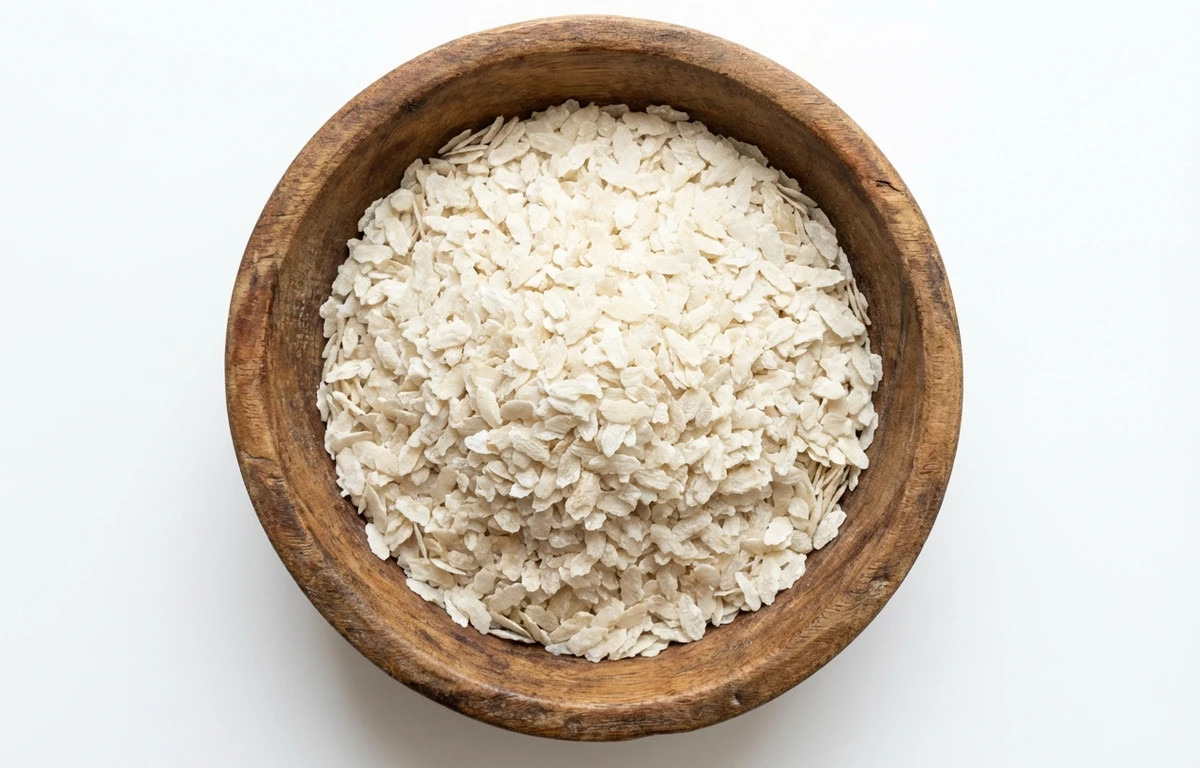
Yes, rice flakes are 100% vegan. They are a plant-based product made by parboiling, flattening, and drying rice grains, and they contain no animal-derived ingredients.
Are rice flakes keto-friendly?
No, rice flakes are not keto-friendly. With approximately 76.75g of carbohydrates per 100g, they are too high in carbs for a standard ketogenic diet, which requires maintaining a very low carbohydrate intake.
How do you prepare rice flakes for cooking?
To prepare rice flakes, place them in a colander and rinse under running water for 30-60 seconds until softened, then drain immediately. They do not require boiling; once softened, they can be tossed directly into a pan with spices and vegetables.
What do rice flakes taste like?
Rice flakes have a very mild, neutral flavor with a slightly nutty undertone. Their light, porous texture makes them excellent at absorbing the flavors of spices, broths, or seasonings used during cooking.
How should I store rice flakes and how long do they last?
Store rice flakes in an airtight container in a cool, dry place away from moisture and direct sunlight. When kept in these conditions, they typically remain fresh for 6 to 12 months.
Can diabetics eat rice flakes?
Diabetics can eat rice flakes in moderation, but should be mindful of portion sizes due to their high carbohydrate content. It is recommended to cook them with high-fiber vegetables and healthy fats to help stabilize blood sugar levels.
RECIPES
Cook with rice flakes.
1 recipes · sorted by what’s quick