
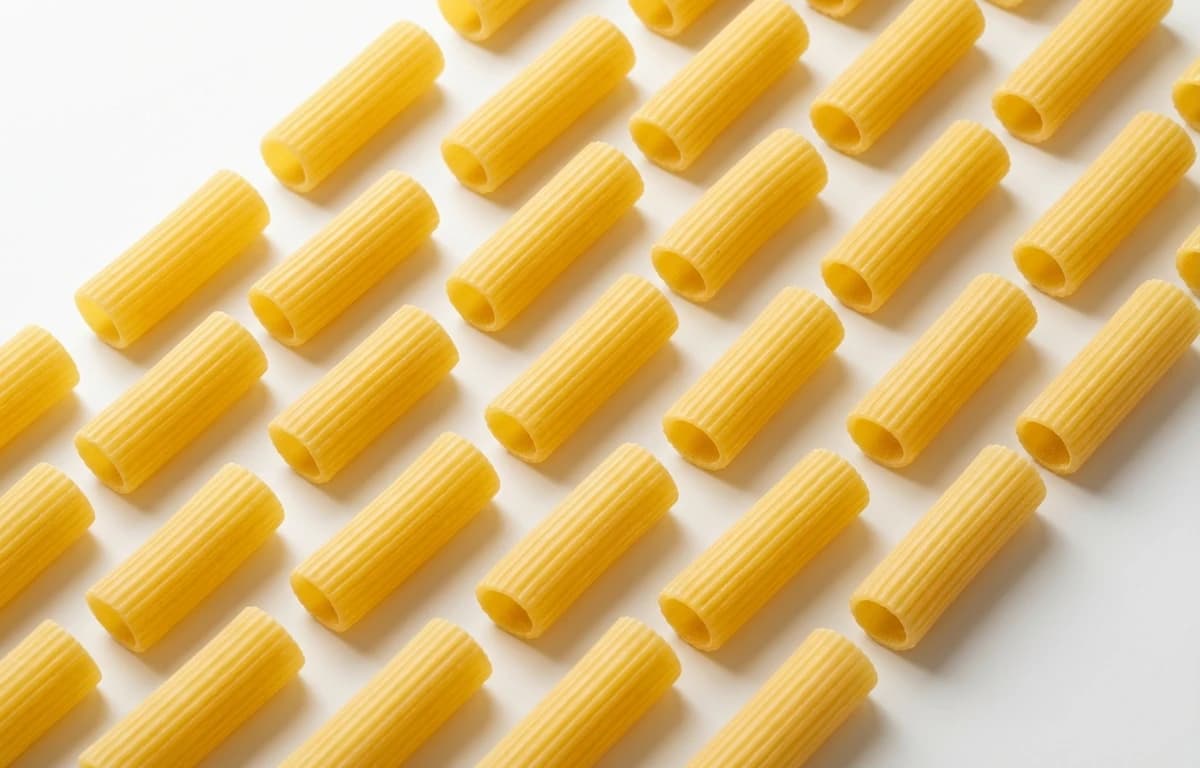
rigatoni pasta
Also known as: dried rigatoni, dry rigatoni, rigatoni
Loading...
Also known as: dried rigatoni, dry rigatoni, rigatoni
Per 100g
Nutrition data source: USDA FoodData Central
Common measurement equivalents in grams
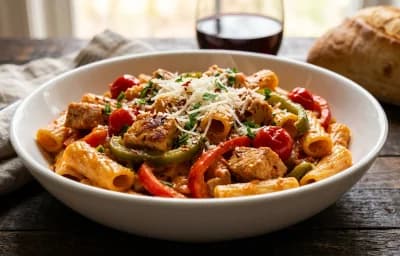
A beloved upstate New York classic! Tender chicken and rigatoni pasta tossed in a spicy, creamy tomato sauce with sweet bell peppers and hot cherry peppers. Pure comfort food with a kick.
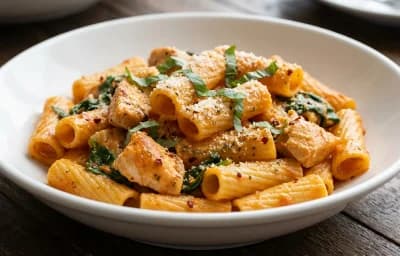
A comforting bowl of rigatoni pasta tossed with tender chicken pieces in a rich, creamy tomato sauce. Infused with garlic and herbs, and finished with fresh Parmesan, this dish is a weeknight dinner dream come true, ready in about 30 minutes.
When stored in a cool, dry place, dry rigatoni can last for 1 to 2 years past the 'best by' date.
Penne, ziti, or tortiglioni are the best substitutes as they have similar tubular shapes and ridges.
Most standard dry rigatoni is vegan as it is made from semolina flour and water, but always check the label for egg ingredients.
The best way is to taste it; it should be tender but still have a slight firmness in the center (al dente).
The ridges (rigate) are designed to help sauces and grated cheese cling to the surface of the pasta.
Yes, you can freeze cooked rigatoni for up to 2 months. It is best to freeze it slightly undercooked to prevent mushiness when reheating.
A standard serving is about 56-85 grams (2-3 ounces) of dry pasta per person.
Rigatoni's large hole and ridges make it ideal for chunky meat sauces (Bolognese), thick vegetable sauces, or baked pasta dishes.
Yes, traditional rigatoni is made from wheat semolina and contains gluten.
rigatoni pasta is a versatile ingredient found in cuisines around the world. With 371 calories per 100g and 13 grams of protein, it's a nutritious addition to many dishes.
Explore more ingredients in the grain category with complete nutrition information.
View all grain →Discover 0 recipes featuring rigatoni pasta with step-by-step instructions.
Browse recipes →Rigatoni is larger, has straight-cut ends, and is always ridged, while penne is smaller with diagonal-cut ends and can be smooth or ridged.