Other
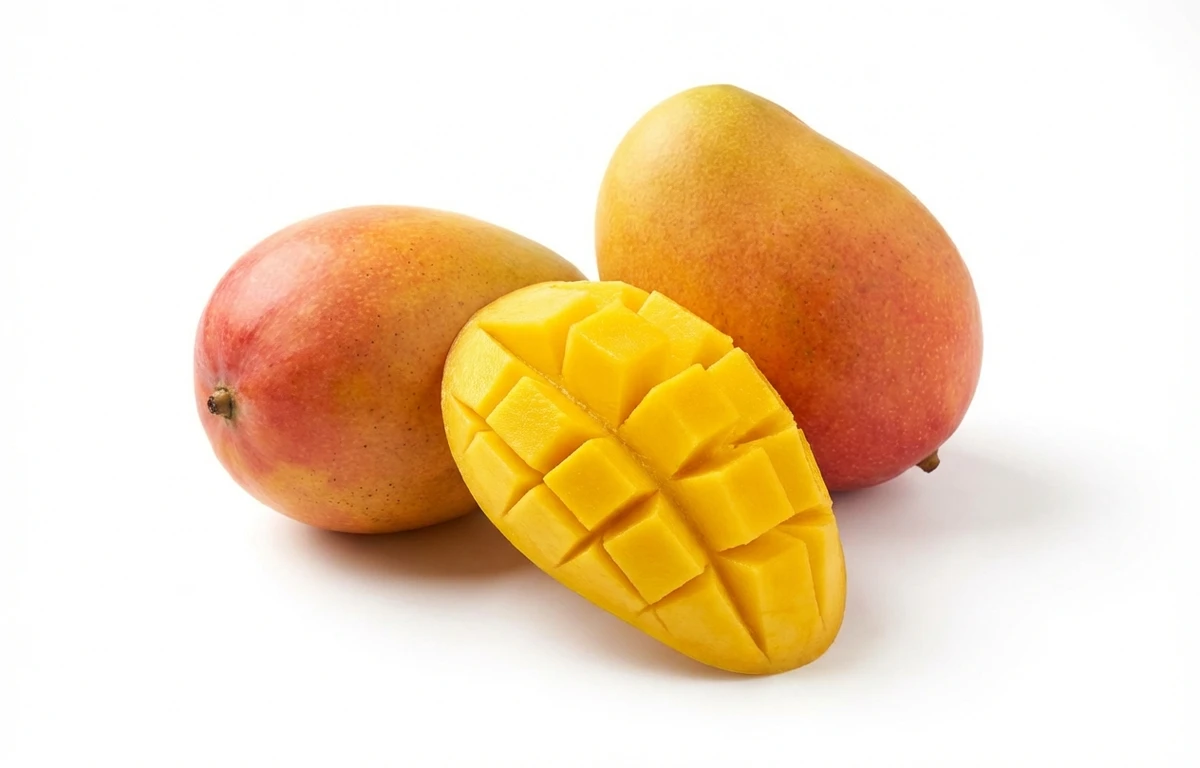
ripe mangoes.
VegetarianVeganGluten-freeDairy-freeNut-freePeanut-freeSoy-freeEgg-freeShellfish-freeHoney-freeAlcohol-free
SERVING
CALORIES
59
PROTEIN
0.82g
CARBS
15.6g
FAT
0.38g
FIBER
1.6g
This ingredient is flagged as naturally gluten-free. Per 100 g, it provides 4.2 µg of vitamin K.
NUTRITION PROFILE · per 100 g
Everything in this ingredient.
MACRONUTRIENTS
Calories59kcal—
Protein0.82g2%
Carbohydrates15.6g6%
Fiber1.6g6%
Sugar13.7g27%
Total fat0.38g0%
Saturated fat0.09g0%
Cholesterol0mg0%
MINERALS
Sodium1.0mg0%
Potassium168mg4%
Calcium11mg1%
Iron0.16mg1%
Magnesium10mg2%
Phosphorus14mg1%
Zinc0.04mg0%
Copper0.11mg12%
Manganese0.06mg3%
Selenium0.60µg1%
VITAMINS
Vitamin A54µg6%
Vitamin C27.7mg31%
Vitamin E0.90mg6%
Vitamin K4.2µg4%
Thiamin (B1)0.06mg5%
Riboflavin (B2)0.06mg5%
Niacin (B3)0.57mg4%
Pantothenic acid (B5)0.16mg3%
Vitamin B60.13mg8%
Folate (B9)43µg11%
%DV based on a 2,000 cal diet. Source: USDA FoodData Central. A dash in the %DV column means there’s no established Daily Value for that nutrient.
MEASUREMENT CONVERSIONS
How much is what.
1 cup165g
1 tablespoon10.3g
1 teaspoon3.4g
1 ml1g
1 liter687.3g
1 piece168g
HEALTH BENEFITS
Why eat it.
- ✓Provides dietary fiber, aiding in digestion and promoting a healthy gut microbiome.
COOKING TIPS
In the kitchen.
- 1To easily cut a mango, slice it lengthwise on either side of the large, flat pit. Score the flesh in a grid pattern without cutting the skin, then scoop out the cubes with a spoon.
- 2Blend ripe mango into smoothies, lassis, or cocktails for natural sweetness and a creamy texture.
- 3Incorporate diced mango into fresh salsas with red onion, cilantro, lime juice, and jalapeño to serve with grilled fish or chicken.
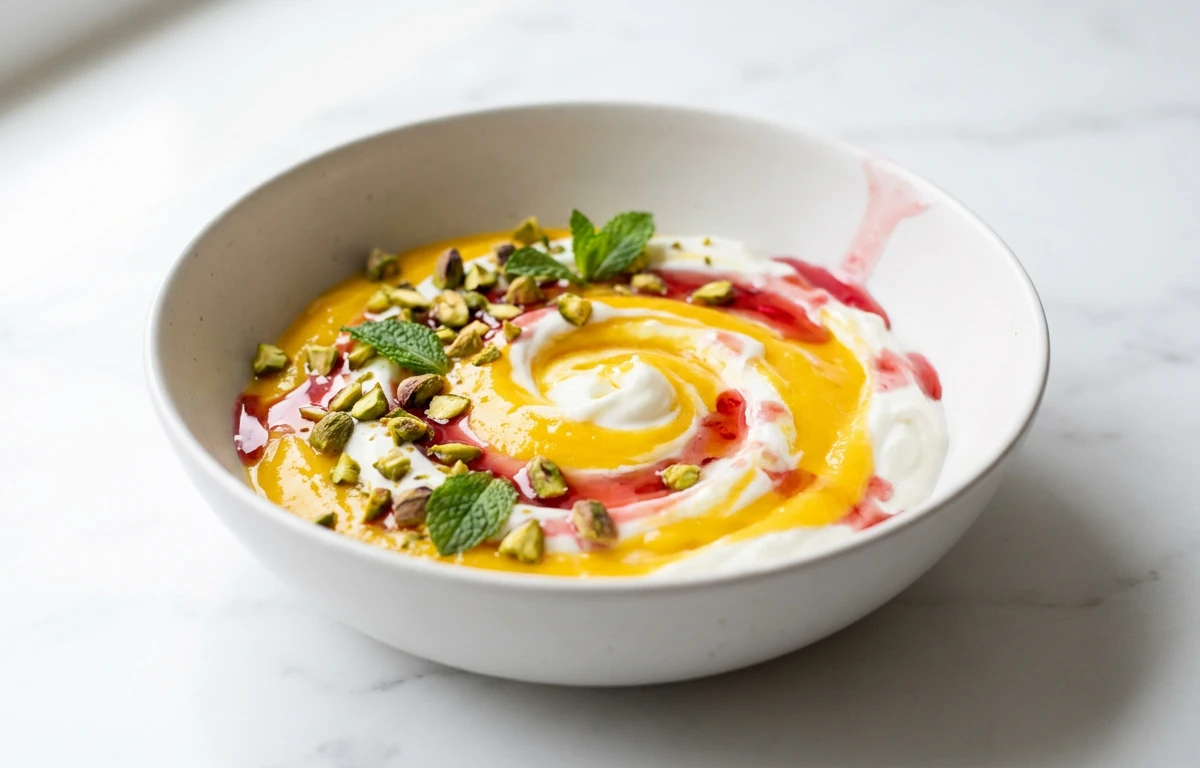
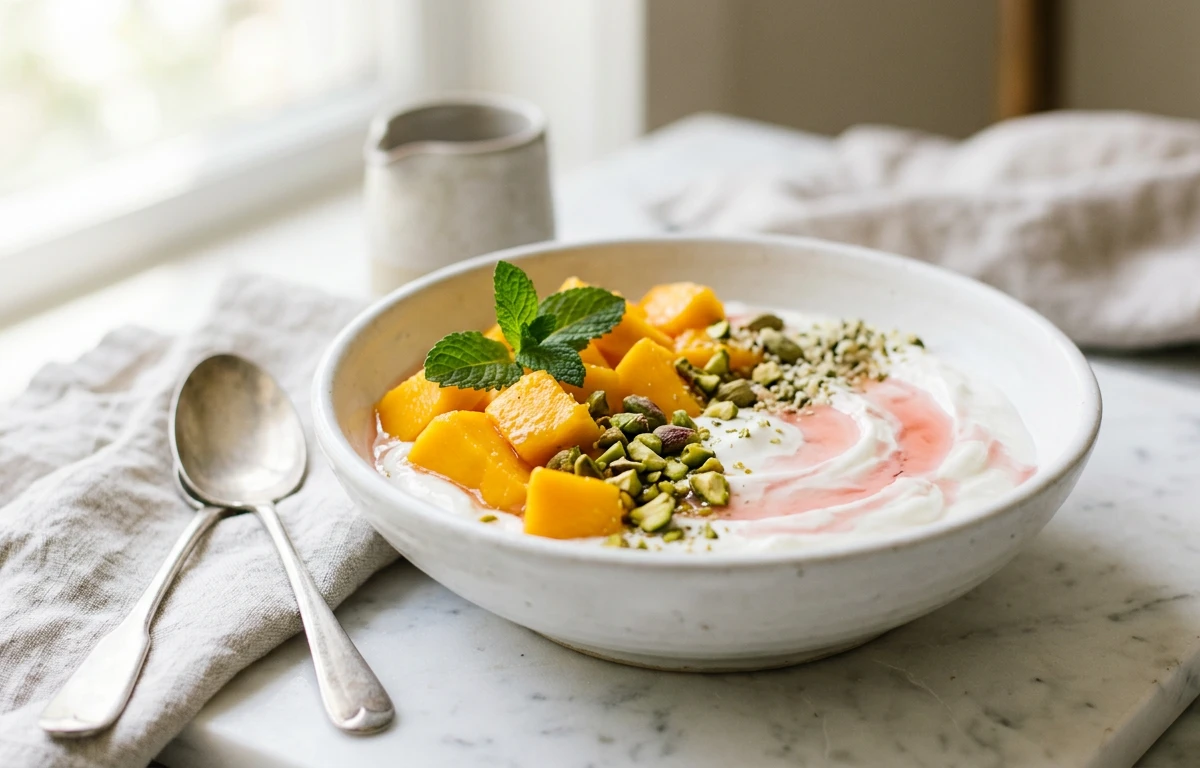
- 4Pureed mango can be used as a base for desserts like mousse, sorbet, or as a topping for yogurt and pancakes.
STORAGE
Keep it fresh.
- Store unripe mangoes at room temperature for several days until they soften slightly and become fragrant.
- Once ripe, transfer whole mangoes to the refrigerator to slow the ripening process, where they will last for up to five days.
- For long-term storage, peel and cube the mango, then freeze in a single layer on a baking sheet before transferring to an airtight container.
FAQ
Frequently asked questions.
How many calories and carbs are in a ripe mango?
Per 100g, ripe mangoes contain approximately 59 calories and 15.6g of carbohydrates. While they are low in fat (0.38g) and protein (0.82g), their carb content comes primarily from natural sugars.
Are ripe mangoes keto-friendly?
No, ripe mangoes are generally not considered keto-friendly. With 15.6g of carbs per 100g, even a small serving can take up a significant portion of the daily carbohydrate limit allowed on a ketogenic diet.
How do you know if a mango is ripe and ready to eat?
A ripe mango will give slightly when gently squeezed, similar to a peach. You should also check the stem end for a sweet, fruity aroma, as skin color is not always a reliable indicator of ripeness depending on the variety.
What is the best way to store ripe mangoes?
Once mangoes are fully ripe, they should be stored in the refrigerator to slow down further ripening. They will typically stay fresh for about 5 days in the fridge, or you can peel and cube them to store in the freezer for up to 6 months.
What do ripe mangoes taste like?
Ripe mangoes have a sweet, tropical flavor profile with hints of peach, citrus, and melon. Their texture is usually smooth, juicy, and buttery, though some varieties may have a slightly more fibrous flesh.
Can you eat the skin of a mango?
While the skin is technically edible and contains nutrients, it is generally not recommended for consumption. Mango skin contains urushiol, the same organic compound found in poison ivy, which can cause allergic reactions or skin irritation in sensitive individuals.
How do you easily cut a ripe mango?
The most common method is to slice off the two 'cheeks' by cutting vertically on either side of the flat central pit. You can then score the flesh of the cheeks in a grid pattern without cutting through the skin and scoop the cubes out with a spoon.
RECIPES
Cook with ripe mangoes.
0 recipes · sorted by what’s quick