Ambe Upkari
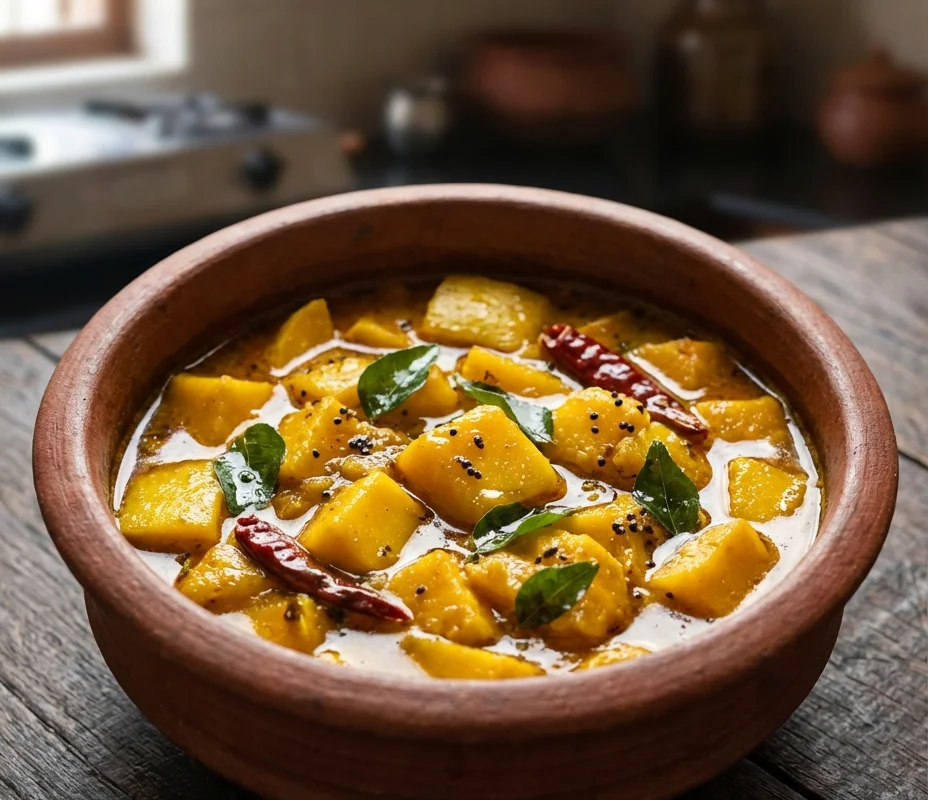
A simple coastal Karnataka dish where ripe mangoes are gently cooked in a lightly spiced coconut gravy. It is sweet, mildly tangy, and especially lovely with hot rice on summer days.
For 4 servings
- prep · ~8 min
Prepare the mangoes and coconut.
1.Wash the mangoes well and trim any stem end.2.Peel them if the skin is thick; leave small tender skins on if preferred.3.Grate the fresh coconut and keep it ready. - mix · ~3 min
Grind the coconut paste.
Blend the grated coconut with a little of the water to make a smooth, pourable paste. Keep it slightly thick so it can be adjusted later in the pot.
- boil · ~10 min
Cook the mangoes.
1.Place the mangoes in a pot with green chili, salt, jaggery, and the remaining water.2.Bring to a boil over medium heat.3.Cook until the mangoes turn soft and the flesh loosens, about 8 to 10 minutes.TIPKeep the boil gentle once the mangoes soften so they hold their shape. - simmer · ~3 min
Add the coconut paste and simmer briefly.
Stir the coconut paste into the cooked mangoes and mix gently. Simmer for 2 to 3 minutes until the gravy looks blended and lightly thickened, then turn off the heat.
TIPDo not boil hard after adding coconut or the gravy can split and lose its fresh taste. - temper · ~1 min
Make the tempering.
1.Heat coconut oil in a small pan over medium heat.2.Add mustard seeds and let them splutter.3.Add dried red chili and curry leaves and cook for a few seconds until fragrant. - assemble · ~1 min
Finish the upkari.
Pour the hot tempering over the mango gravy and cover for 1 minute so the flavors settle into the dish.
- serve
Serve warm with rice.
What to keep in mind.
7 tips from the recipe — small details that make a real difference to the final dish.
- 1Choose small ripe mangoes that are sweet with a slight tang, so the gravy stays balanced rather than sugary.
- 2If using larger mangoes, halve them neatly instead of chopping small; bigger pieces hold their shape better while simmering.
- 3Grind the coconut with minimal water first, then thin it in the pot so the gravy stays creamy, not watery.
- 4Once the coconut paste goes in, keep the heat low and stir gently to prevent the gravy from splitting.
- 5Cover the pot right after pouring the tempering so the aroma of curry leaves and red chili infuses the upkari.
- 6Taste after the mangoes soften, then adjust jaggery and salt only at the end because mango sweetness varies a lot.
- 7This dish tastes even better after a short rest of 10 to 15 minutes, when the mango and coconut flavors meld.
Adapt it for your goals.
Spicier
Add an extra green chili or a second dried red chili in the tempering for a sharper contrast to the sweet mango.
jaggery freeJaggery-free
Skip the jaggery when your mangoes are very sweet; this gives a cleaner fruit-forward taste with milder sweetness.
thinner gravyThinner-gravy
Add a little more hot water after the coconut paste if you prefer a looser consistency to mix with rice.
peeled mango versionPeeled-mango version
Peel thick-skinned mangoes fully for a silkier gravy and easier eating, especially if serving children or guests.
Why this is on our healthy list.
Fruit-Rich Summer Dish
Ripe mango brings natural sweetness along with beneficial plant compounds, making the dish feel light and seasonal.
Good Fats from Coconut
Fresh coconut and a little coconut oil add richness and satiety, so the dish is satisfying even with simple rice.
Moderately Spiced and Gentle
With only green chili, curry leaves, and a light tempering, this preparation stays mild compared to heavier curries.
Frequently asked questions
Use small ripe mangoes with a sweet-tangy taste if possible. Very fibrous or overly sour mangoes can affect the texture and balance.