Spice2 recipes
salt pork.
VegetarianVeganGluten-freeDairy-freeNut-freePeanut-freeSoy-freeEgg-freeShellfish-freeHoney-freeAlcohol-freeHalalKosher
ALSO KNOWN AS
salt-cured porksalted fatbackwhite baconcured pork fatsalt porkraw salt pork
SERVING
CALORIES
748
PROTEIN
5.0g
CARBS
0g
FAT
81g
FIBER
0g
NUTRITION PROFILE · per 100 g
Everything in this ingredient.
MACRONUTRIENTS
Calories748kcal—
Protein5.0g10%
Carbohydrates0g0%
Fiber0g0%
Sugar0g0%
Total fat81g104%
Saturated fat29.8g149%
Trans fat0g—
Cholesterol86mg29%
Water12g—
MINERALS
Sodium1450mg63%
Potassium62mg1%
Calcium2.0mg0%
Iron0.30mg2%
Magnesium2.0mg0%
Phosphorus45mg4%
Zinc0.50mg5%
Copper0.02mg2%
Manganese0.01mg0%
Selenium10.2µg19%
VITAMINS
Vitamin A0µg0%
Vitamin C0mg0%
Vitamin D0.80µg4%
Vitamin E0.30mg2%
Vitamin K0µg0%
Thiamin (B1)0.12mg10%
Riboflavin (B2)0.05mg4%
Niacin (B3)1.2mg8%
Pantothenic acid (B5)0.20mg4%
Vitamin B60.05mg3%
Folate (B9)1.0µg0%
Vitamin B120.30µg13%
%DV based on a 2,000 cal diet. Source: USDA FoodData Central. A dash in the %DV column means there’s no established Daily Value for that nutrient.
MEASUREMENT CONVERSIONS
How much is what.
1 cup216g
1 tablespoon13.5g
1 teaspoon4.5g
1 oz28.4g
1 lb453.6g
1 ml0.9g
1 liter900g
HEALTH BENEFITS
Why eat it.
- ✓High energy density for caloric needs
- ✓Provides essential fatty acids
- ✓Source of selenium for antioxidant support
- ✓Contains B-vitamins for metabolism
- ✓Source of phosphorus for bone health
COOKING TIPS
In the kitchen.
- 1Blanch in boiling water for 1-2 minutes before use to remove excess salt
- 2Dice into small cubes and render slowly to create a flavorful fat base
- 3Use as a seasoning for slow-cooked beans, greens, or chowders
STORAGE
Keep it fresh.
- Store in the refrigerator in an airtight container for up to 1 month
- Can be frozen for up to 6 months if wrapped tightly in plastic and foil
- Keep in original brine or salt packing until ready to use
FAQ
Frequently asked questions.
How long does salt pork last in the fridge?
Because it is salt-cured, it has a long shelf life and can last up to 4-5 weeks in the refrigerator if properly sealed.
Can I freeze salt pork?
Yes, salt pork freezes very well. Wrap it tightly to prevent freezer burn; it will maintain quality for about 6 months.
What is the best substitute for salt pork?
Thick-cut bacon is the best substitute, though it adds a smoky flavor. Pancetta or plain pork belly with extra salt are also good alternatives.
Do I need to wash salt pork before cooking?
Yes, it is highly recommended to rinse it under cold water or blanch it in boiling water to remove the heavy surface salt before adding it to recipes.
Is salt pork the same as bacon?
No. While both come from the same area of the pig, salt pork is salt-cured but not smoked, whereas bacon is usually both cured and smoked.
How do I choose high-quality salt pork?
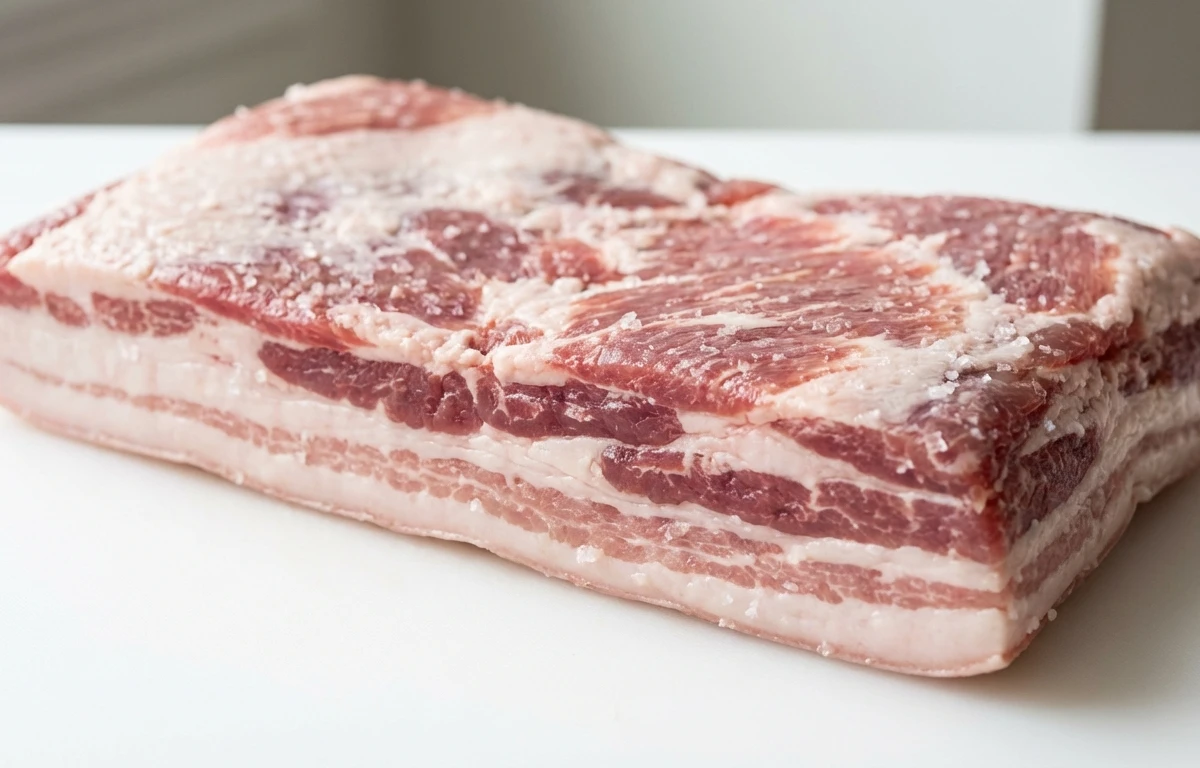
Look for pieces that are mostly white fat with thin streaks of pink lean meat. Avoid any pieces that look yellow or have a rancid smell.
What are common dishes that use salt pork?
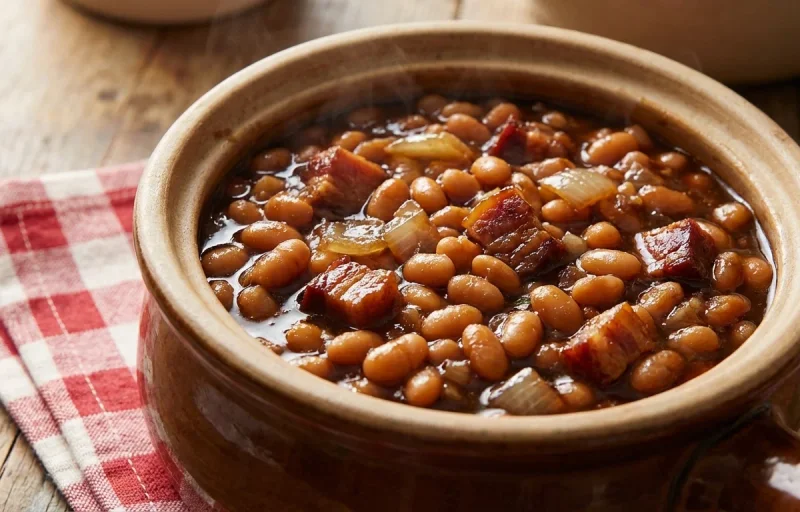
It is a staple in New England clam chowder, Boston baked beans, and Southern-style collard greens or black-eyed peas.
Is salt pork healthy?
It is very high in sodium and saturated fat, so it should be used sparingly as a flavoring agent rather than a primary protein source.
RECIPES
Cook with salt pork.
2 recipes · sorted by what’s quick