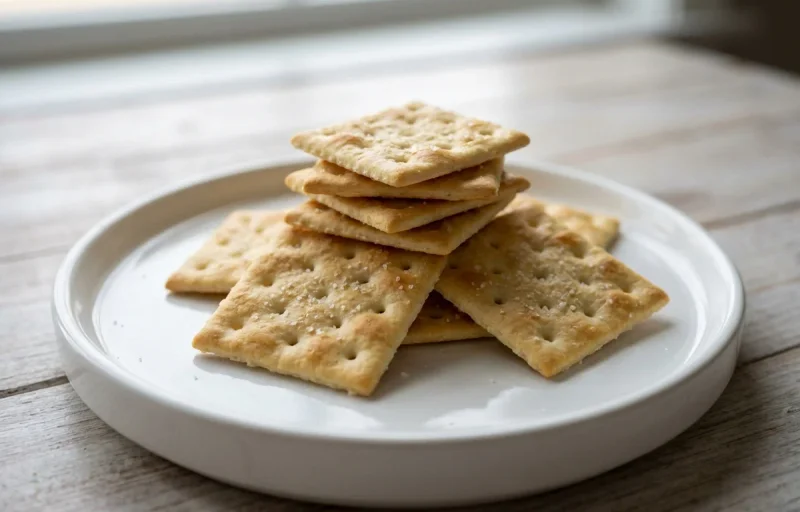
Spice4 recipes
saltine crackers.
VegetarianVeganGluten-freeDairy-freeNut-freePeanut-freeSoy-freeEgg-freeShellfish-freeHoney-freeAlcohol-free
ALSO KNOWN AS
soda crackerspremium crackerssoup crackerssalted crackersgalletas de soda
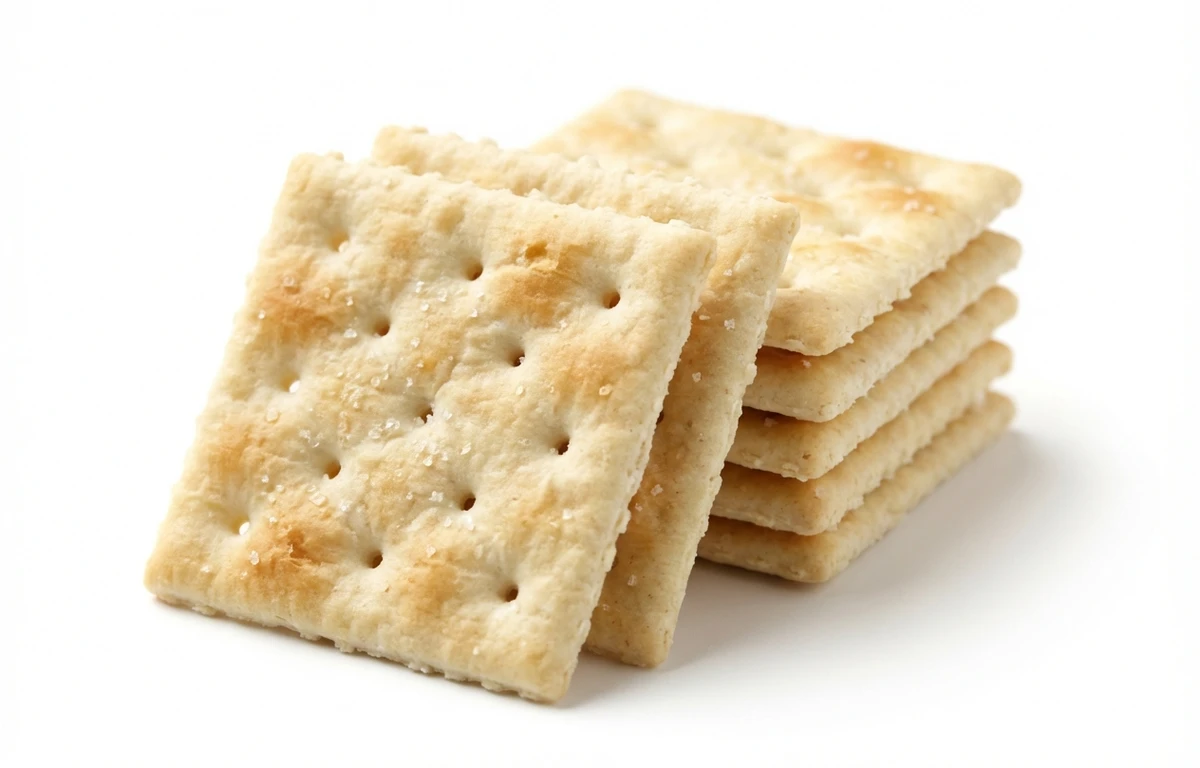
SERVING
CALORIES
421
PROTEIN
9.4g
CARBS
74g
FAT
9.0g
FIBER
2.7g
NUTRITION PROFILE · per 100 g
Everything in this ingredient.
MACRONUTRIENTS
Calories421kcal—
Protein9.4g19%
Carbohydrates74g27%
Fiber2.7g10%
Sugar1.5g3%
Total fat9.0g12%
Saturated fat1.5g8%
Trans fat0g—
Cholesterol0mg0%
Water3.5g—
MINERALS
Sodium940mg41%
Potassium120mg3%
Calcium25mg2%
Iron4.8mg27%
Magnesium22mg5%
Phosphorus105mg8%
Zinc0.80mg7%
Copper0.15mg17%
Manganese0.40mg17%
Selenium25µg45%
VITAMINS
Vitamin A0µg0%
Vitamin C0mg0%
Vitamin D0µg0%
Vitamin E0.80mg5%
Vitamin K1.5µg1%
Thiamin (B1)0.50mg42%
Riboflavin (B2)0.40mg31%
Niacin (B3)4.5mg28%
Pantothenic acid (B5)0.30mg6%
Vitamin B60.05mg3%
Folate (B9)120µg30%
Vitamin B120µg0%
%DV based on a 2,000 cal diet. Source: USDA FoodData Central. A dash in the %DV column means there’s no established Daily Value for that nutrient.
MEASUREMENT CONVERSIONS
How much is what.
1 cup75g
1 tablespoon5g
1 teaspoon1.7g
1 oz28.4g
1 lb453.6g
1 ml0.3g
1 liter320g
1 piece3.1g
HEALTH BENEFITS
Why eat it.
- ✓Easy to digest for those with nausea or upset stomachs
- ✓Provides quick carbohydrate energy
- ✓Low in sugar compared to other snack biscuits
- ✓Low in fat and cholesterol-free
- ✓Often fortified with iron and B-vitamins
COOKING TIPS
In the kitchen.
- 1Crush into fine crumbs to use as a binder for meatloaf or meatballs
- 2Use as a crunchy topping for baked casseroles or macaroni and cheese
- 3Pulse in a food processor to create a quick breading for fried chicken or fish
STORAGE
Keep it fresh.
- Store in an airtight container or original sleeve tightly sealed to maintain crispness
- Keep in a cool, dry pantry away from direct sunlight and humidity
- If they become stale, they can be briefly toasted in an oven to regain crunch
FAQ
Frequently asked questions.
How long do saltine crackers last?
Unopened saltines can last 6-9 months in a cool, dry place. Once opened, they should be consumed within 1-2 weeks for best quality, or stored in an airtight container.
Are saltine crackers vegan?
Most commercial saltine crackers are vegan as they are made from flour, water, yeast, and vegetable oil. However, always check the label for lard or dairy-derived ingredients.
Can I freeze saltine crackers?
Yes, you can freeze them in an airtight, moisture-proof bag for up to 6 months. This prevents the oils in the crackers from going rancid.
What is a good substitute for saltines in recipes?
Ritz crackers, water crackers, or matzo crackers are excellent substitutes. For breading, panko or plain breadcrumbs work well.
Why are they called 'saltines'?
The name comes from the coarse salt sprinkled on top of the crackers before baking, which is their defining characteristic.
How do I know if saltines have gone bad?
They will lose their crunch and become soft or 'stale.' If the oils have gone rancid, they may develop a sour or 'cardboard' smell.
Are saltines gluten-free?
No, traditional saltines are made from wheat flour and contain gluten. Look for specific 'gluten-free' labeled alternatives made from rice or corn flour.
Why are saltines recommended for nausea?
Their high starch content helps absorb stomach acid, and their bland flavor is less likely to trigger a gag reflex during morning sickness or illness.
How many crackers are in a standard serving?
A standard nutritional serving is usually 5 crackers (about 15-16 grams), though this database provides values per 100g.
RECIPES
Cook with saltine crackers.
4 recipes · sorted by what’s quick