Other3 recipes
schmaltz.
VegetarianVeganGluten-freeDairy-freeNut-freePeanut-freeSoy-freeEgg-freeShellfish-freeHoney-freeAlcohol-free
ALSO KNOWN AS
chicken fatrendered chicken fat
SERVING
CALORIES
898
PROTEIN
0g
CARBS
0g
FAT
100g
FIBER
0g
This ingredient is flagged as naturally gluten-free. Per 100 g, it provides 2.4 µg of vitamin K.
NUTRITION PROFILE · per 100 g
Everything in this ingredient.
MACRONUTRIENTS
Calories898kcal—
Protein0g0%
Carbohydrates0g0%
Fiber0g0%
Sugar0g0%
Total fat100g128%
Saturated fat30.3g152%
Trans fat0.75g—
Cholesterol85mg28%
Water0g—
MINERALS
Sodium0mg0%
Potassium0mg0%
Calcium0mg0%
Iron0mg0%
Magnesium6.0mg1%
Phosphorus54mg4%
Zinc0.45mg4%
Copper0.03mg3%
Manganese0.01mg0%
Selenium9.7µg18%
VITAMINS
Vitamin A0µg0%
Vitamin C0mg0%
Vitamin D0µg0%
Vitamin E2.7mg18%
Vitamin K2.4µg2%
Thiamin (B1)0.02mg2%
Riboflavin (B2)0.06mg5%
Niacin (B3)2.0mg13%
Pantothenic acid (B5)0.19mg4%
Vitamin B60.02mg1%
Folate (B9)1.0µg0%
Vitamin B120.07µg3%
%DV based on a 2,000 cal diet. Source: USDA FoodData Central. A dash in the %DV column means there’s no established Daily Value for that nutrient.
MEASUREMENT CONVERSIONS
How much is what.
1 cup205g
1 tablespoon12.8g
1 teaspoon4.3g
1 ml0.9g
1 liter853.3g
HEALTH BENEFITS
Why eat it.
- ✓Rich in monounsaturated fats, which can support heart health when consumed in moderation.
- ✓Has a high smoke point (around 375°F or 190°C), making it stable for frying and roasting without creating harmful free radicals.
- ✓A natural, whole-food fat source free from trans fats often found in hydrogenated oils.
- ✓Provides a rich, savory flavor to dishes, allowing for satisfying meals with less processed ingredients.
COOKING TIPS
In the kitchen.
- 1Use as a flavorful fat for roasting vegetables, especially potatoes and root vegetables, to achieve a crispy exterior and rich taste.
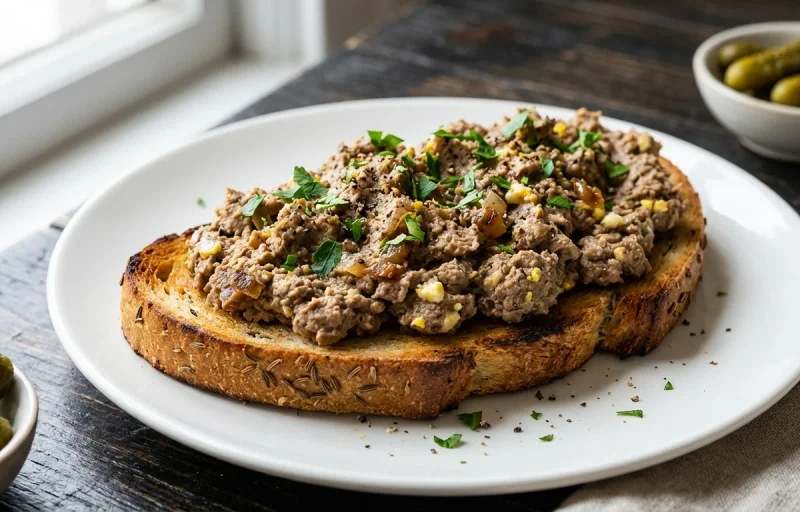
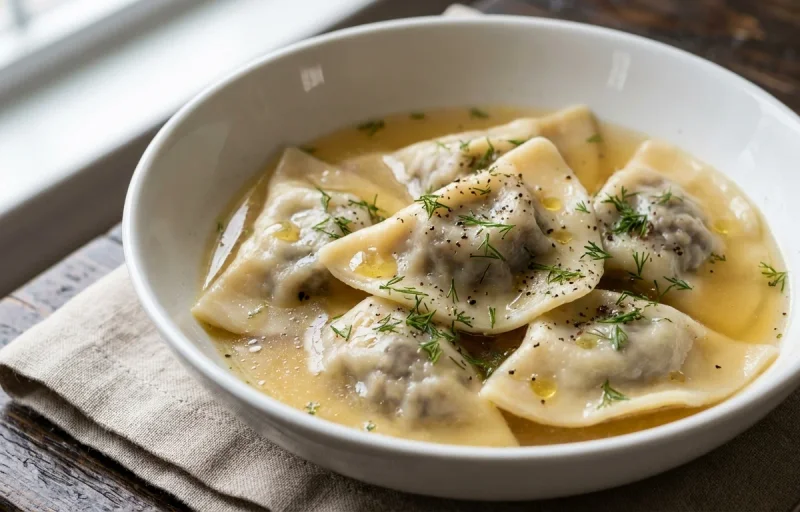
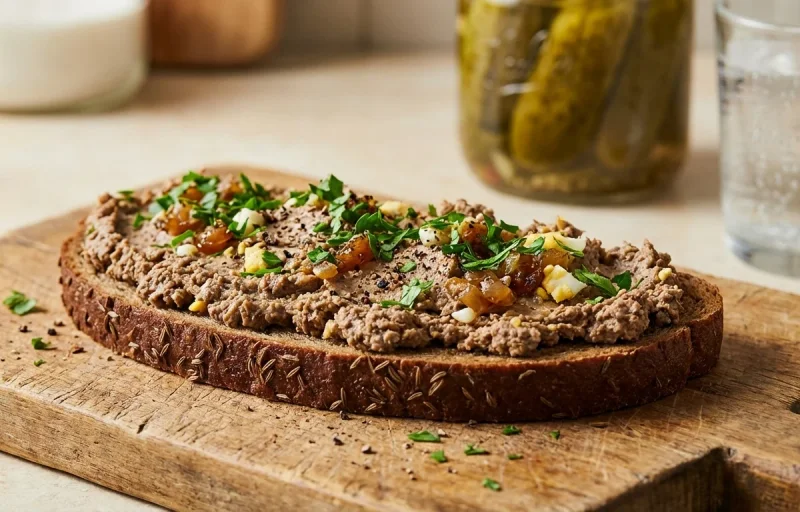
- 2Incorporate into traditional Ashkenazi Jewish recipes like matzo ball soup, chopped liver, and kugel for authentic flavor.
- 3Substitute for butter or oil when sautéing onions, mushrooms, or other aromatics to build a savory base for soups, stews, and braises.
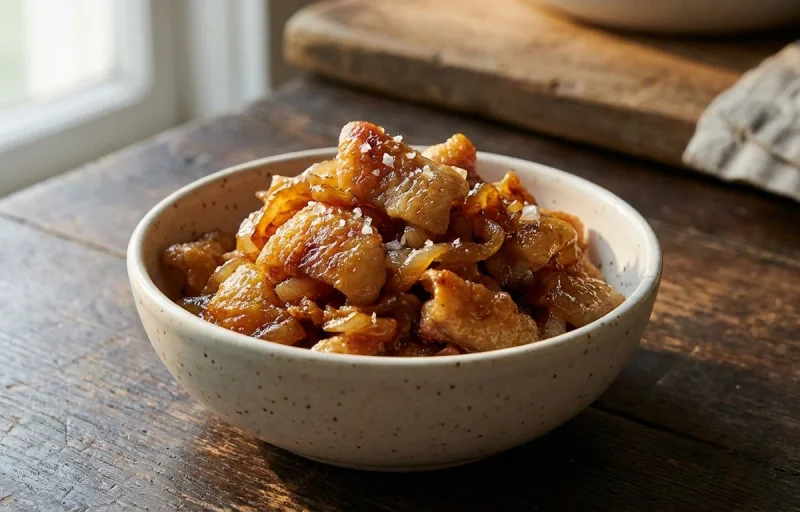
- 4If rendering your own schmaltz, save the crispy chicken or goose skin cracklings (gribenes) to use as a garnish.
STORAGE
Keep it fresh.
- Store in a sealed, airtight container in the refrigerator for up to 6 months.
- For longer-term storage, freeze in an airtight container or in ice cube trays for easy portioning for up to one year.
FAQ
Frequently asked questions.
Is schmaltz healthy?
Schmaltz is a natural, whole-food fat source that is rich in monounsaturated fats, which can support heart health when consumed in moderation. Unlike many processed vegetable oils, it is free from trans fats. However, because it is calorie-dense and contains saturated fat, it should be used sparingly as part of a balanced diet.
How many calories and fat are in schmaltz?
Schmaltz is a pure fat source, containing 100g of fat and approximately 898 calories per 100g. It contains zero carbohydrates, fiber, or protein, making it a concentrated energy source.
Is schmaltz vegan or vegetarian?
No, schmaltz is neither vegan nor vegetarian. It is rendered animal fat, typically produced from chicken or goose, and is an animal-based product.
Is schmaltz keto-friendly?
Yes, schmaltz is highly keto-friendly and suitable for low-carb diets. Since it consists entirely of fat with zero grams of carbohydrates, it is an effective way to add flavor and healthy fats to a ketogenic meal plan.
What does schmaltz taste like and how is it used?
Schmaltz has a rich, savory, and intensely 'chicken-like' flavor. It is traditionally used in Jewish cuisine to flavor matzo balls, chopped liver, and latkes, but it is also excellent for roasting potatoes or sautéing vegetables to add a deep umami profile.
Can I use schmaltz for frying?
Yes, schmaltz has a high smoke point of approximately 375°F (190°C). This makes it stable for roasting, searing, and shallow frying, as it can withstand high temperatures without breaking down into harmful free radicals.
Is schmaltz dairy-free?
Yes, schmaltz is 100% dairy-free and lactose-free. It is a popular substitute for butter in Kosher cooking because it provides a similar richness without violating dietary laws that prohibit mixing meat and dairy.
How should I store schmaltz and how long does it last?
Schmaltz should be stored in a sealed glass jar in the refrigerator, where it will stay fresh for up to 6 months. For longer storage, you can freeze it in an airtight container for up to one year.
How can I tell if schmaltz has gone bad?
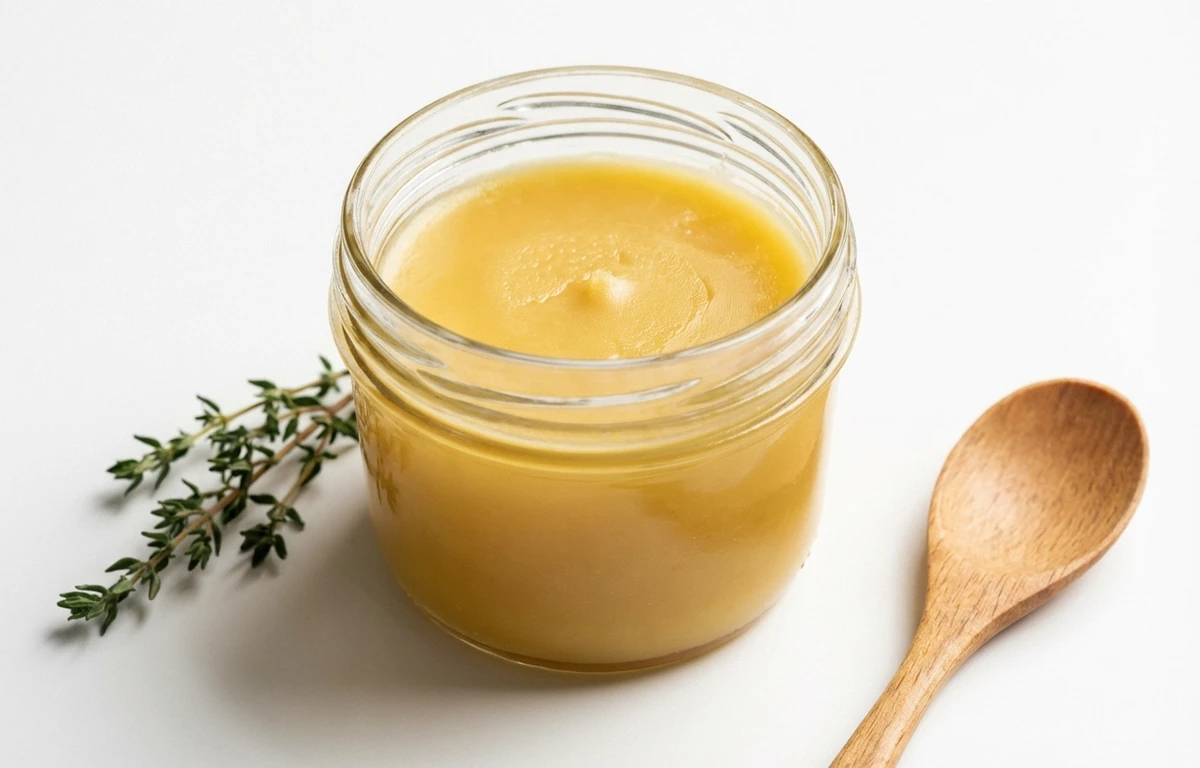
You can tell schmaltz has spoiled if it develops a sharp, rancid, or sour odor. Any visible mold or a significant change in color from its usual pale yellow or white state indicates that it should be discarded.
What is the difference between schmaltz and lard?
The primary difference is the animal source: schmaltz is rendered from poultry (chicken or goose), while lard is rendered from pork. Schmaltz has a more distinct savory poultry flavor, whereas lard is more neutral in taste.
RECIPES
Cook with schmaltz.
3 recipes · sorted by what’s quick