Gribenes
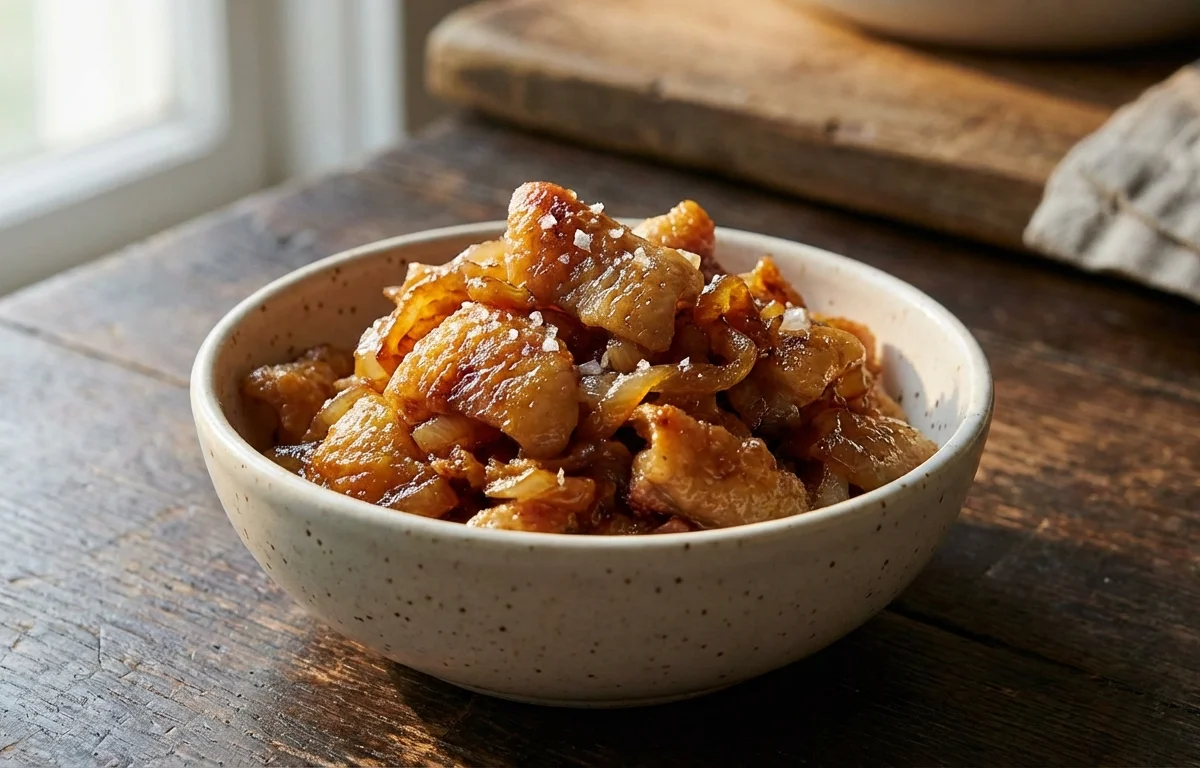
Crispy, golden bits of chicken skin fried with onions until deeply caramelized. This Ashkenazi Jewish classic transforms humble schmaltz byproducts into an irresistibly savory, crunchy topping or snack that captures the soul of old-world cooking.
For 4 servings
- prep · ~5 min
Chop the chicken skin.
Cut the chicken skin with attached fat into strips roughly half an inch wide. If the skin came from a whole chicken, snip it into small, uniform pieces with kitchen shears.
- fry · ~15 min
Render the skin slowly.
Place the chicken skin pieces and water in a cold, heavy-bottomed skillet. Set over medium-low heat and let the fat render gently, stirring occasionally. The water prevents burning while the fat melts out over the first 10 to 15 minutes.
TIPStart with a cold pan and low heat — rushing this step burns the skin before the fat renders. - fry · ~30 min
Add the onions and continue frying.
Once the skin has released most of its fat and the pieces are beginning to brown, stir in the sliced onions. Raise the heat slightly to medium and cook, stirring every few minutes, until the onions are deep golden and the skins are mahogany-crisp.
TIPWatch closely during the final 5 minutes — the onions go from caramelized to burnt quickly. - prep · ~2 min
Drain and season the gribenes.
Remove the pan from heat. Using a slotted spoon, transfer the crispy skin and onion bits to a plate lined with paper towels. Sprinkle with salt and black pepper while still hot.
- prep · ~1 min
Strain and save the schmaltz.
Pour the golden liquid fat remaining in the pan through a fine-mesh strainer into a heatproof jar. This rendered schmaltz keeps in the refrigerator for weeks and is liquid gold for chopped liver, matzo balls, or spreading on bread.
TIPSchmaltz solidifies when chilled — scoop out what you need and it melts instantly in a hot pan. - serve
Serve warm or at room temperature.
Pile the gribenes into a small bowl and serve as a crunchy snack or a savory topping for chopped liver, mashed potatoes, or rye bread with a pinch of flaky salt.
What to keep in mind.
6 tips from the recipe — small details that make a real difference to the final dish.
- 1Pat the chicken skin dry with paper towels before cutting to remove excess moisture and promote even browning.
- 2Cut the skin strips uniformly so they render at the same rate and crisp evenly.
- 3Use a heavy-bottomed skillet (cast iron is ideal) to distribute heat evenly and prevent scorching.
- 4Don't crowd the pan — if you have more than 500g of skin, cook in batches to ensure proper rendering.
- 5Resist the urge to stir too often; let the skin sizzle undisturbed for a few minutes at a time to build deep color.
- 6Store leftover gribenes in an airtight container at room temperature for up to 3 days — re-crisp in a dry skillet.
Adapt it for your goals.
Garlicky
Add 4 thinly sliced garlic cloves along with the onions for a pungent, aromatic twist that complements the rich chicken fat.
herbedHerbed
Toss the finished gribenes with fresh chopped parsley or dill for a bright, herbal contrast to the deep savory notes.
spicySpicy
Add a dried red chili pepper or a teaspoon of red pepper flakes during the last 5 minutes of cooking for gentle heat.
schmaltz focusedSchmaltz-focused
Use duck skin instead of chicken skin for a richer, gamey flavor, and serve the rendered duck fat as a luxurious cooking fat.
Why this is on our healthy list.
Rich in Healthy Fats
Chicken skin provides monounsaturated and saturated fats that are a traditional source of energy and help absorb fat-soluble vitamins.
Contains Collagen
The skin and attached fat are naturally rich in collagen and gelatin, which support joint, skin, and gut health.
Low in Carbohydrates
Gribenes are naturally low-carb and keto-friendly, making them a satisfying snack for those reducing carbohydrate intake.
Mineral Boost from Onions
Onions contribute small amounts of potassium, vitamin C, and quercetin, a plant compound with antioxidant properties.
Frequently asked questions
Yes — rely on visual cues: the skin should slowly sizzle and gradually turn golden, then deep mahogany, without smoking. Low and slow is key.