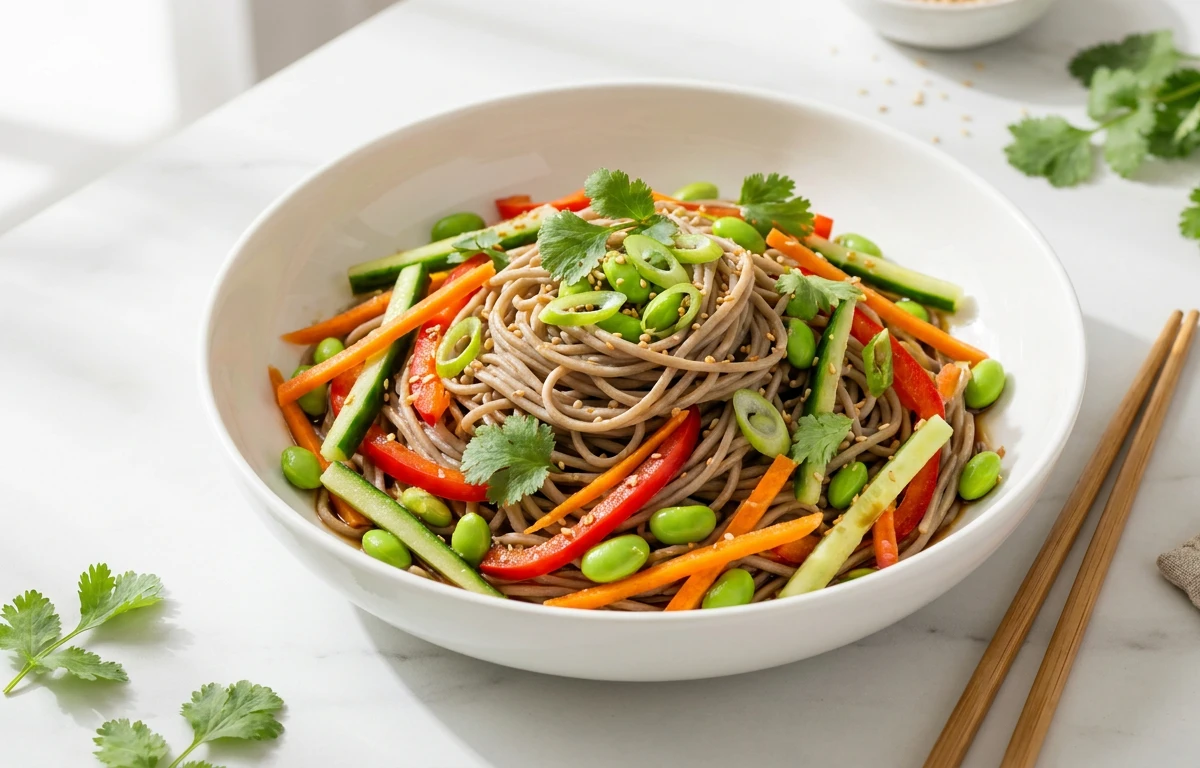
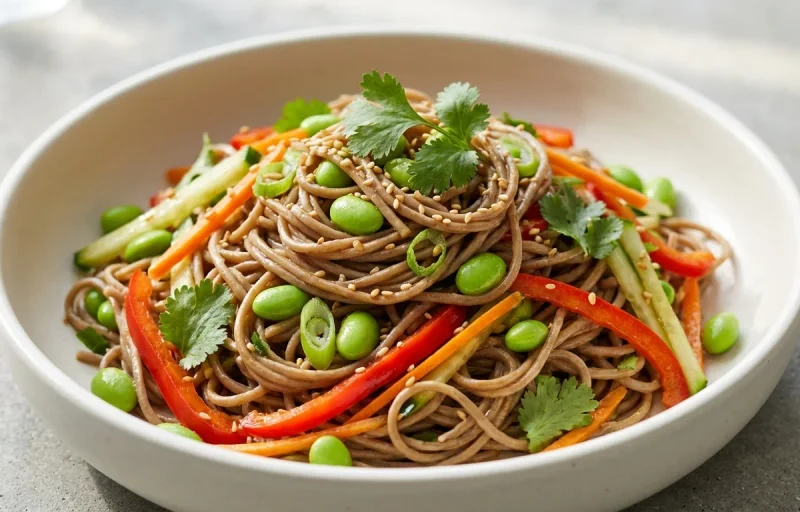
Grain6 recipes
soba noodles.
VegetarianVeganGluten-freeDairy-freeNut-freePeanut-freeSoy-freeEgg-freeShellfish-freeHoney-freeAlcohol-free
ALSO KNOWN AS
buckwheat noodlesKuttu Noodlessoba noodlesjapanese noodlescooked soba noodles
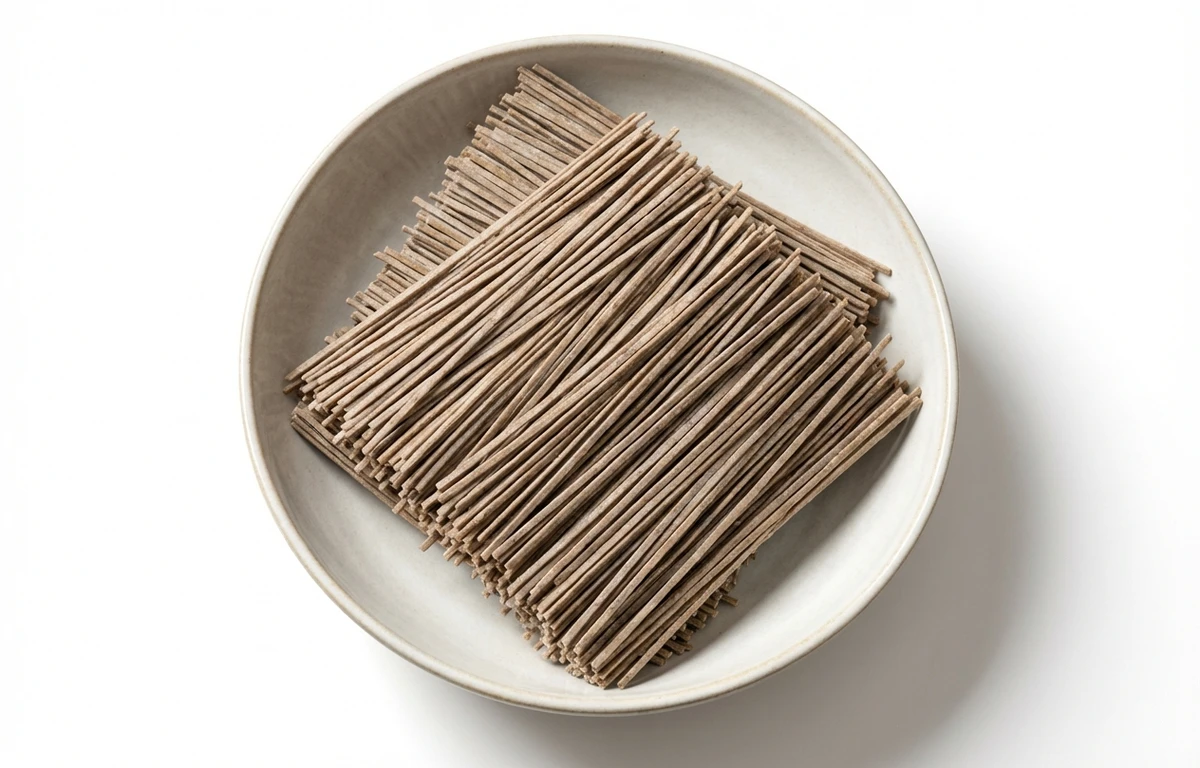
SERVING
CALORIES
113
PROTEIN
5.1g
CARBS
21.4g
FAT
0.30g
FIBER
2.5g
NUTRITION PROFILE · per 100 g
Everything in this ingredient.
MACRONUTRIENTS
Calories113kcal—
Protein5.1g10%
Carbohydrates21.4g8%
Fiber2.5g9%
Sugar0.20g0%
Total fat0.30g0%
Saturated fat0.05g0%
Cholesterol0mg0%
Water72g—
MINERALS
Sodium1.0mg0%
Potassium69mg1%
Calcium12mg1%
Iron0.70mg4%
Magnesium54.1mg13%
Phosphorus145mg12%
Zinc0.97mg9%
Copper0.13mg14%
Manganese0.74mg32%
VITAMINS
Vitamin A0µg0%
Vitamin C0mg0%
Vitamin D0µg0%
Vitamin K1.0µg1%
Thiamin (B1)0.27mg23%
Riboflavin (B2)0.07mg5%
Niacin (B3)1.8mg11%
Pantothenic acid (B5)0.54mg11%
Vitamin B60.14mg8%
Folate (B9)34.2µg9%
Vitamin B120µg0%
%DV based on a 2,000 cal diet. Source: USDA FoodData Central. A dash in the %DV column means there’s no established Daily Value for that nutrient.
MEASUREMENT CONVERSIONS
How much is what.
1 cup110g
1 tablespoon6.9g
1 teaspoon2.3g
1 oz28.4g
1 lb453.6g
1 ml0.5g
1 liter458.3g
HEALTH BENEFITS
Why eat it.
- ✓Buckwheat, the primary ingredient, is a source of complete protein, containing all nine essential amino acids, which is rare for a plant-based food.
- ✓Rich in the flavonoid rutin, which may support cardiovascular health by improving circulation and strengthening blood vessels.
- ✓A good source of manganese, essential for bone health, metabolism, and antioxidant function.
- ✓High in soluble fiber, which can help regulate blood sugar levels and promote digestive health.
COOKING TIPS
In the kitchen.
- 1Cook in a large pot of rapidly boiling water, as soba noodles can foam up significantly.
- 2Do not overcook; test for an 'al dente' texture, typically after 4-7 minutes depending on thickness.
- 3After draining, immediately rinse the noodles thoroughly under cold running water to remove excess starch and stop the cooking process, which is crucial for texture.
- 4Serve either chilled with a dipping sauce (zaru soba) or hot in a savory broth (kake soba).
STORAGE
Keep it fresh.
- Store dried soba noodles in an airtight container in a cool, dark pantry for up to one year.
- Keep cooked soba noodles in a sealed container in the refrigerator for 2-3 days. Rinse with cold water before storing to prevent clumping.
FAQ
Frequently asked questions.
Are soba noodles healthy?
Yes, soba noodles are highly nutritious as they are made from buckwheat, which provides a complete plant-based protein containing all nine essential amino acids. They are rich in manganese for bone health and rutin, a flavonoid that supports cardiovascular health and circulation.
How much protein and calories are in soba noodles?
A 100g serving of cooked soba noodles contains approximately 113 calories and 5.1g of protein. They are very low in fat (0.3g) and provide about 21.4g of carbohydrates, making them a lighter alternative to many traditional wheat pastas.
Are soba noodles gluten-free?
Pure buckwheat soba is naturally gluten-free; however, many commercial brands mix buckwheat with wheat flour to improve the texture. If you have a gluten intolerance, ensure the packaging specifically states '100% buckwheat' or 'gluten-free'.
Are soba noodles vegan?
Yes, traditional soba noodles are vegan as they are made from buckwheat flour, water, and sometimes wheat flour. They do not contain eggs or dairy, though you should always check the label for any non-traditional additives.
How do you cook soba noodles properly?
Boil soba noodles in unsalted water for 4 to 7 minutes until tender. Immediately after draining, rinse them thoroughly under cold running water to remove excess starch, which prevents them from becoming gummy or sticking together.
What do soba noodles taste like?
Soba noodles have a distinct nutty, earthy flavor and a slightly dense, grainy texture. This unique profile makes them more flavorful than standard white pasta and allows them to pair well with bold ingredients like ginger, soy, and sesame.
Are soba noodles good for weight loss?
Soba noodles can be beneficial for weight loss because they are lower in calories than many other pastas and contain soluble fiber. This fiber helps regulate blood sugar levels and promotes a feeling of fullness, which can help reduce overall calorie intake.
Can you eat soba noodles cold?
Yes, soba is frequently served cold, a style known as Zaru Soba, accompanied by a chilled dipping sauce. Rinsing the noodles in cold water after cooking is essential for this preparation to maintain their firm, springy texture.
How do you store cooked soba noodles?
Store cooked and rinsed soba noodles in an airtight container in the refrigerator for up to 3 to 5 days. To prevent them from clumping during storage, toss them with a small amount of sesame or vegetable oil before refrigerating.
What is the difference between soba and ramen noodles?
Soba is made primarily from buckwheat flour, resulting in a brown color and nutty taste, whereas ramen is made from wheat flour and alkaline water, giving it a yellow hue and chewy texture. Soba is generally higher in fiber and minerals compared to standard ramen.
RECIPES
Cook with soba noodles.
6 recipes · sorted by what’s quick