
Protein10 recipes
sprouted mung beans.
VegetarianVeganGluten-freeDairy-freeNut-freePeanut-freeSoy-freeEgg-freeShellfish-freeHoney-freeAlcohol-free
ALSO KNOWN AS
sprouted moongmoong sproutshara moong ankuritmung bean sproutssprouted mung beansankurit moongSprouted Moong Beans
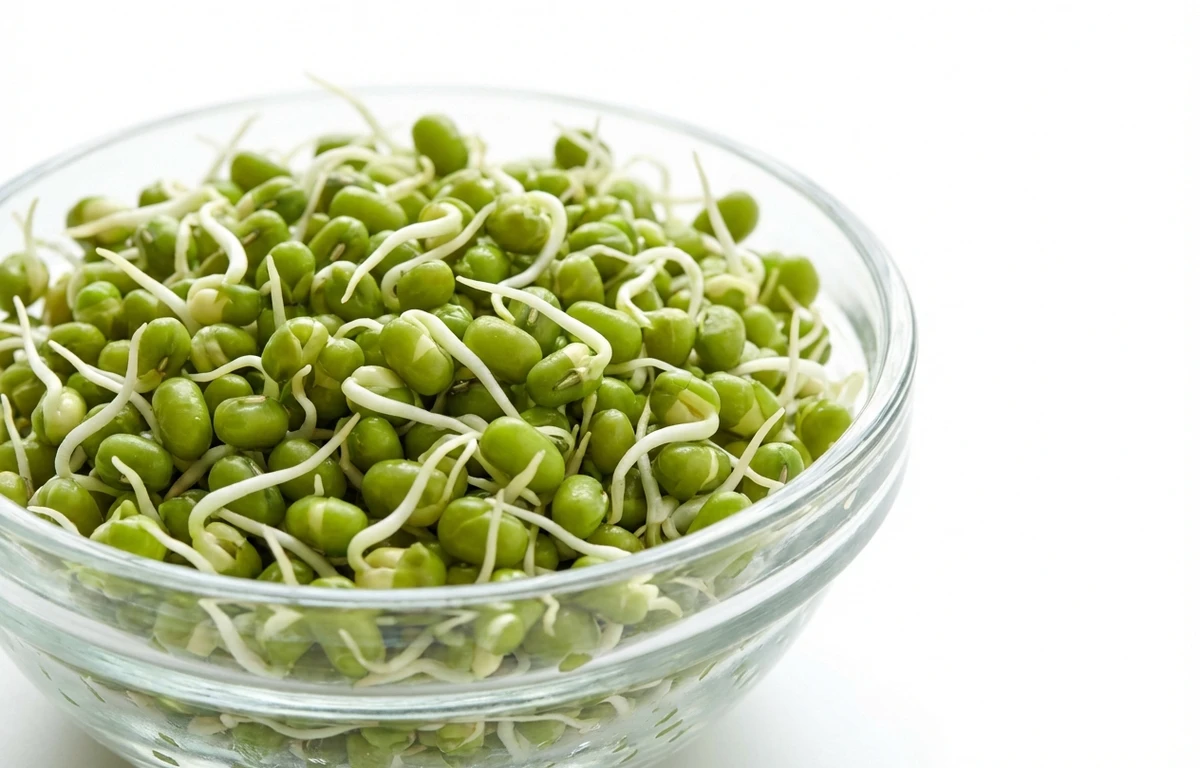
SERVING
CALORIES
38
PROTEIN
3.0g
CARBS
5.9g
FAT
0.18g
FIBER
1.8g
NUTRITION PROFILE · per 100 g
Everything in this ingredient.
MACRONUTRIENTS
Calories37.5kcal—
Protein3.0g6%
Carbohydrates5.9g2%
Fiber1.8g6%
Sugar4.1g8%
Total fat0.18g0%
Saturated fat0.05g0%
Trans fat0g—
Cholesterol0mg0%
Water90.4g—
MINERALS
Sodium6.0mg0%
Potassium149mg3%
Calcium13mg1%
Iron0.91mg5%
Magnesium21mg5%
Phosphorus54mg4%
Zinc0.41mg4%
Copper0.16mg18%
Manganese0.19mg8%
Selenium0.60µg1%
VITAMINS
Vitamin A1.0µg0%
Vitamin C13.2mg15%
Vitamin D0µg0%
Vitamin E0.10mg1%
Vitamin K33µg28%
Thiamin (B1)0.08mg7%
Riboflavin (B2)0.12mg9%
Niacin (B3)0.75mg5%
Pantothenic acid (B5)0.38mg8%
Vitamin B60.09mg5%
Folate (B9)61µg15%
Vitamin B120µg0%
%DV based on a 2,000 cal diet. Source: USDA FoodData Central. A dash in the %DV column means there’s no established Daily Value for that nutrient.
MEASUREMENT CONVERSIONS
How much is what.
1 cup104g
1 tablespoon6.5g
1 teaspoon2.2g
1 ml0.4g
1 liter433.3g
HEALTH BENEFITS
Why eat it.
- ✓Highly digestible due to the sprouting process, which reduces anti-nutrients like phytic acid and increases enzyme activity.
- ✓Rich in vitamins C and K, folate, and antioxidants, with nutrient levels increasing during germination.
- ✓Good source of dietary fiber and plant-based protein, which aids in digestion, blood sugar regulation, and satiety.
- ✓Low in calories and fat, making them a nutrient-dense addition to a weight management diet.
- ✓May support heart health by helping to lower bad cholesterol levels.
COOKING TIPS
In the kitchen.
- 1Rinse thoroughly under cold water before use. They can be eaten raw in salads, wraps, and sandwiches for a crisp texture.
- 2For a tender-crisp texture, lightly steam or stir-fry for only 1-3 minutes. Overcooking will make them mushy.
- 3Add to soups, curries, or noodle dishes during the last few minutes of cooking to preserve their crunch and nutritional value.
- 4Can be blended into a batter to make savory pancakes, such as the South Indian dish Pesarattu, or added to stir-fries and spring rolls.
STORAGE
Keep it fresh.
- Store fresh sprouted mung beans in the refrigerator in a breathable bag or a container lined with a paper towel to absorb excess moisture.
- For best quality and safety, consume within 2 to 5 days of purchase or sprouting. Rinse daily if storing for longer periods.
FAQ
Frequently asked questions.
Are sprouted mung beans healthy?
Yes, sprouted mung beans are highly nutritious and low in calories. The sprouting process increases the levels of vitamin C, folate, and antioxidants while making minerals like iron and magnesium easier for the body to absorb.
How much protein is in sprouted mung beans?
100g of sprouted mung beans contains approximately 3.04g of plant-based protein. While this is lower than the protein density of dried beans, the protein in sprouts is often more bioavailable and easier for the body to process.
Are sprouted mung beans good for weight loss?
Absolutely, as they contain only 30 calories per 100g and are virtually fat-free. Their combination of dietary fiber and protein helps promote satiety, which can reduce overall calorie intake throughout the day.
Are sprouted mung beans keto-friendly?
Yes, they can be included in a keto diet in moderation. With only 5.94g of total carbohydrates per 100g, they are significantly lower in carbs than unsprouted legumes and provide essential nutrients without a large insulin spike.
Can I eat sprouted mung beans raw?
While many people eat them raw in salads, there is a risk of bacterial contamination during the sprouting process. To minimize risk, especially for children or pregnant women, it is recommended to lightly steam or sauté them before consumption.
How do you cook sprouted mung beans?
They cook very quickly; you can steam them for 3-5 minutes or stir-fry them for 2 minutes to maintain their crunch. They are also excellent when added to soups or stews during the last few minutes of cooking.
Do sprouted mung beans cause gas?
Sprouted mung beans are much less likely to cause gas than regular beans. The germination process breaks down the complex sugars (oligosaccharides) that are typically responsible for bloating and flatulence.
How long do sprouted mung beans last in the fridge?
Fresh sprouted mung beans typically last between 3 to 5 days in the refrigerator. To keep them fresh, store them in a container lined with a paper towel to absorb excess moisture and ensure they have some airflow.
How can I tell if sprouted mung beans have gone bad?
Spoiled sprouts will feel slimy or mushy to the touch and may develop a brown or greyish discoloration. If they emit a sour or musty odor, they have likely expired and should be discarded.
Are sprouted mung beans vegan and gluten-free?
Yes, sprouted mung beans are naturally vegan and gluten-free. They are an excellent source of plant-based nutrition for individuals with celiac disease or those following a strict plant-based diet.
RECIPES
Cook with sprouted mung beans.
10 recipes · sorted by what’s quick



















