Vegetable2 recipes
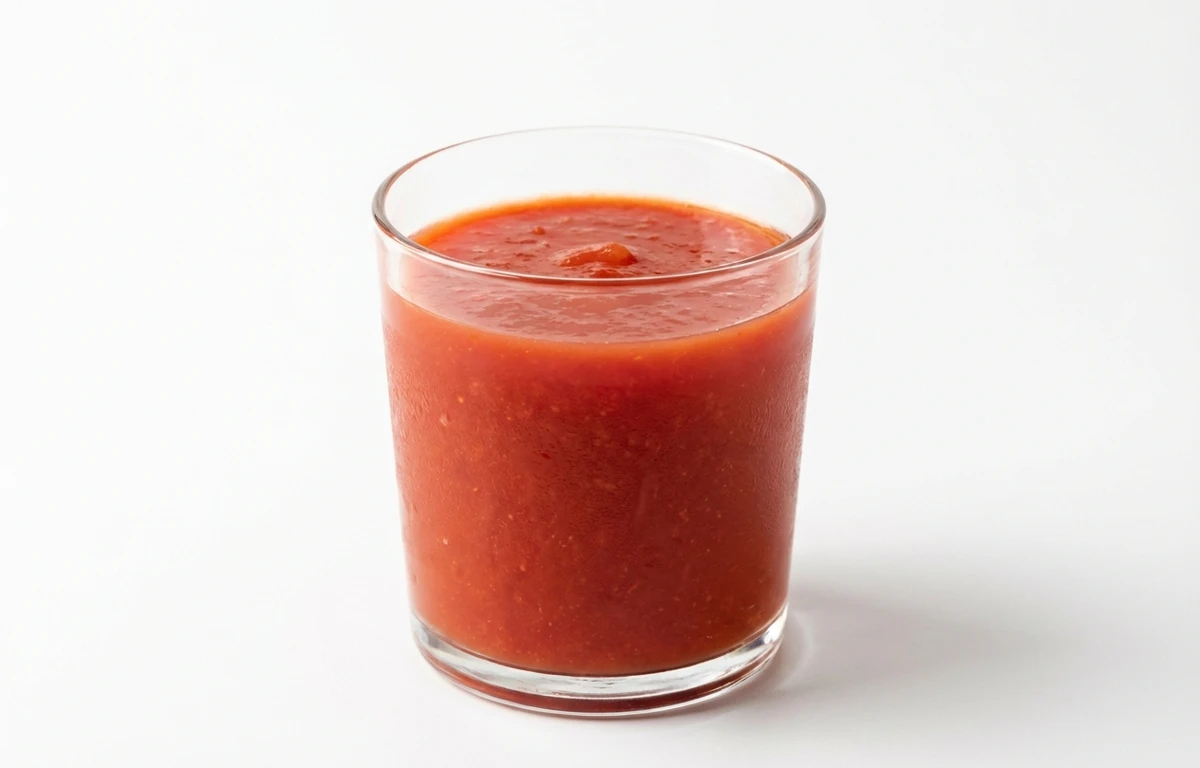
tomato juice.
VegetarianVeganGluten-freeDairy-freeNut-freePeanut-freeSoy-freeEgg-freeShellfish-freeHoney-freeAlcohol-free
ALSO KNOWN AS
tamatar juice
SERVING
CALORIES
17
PROTEIN
0.85g
CARBS
3.5g
FAT
0.29g
FIBER
0.40g
This ingredient is flagged as naturally gluten-free. Per 100 g, it provides 2.3 µg of vitamin K.
NUTRITION PROFILE · per 100 g
Everything in this ingredient.
MACRONUTRIENTS
Calories17kcal—
Protein0.85g2%
Carbohydrates3.5g1%
Fiber0.40g1%
Sugar2.6g5%
Total fat0.29g0%
Saturated fat0.02g0%
Trans fat0g—
Cholesterol0mg0%
Water94.2g—
MINERALS
Sodium253mg11%
Potassium217mg5%
Calcium10mg1%
Iron0.39mg2%
Magnesium11mg3%
Phosphorus19mg2%
Zinc0.11mg1%
Copper0.04mg4%
Manganese0.07mg3%
Selenium0.50µg1%
VITAMINS
Vitamin A23µg3%
Vitamin C70.1mg78%
Vitamin D0µg0%
Vitamin E0.32mg2%
Vitamin K2.3µg2%
Thiamin (B1)0.10mg8%
Riboflavin (B2)0.08mg6%
Niacin (B3)0.67mg4%
Vitamin B60.07mg4%
Folate (B9)20µg5%
Vitamin B120µg0%
%DV based on a 2,000 cal diet. Source: USDA FoodData Central. A dash in the %DV column means there’s no established Daily Value for that nutrient.
MEASUREMENT CONVERSIONS
How much is what.
1 cup243g
1 tablespoon15.2g
1 teaspoon5.1g
1 ml1g
1 liter1012.5g
HEALTH BENEFITS
Why eat it.
- ✓Provides potassium, an essential mineral for regulating blood pressure and fluid balance.
- ✓Contains Vitamin A (as beta-carotene), which is important for vision and cell growth.
COOKING TIPS
In the kitchen.
- 1Use as a flavorful base for soups like gazpacho or classic tomato soup.
- 2Incorporate into marinades for meat or tofu to add acidity and moisture.
- 3Freeze in ice cube trays and add to sauces, stews, or smoothies for a quick flavor boost.
- 4Serves as the essential ingredient for cocktails like the Bloody Mary or non-alcoholic drinks like the Virgin Mary.
STORAGE
Keep it fresh.
- Store unopened cans or bottles in a cool, dark place like a pantry for up to 18 months.
- Once opened, transfer to a sealed glass or plastic container, refrigerate, and consume within 5-7 days.
FAQ
Frequently asked questions.
How many calories and carbs are in tomato juice?
Tomato juice is a low-calorie beverage, containing approximately 17 calories and 3.53g of carbohydrates per 100g. It also provides about 0.85g of protein and is virtually fat-free, making it a light choice for most diets.
Is tomato juice keto-friendly?
In moderation, tomato juice can fit into a keto diet as it contains about 3.5g of net carbs per 100g. However, you should monitor portion sizes and check labels for added sugars in commercial brands to ensure you stay within your daily carb limits.
Is tomato juice vegan and gluten-free?
Pure tomato juice is naturally vegan and gluten-free. However, always check the label of pre-mixed versions, such as Bloody Mary mixes, which may contain non-vegan ingredients like Worcestershire sauce (which often contains anchovies) or gluten-based thickeners.
What is the best way to store tomato juice?
Unopened canned or bottled tomato juice should be stored in a cool, dry place. Once opened, it must be refrigerated in a sealed glass or plastic container and is typically best consumed within 5 to 7 days.
Can I use tomato juice in cooking?
Absolutely. Tomato juice is a versatile ingredient used as a base for soups like gazpacho, a poaching liquid for proteins, or a flavor enhancer in stews and sauces. It is also the primary base for cocktails like the Bloody Mary.
How do I know if tomato juice has spoiled?
Signs of spoilage include a sour or fermented smell, visible mold around the cap or surface, or a significant change in color. If the juice tastes unusually fizzy or the container is bulging, it should be discarded immediately.
Is tomato juice high in sodium?
While tomatoes are naturally low in sodium, many commercial tomato juices contain high amounts of added salt for flavor and preservation. To keep your intake low, look for labels marked 'low-sodium' or 'no salt added'.
Can I substitute tomato juice with tomato paste?
Yes, you can create a quick substitute by mixing one part tomato paste with four parts water. Whisk the mixture thoroughly until smooth to achieve a consistency and flavor profile similar to standard tomato juice for use in recipes.
RECIPES
Cook with tomato juice.
2 recipes · sorted by what’s quick