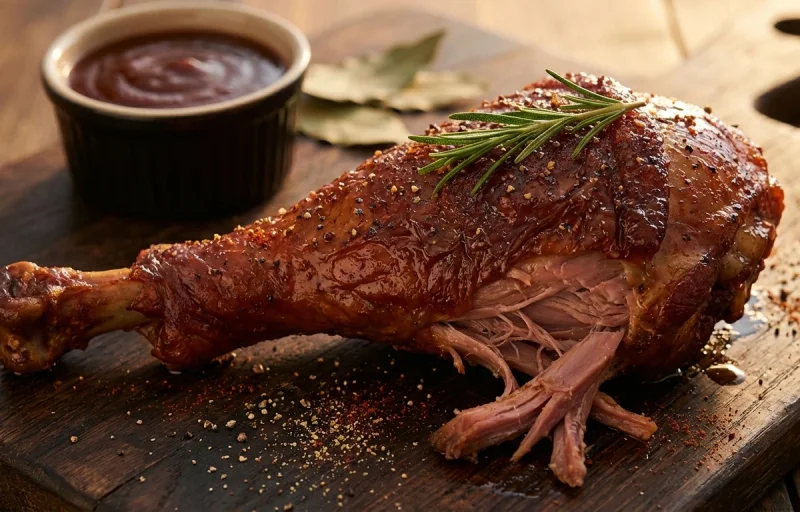
Protein1 recipes
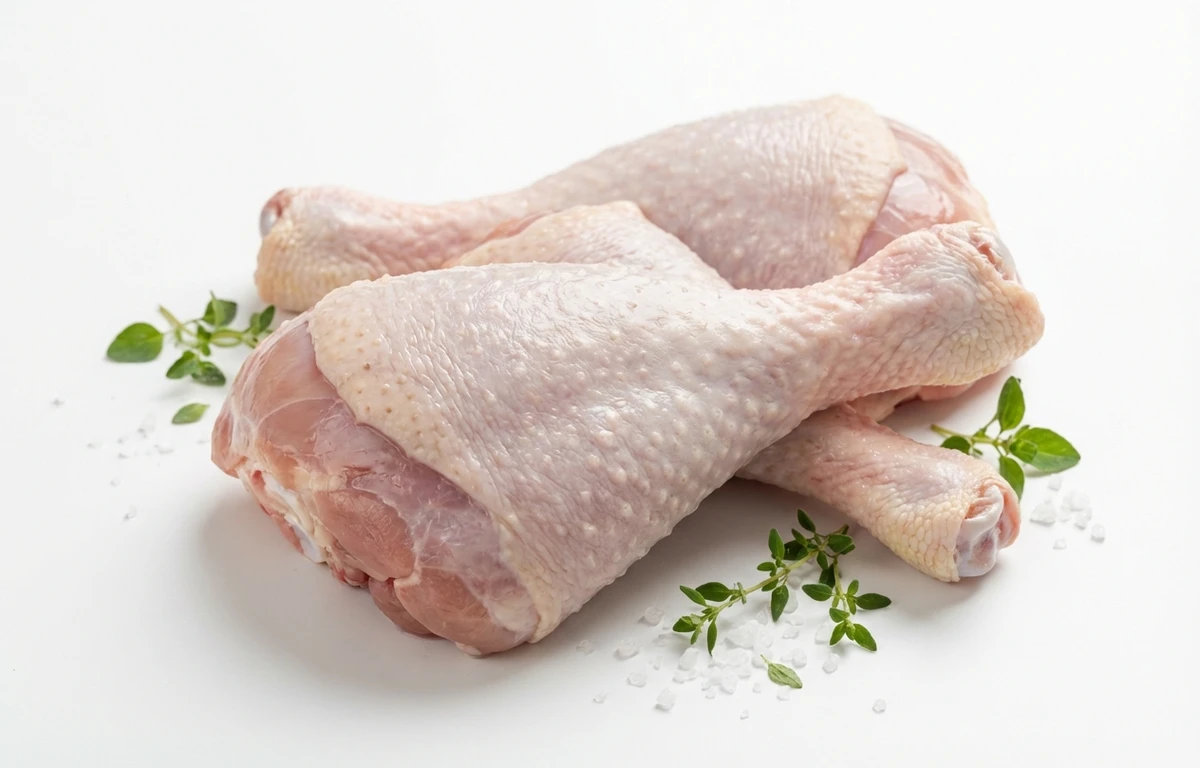
turkey legs.
VegetarianVeganGluten-freeDairy-freeNut-freePeanut-freeSoy-freeEgg-freeShellfish-freeHoney-freeAlcohol-free
ALSO KNOWN AS
turkey drumsticksraw turkey drumstickraw turkey leg
SERVING
CALORIES
196
PROTEIN
27.9g
CARBS
0g
FAT
8.7g
FIBER
0g
This ingredient is flagged as naturally gluten-free. Per 100 g, it provides 0.50 µg of vitamin K.
NUTRITION PROFILE · per 100 g
Everything in this ingredient.
MACRONUTRIENTS
Calories196kcal—
Protein27.9g56%
Carbohydrates0g0%
Fiber0g0%
Sugar0g0%
Total fat8.7g11%
Saturated fat2.5g13%
Cholesterol100mg33%
MINERALS
Sodium70mg3%
Potassium290mg6%
Calcium16mg1%
Iron2.1mg12%
Magnesium29mg7%
Phosphorus220mg18%
Zinc2.5mg23%
Copper0.15mg17%
Manganese0.02mg1%
Selenium25µg45%
VITAMINS
Vitamin A0µg0%
Vitamin C0mg0%
Vitamin D0µg0%
Vitamin E0.10mg1%
Vitamin K0.50µg0%
Thiamin (B1)0.08mg7%
Riboflavin (B2)0.20mg15%
Niacin (B3)6.5mg41%
Pantothenic acid (B5)0.70mg14%
Vitamin B60.40mg24%
Folate (B9)8.0µg2%
Vitamin B120.80µg33%
%DV based on a 2,000 cal diet. Source: USDA FoodData Central. A dash in the %DV column means there’s no established Daily Value for that nutrient.
MEASUREMENT CONVERSIONS
How much is what.
1 piece450g
HEALTH BENEFITS
Why eat it.
- ✓Excellent source of high-quality protein, essential for muscle building, repair, and overall body function.
- ✓Rich in B vitamins, particularly niacin (B3) and B6, which support energy metabolism and nervous system health.
COOKING TIPS
In the kitchen.
- 1Ideal for slow-cooking methods like braising, slow-roasting, or smoking, which break down connective tissues and result in tender, flavorful meat.
- 2For crispy skin, pat the legs completely dry with paper towels, rub with oil, and season generously before roasting at a high temperature (e.g., 400°F / 200°C).
- 3Always cook to a safe internal temperature of 165°F (74°C), measured with a meat thermometer inserted into the thickest part of the meat without touching the bone.
- 4Brining the legs in a saltwater solution for several hours before cooking can significantly enhance their moisture and flavor.
STORAGE
Keep it fresh.
- Store raw turkey legs in the coldest part of the refrigerator (at or below 40°F / 4°C) and use within 1-2 days.
- For long-term storage, freeze at 0°F (-18°C) in an airtight, freezer-safe bag or container for up to 9 months for best quality.
- Keep cooked turkey legs in a sealed container in the refrigerator and consume within 3-4 days.
FAQ
Frequently asked questions.
Are turkey legs healthy?
Yes, turkey legs are a nutrient-dense protein source that provides high-quality protein for muscle repair and overall body function. They are rich in B vitamins, zinc, and selenium, though they contain slightly more fat and calories than turkey breast.
Are turkey legs keto-friendly?
Yes, turkey legs are ideal for a keto or low-carb diet because they contain 0 grams of carbohydrates. Their moderate fat content (8.7g per 100g) also helps meet the fat macros required for ketosis.
What is the difference between turkey legs and turkey breast?
Turkey legs are dark meat, meaning they have a higher fat content and more myoglobin than the white meat found in the breast. This results in a richer flavor, moister texture, and higher levels of iron and zinc.
How do you cook turkey legs?
Turkey legs are best cooked using slow methods like roasting, smoking, or braising to tenderize the connective tissue. Roast them at 350°F (175°C) until the internal temperature reaches a safe 165°F (74°C).
Are turkey legs gluten-free?
Plain, raw turkey legs are naturally gluten-free. However, if you are buying pre-marinated or smoked turkey legs from a vendor, check the ingredients for gluten-containing additives in the rubs or injections.
How long do raw turkey legs last in the refrigerator?
Raw turkey legs should be stored in the coldest part of your refrigerator and used within 1 to 2 days. For longer storage, they should be tightly wrapped and kept in the freezer.
What do turkey legs taste like?
Turkey legs have a deep, savory, and slightly gamey flavor compared to chicken. Because they are dark meat, they are more succulent and flavorful than turkey breast, especially when roasted or smoked.
RECIPES
Cook with turkey legs.
1 recipes · sorted by what’s quick