
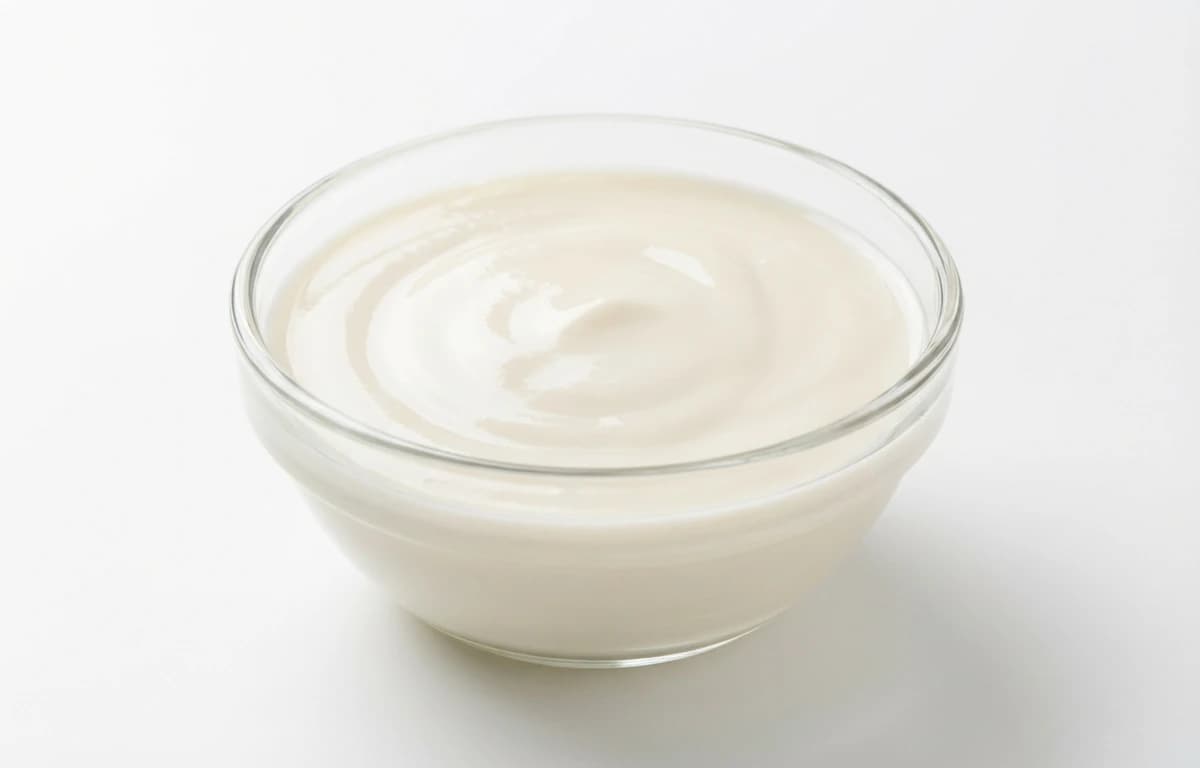
vegan yogurt
Also known as: vegan curd, dairy-free yogurt, plant-based yogurt, vegan dahi, dairy-free yogurt, plant-based yogurt, non-dairy yogurt
Loading...
Also known as: vegan curd, dairy-free yogurt, plant-based yogurt, vegan dahi, dairy-free yogurt, plant-based yogurt, non-dairy yogurt
Per 100g
Nutrition data source: USDA FoodData Central
Common measurement equivalents in grams
A vibrant and refreshing breakfast bowl featuring creamy vegan yogurt, crunchy homemade granola, sweet berries, and crisp apple slices. It's a wholesome, customizable, and delicious way to start your day.
A refreshing and nutritious start to your day. This customizable vegan yogurt bowl is packed with plant-based protein, fiber from fresh fruit and granola, and healthy fats. Ready in just 5 minutes!
Yes, vegan yogurt is a healthy dairy alternative, providing approximately 94 calories per 100g. It is typically low in saturated fat and often fortified with essential nutrients like calcium, vitamin D, and vitamin B12 to support a balanced plant-based diet.
Vegan yogurt contains about 3.5g of protein per 100g. While this is lower than traditional Greek dairy yogurt, soy-based varieties generally offer the highest protein content among plant-based options.
Yes, most vegan yogurts are made with live active cultures that provide probiotics. These beneficial bacteria are essential for supporting gut health, improving digestion, and maintaining a healthy microbiome.
Yes, vegan yogurt is naturally 100% lactose-free because it is made from plant-based sources like soy, almonds, coconuts, or oats. This makes it a safe and effective substitute for individuals with lactose intolerance or dairy allergies.
Most vegan yogurts contain around 16g of carbohydrates per 100g, which may be too high for a strict keto diet. However, unsweetened versions made from high-fat bases like coconut or almond may fit into a low-carb lifestyle if consumed in moderation.
Yes, vegan yogurt is an excellent 1:1 substitute for dairy yogurt in baking recipes like muffins and cakes to add moisture. In savory cooking, it works well in dressings and cold sauces, though it may separate if heated at very high temperatures.
The flavor depends on the base ingredient; soy is mild, almond is slightly nutty, and coconut is rich and sweet. Most varieties share the signature tangy, acidic profile of traditional yogurt due to the fermentation process.
vegan yogurt is a versatile ingredient found in cuisines around the world. With 80 calories per 100g and 3.5 grams of protein, it's a nutritious addition to many dishes.
Explore more ingredients in the dairy category with complete nutrition information.
View all dairy →Discover 1 recipes featuring vegan yogurt with step-by-step instructions.
Browse recipes →It can be a helpful part of a weight loss diet as it contains only 1.8g of fat per 100g. To maximize benefits, choose unsweetened versions to avoid the extra calories found in the 15.96g of carbohydrates typically present in flavored varieties.
Once opened, vegan yogurt should be kept refrigerated and is generally best consumed within 5 to 7 days. Always check for signs of spoilage, such as a sour smell, visible mold, or significant changes in texture.
While you can freeze vegan yogurt, the texture often becomes grainy or separated once thawed. It is best used for making frozen yogurt popsicles or as a thickener in smoothies rather than being eaten plain after freezing.