
Other10 recipes
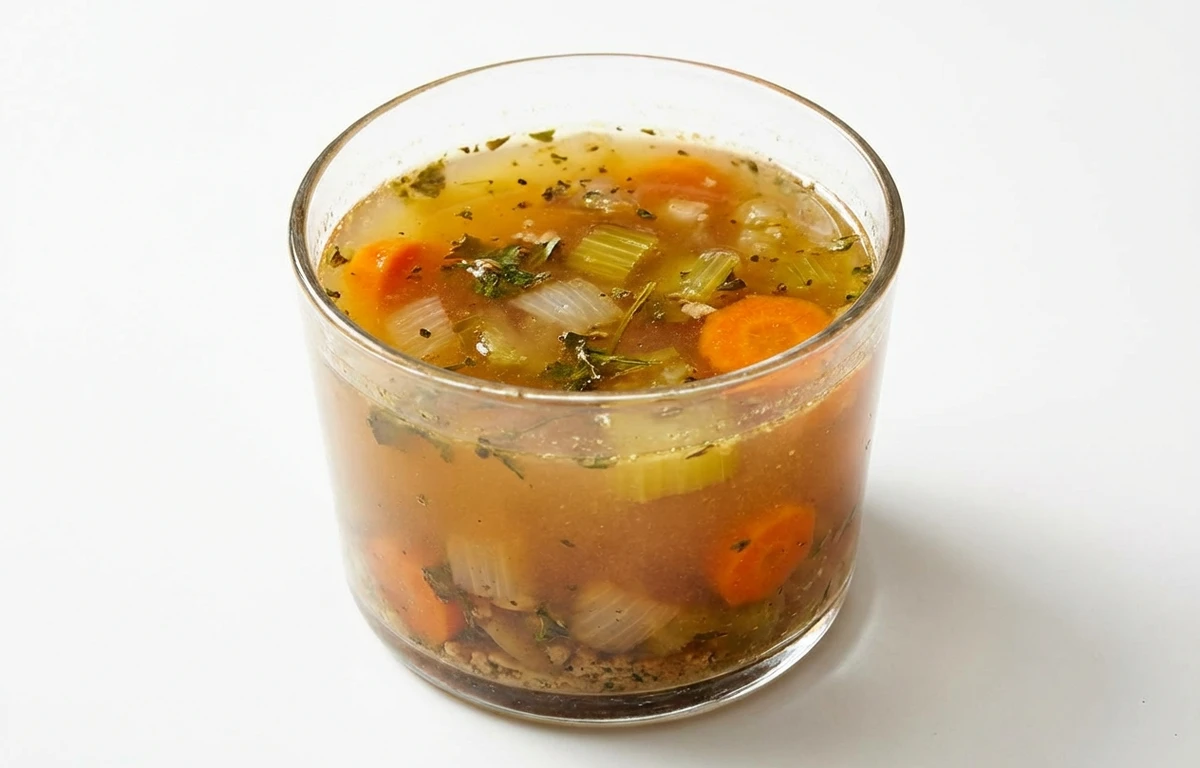
vegetable broth.
VegetarianVeganGluten-freeDairy-freeNut-freePeanut-freeSoy-freeEgg-freeShellfish-freeHoney-freeAlcohol-free
ALSO KNOWN AS
vegetable stockveggie brothveggie stocksabzi ka shorbaveg stock
SERVING
CALORIES
7
PROTEIN
0.30g
CARBS
1.5g
FAT
0.10g
FIBER
0.10g
This ingredient is flagged as naturally gluten-free. Per 100 g, it provides 0.50 µg of vitamin K.
NUTRITION PROFILE · per 100 g
Everything in this ingredient.
MACRONUTRIENTS
Calories7.0kcal—
Protein0.30g1%
Carbohydrates1.5g1%
Fiber0.10g0%
Sugar0.80g2%
Total fat0.10g0%
Saturated fat0g0%
Trans fat0g—
Cholesterol0mg0%
Water97.5g—
MINERALS
Sodium350mg15%
Potassium25mg1%
Calcium5.0mg0%
Iron0.10mg1%
Magnesium2.0mg0%
Phosphorus5.0mg0%
Zinc0.02mg0%
Copper0.01mg1%
Manganese0.02mg1%
Selenium0.10µg0%
VITAMINS
Vitamin A10µg1%
Vitamin C0.50mg1%
Vitamin D0µg0%
Vitamin E0.01mg0%
Vitamin K0.50µg0%
Thiamin (B1)0.01mg1%
Riboflavin (B2)0.01mg1%
Niacin (B3)0.10mg1%
Pantothenic acid (B5)0.05mg1%
Vitamin B60.01mg1%
Folate (B9)1.0µg0%
Vitamin B120µg0%
%DV based on a 2,000 cal diet. Source: USDA FoodData Central. A dash in the %DV column means there’s no established Daily Value for that nutrient.
MEASUREMENT CONVERSIONS
How much is what.
1 cup240g
1 tablespoon15g
1 teaspoon5g
1 oz28.4g
1 lb453.6g
1 ml1g
1 liter1000g
HEALTH BENEFITS
Why eat it.
- ✓Hydrating due to high water content
- ✓Provides trace minerals from simmered vegetables
- ✓Easy to digest for sensitive stomachs
- ✓Versatile plant-based flavor enhancer
COOKING TIPS
In the kitchen.
- 1Use as a liquid for cooking grains like quinoa or rice for extra flavor
- 2Deglaze pans with broth to incorporate browned bits into sauces
- 3Simmer with a piece of kombu or dried mushrooms for extra umami depth
STORAGE
Keep it fresh.
- Refrigerate after opening and use within 4-5 days
- Freeze in ice cube trays for easy portioning in recipes
- Store unopened cartons in a cool, dark pantry away from heat
FAQ
Frequently asked questions.
How long does vegetable broth last in the fridge?
Once opened, commercial vegetable broth typically lasts 4 to 5 days in the refrigerator. Homemade broth should be used within 3 to 4 days.
Can I freeze vegetable broth?
Yes, vegetable broth freezes very well. It can be stored in an airtight container or freezer bag for up to 6 months.
What is the difference between vegetable broth and vegetable stock?
Broth is usually seasoned and lighter, intended for drinking or as a soup base. Stock is often more concentrated and unseasoned, used as a foundation for other dishes.
What can I use as a substitute for vegetable broth?
You can use water with a bouillon cube, mushroom soaking liquid, or even water simmered with a few aromatics like onion, carrot, and celery.
Is vegetable broth always vegan?
Generally yes, but some commercial brands may use honey or animal-derived flavor enhancers. Always check the label if you are strictly vegan.
How can I tell if vegetable broth has gone bad?
Look for a sour smell, cloudy appearance, or any signs of mold. If the carton is bloated, discard it immediately.
Is vegetable broth high in sodium?
Standard commercial vegetable broth can be very high in sodium. Look for 'low sodium' or 'no salt added' versions if you are monitoring salt intake.
Can I use vegetable broth instead of water for rice?
Yes, substituting water with vegetable broth is an excellent way to add flavor and nutrients to rice, quinoa, and other grains.
Does vegetable broth contain gluten?
Most vegetable broths are naturally gluten-free, but some brands use yeast extract derived from barley or other gluten-containing thickeners. Check for a gluten-free certification.
RECIPES
Cook with vegetable broth.
10 recipes · sorted by what’s quick



















