
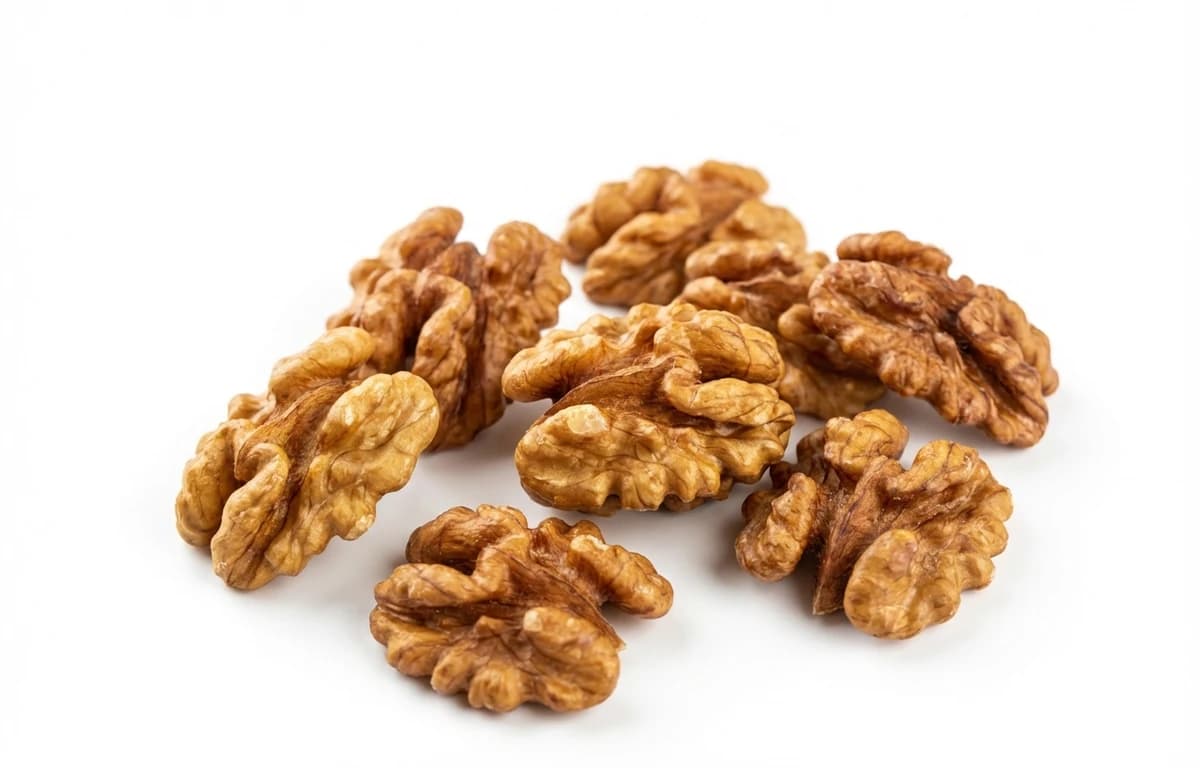
walnut
Also known as: akhrot
Loading...
Also known as: akhrot
Per 100g
Nutrition data source: USDA FoodData Central
Common measurement equivalents in grams
A warm, comforting bowl of creamy oatmeal, studded with juicy blueberries and crunchy walnuts. It's a wholesome, fiber-rich start to your day, naturally sweetened with a hint of maple syrup.
A warm, comforting bowl of oatmeal topped with creamy Greek yogurt, crisp apple, and crunchy walnuts. It's a wholesome and satisfying breakfast that's ready in minutes, perfect for a busy morning.
A simple, refreshing, and healthy bowl combining creamy yogurt, juicy pomegranate arils, crunchy walnuts, and a hint of sweetness. Perfect for a quick breakfast, a light dessert, or a healthy snack.
A vibrant and satisfying salad packed with textures and flavors. Tender baby spinach, fluffy quinoa, crunchy walnuts, and salty feta are all brought together with a zesty lemon-dijon vinaigrette. Perfect for a nutritious lunch or a light dinner.
A vibrant, protein-rich bowl that's both satisfying and refreshing. Creamy cottage cheese is topped with sweet berries, crunchy walnuts, and zesty orange for a perfect no-cook breakfast or snack.
Rancid walnuts will have a sharp, bitter taste and a smell similar to paint thinner or old oil. If they look shriveled or have mold, discard them.
Shelled walnuts should be kept in an airtight container in the fridge or freezer. Their high oil content makes them spoil quickly at room temperature.
Pecans are the best substitute due to their similar texture and oil content. Hazelnuts or almonds can also work depending on the recipe.
Yes, in moderation. Despite being calorie-dense, their protein and fiber content help promote fullness and satiety.
No, the skin is edible and contains most of the walnut's antioxidants, though it can be slightly bitter.
Toast them in a single layer at 350°F (175°C) for 5-10 minutes, checking frequently and tossing them halfway through.
Not necessarily. While walnuts are tree nuts and peanuts are legumes, cross-contamination is common, and many people are allergic to both.
Walnuts are particularly high in Vitamin B6, Folic Acid (B9), and Vitamin E.
walnut is a versatile ingredient found in cuisines around the world. With 654 calories per 100g and 15.2 grams of protein, it's a nutritious addition to many dishes.
Explore more ingredients in the nut seed category with complete nutrition information.
View all nut seed →