Other
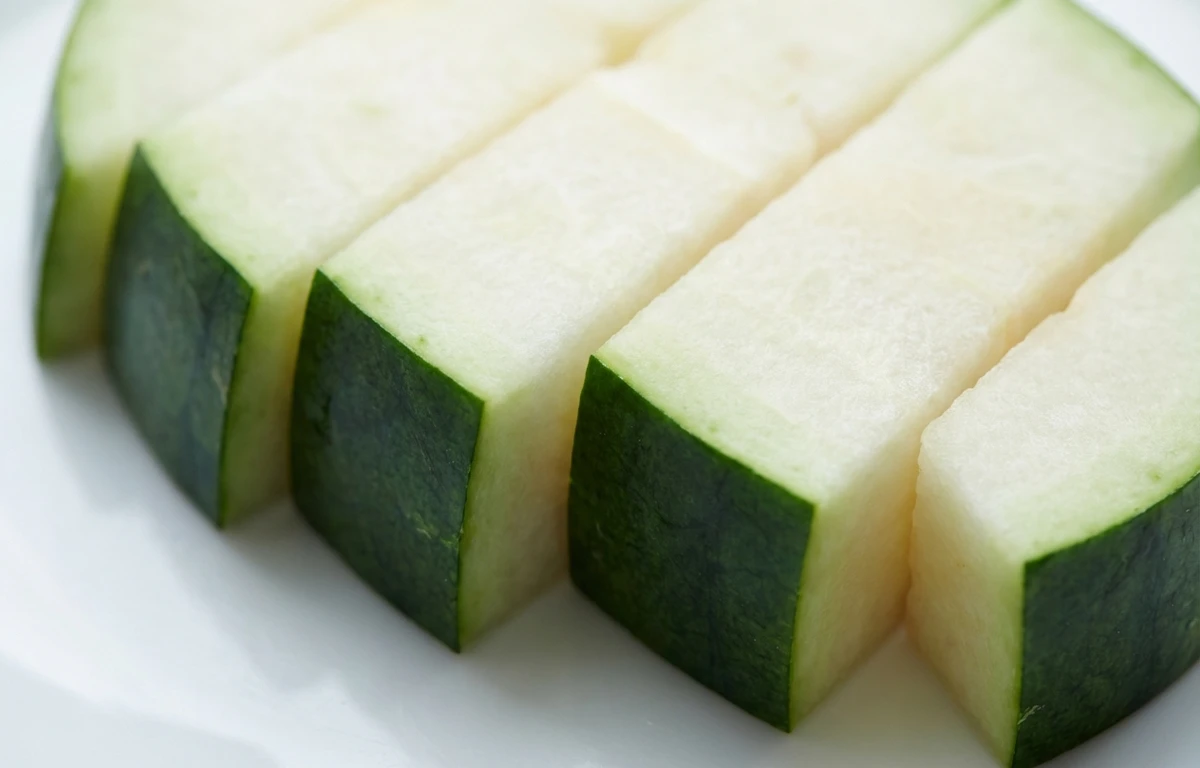
watermelon rind.
VegetarianVeganGluten-freeDairy-freeNut-freePeanut-freeSoy-freeEgg-freeShellfish-freeHoney-freeAlcohol-free
ALSO KNOWN AS
watermelon peeltarbooj ka chilka
SERVING
CALORIES
19
PROTEIN
0.60g
CARBS
3.7g
FAT
0.20g
FIBER
0.40g
This ingredient is flagged as naturally gluten-free. Per 100 g, it provides 0.10 µg of vitamin K.
NUTRITION PROFILE · per 100 g
Everything in this ingredient.
MACRONUTRIENTS
Calories19kcal—
Protein0.60g1%
Carbohydrates3.7g1%
Fiber0.40g1%
Sugar2.5g5%
Total fat0.20g0%
Saturated fat0.03g0%
Cholesterol0mg0%
Water95.1g—
MINERALS
Sodium2.0mg0%
Potassium112mg2%
Calcium7.0mg1%
Iron0.20mg1%
Magnesium10mg2%
Phosphorus11mg1%
Zinc0.10mg1%
Copper0.04mg4%
Manganese0.04mg2%
Selenium0.10µg0%
VITAMINS
Vitamin A4.0µg0%
Vitamin C8.1mg9%
Vitamin D0µg0%
Vitamin E0.05mg0%
Vitamin K0.10µg0%
Thiamin (B1)0.03mg3%
Riboflavin (B2)0.02mg2%
Niacin (B3)0.20mg1%
Pantothenic acid (B5)0.10mg2%
Vitamin B60.04mg2%
Folate (B9)3.0µg1%
%DV based on a 2,000 cal diet. Source: USDA FoodData Central. A dash in the %DV column means there’s no established Daily Value for that nutrient.
MEASUREMENT CONVERSIONS
How much is what.
1 cup160g
1 tablespoon10g
1 teaspoon3.3g
1 ml0.7g
1 liter666.7g
HEALTH BENEFITS
Why eat it.
- ✓Rich in citrulline, an amino acid that may improve blood flow and heart health.
- ✓A good source of dietary fiber, which aids digestion and promotes a feeling of fullness.
- ✓High in water content, contributing to overall hydration.
COOKING TIPS
In the kitchen.
- 1Always peel off the tough, dark green outer layer before cooking, using only the firm white part.
- 2The rind is excellent for pickling with a brine of vinegar, sugar, and spices like cinnamon and cloves.
- 3Dice the rind and add it to stir-fries or curries; it has a crisp texture similar to cucumber and absorbs flavors well.
- 4Blend raw rind into smoothies for an extra boost of fiber, citrulline, and hydration without significantly altering the flavor.
STORAGE
Keep it fresh.
- Store fresh, unpeeled watermelon rind in an airtight container in the refrigerator for up to 5 days.
- For longer storage, chop the rind and freeze it in a single layer on a baking sheet before transferring to a freezer bag, where it can last for several months.
- Pickled watermelon rind can be kept in a sealed jar in the refrigerator for several weeks to a few months.
FAQ
Frequently asked questions.
How many calories are in watermelon rind?
Watermelon rind is very low in calories, containing approximately 15 calories per 100g. It also contains about 3.7g of carbohydrates and 0.6g of protein, making it a light, nutrient-dense vegetable option.
Is watermelon rind keto-friendly?
Yes, watermelon rind is keto-friendly. With only 3.7g of carbohydrates per 100g, it is much lower in sugar than the red flesh of the watermelon and can easily fit into a low-carb or ketogenic diet.
Can you eat watermelon rind raw?
Yes, you can eat watermelon rind raw, though it has a very firm and crunchy texture similar to a cucumber. It is best enjoyed raw when thinly sliced into salads or blended into refreshing smoothies.
What does watermelon rind taste like?
Watermelon rind has a mild, neutral, and refreshing flavor that closely resembles a cucumber or jicama. Because it isn't sweet, it works well in savory dishes like stir-fries, pickles, and slaws.
How do you cook watermelon rind?
Common cooking methods include pickling it in a brine of vinegar and sugar, stir-frying it with garlic and soy sauce, or adding it to curries. It holds its shape well during cooking and absorbs the flavors of the spices it is paired with.
Do I need to peel the green skin off the watermelon rind?
Yes, it is generally recommended to use a vegetable peeler to remove the very thin, tough green outer skin. The edible part is the white and light-green flesh located between the outer skin and the red fruit.
How do you store watermelon rind?
Store prepared watermelon rind in an airtight container in the refrigerator for up to 5 days. If you cannot use it immediately, you can freeze it for use in smoothies or preserve it through pickling.
RECIPES
Cook with watermelon rind.
0 recipes · sorted by what’s quick