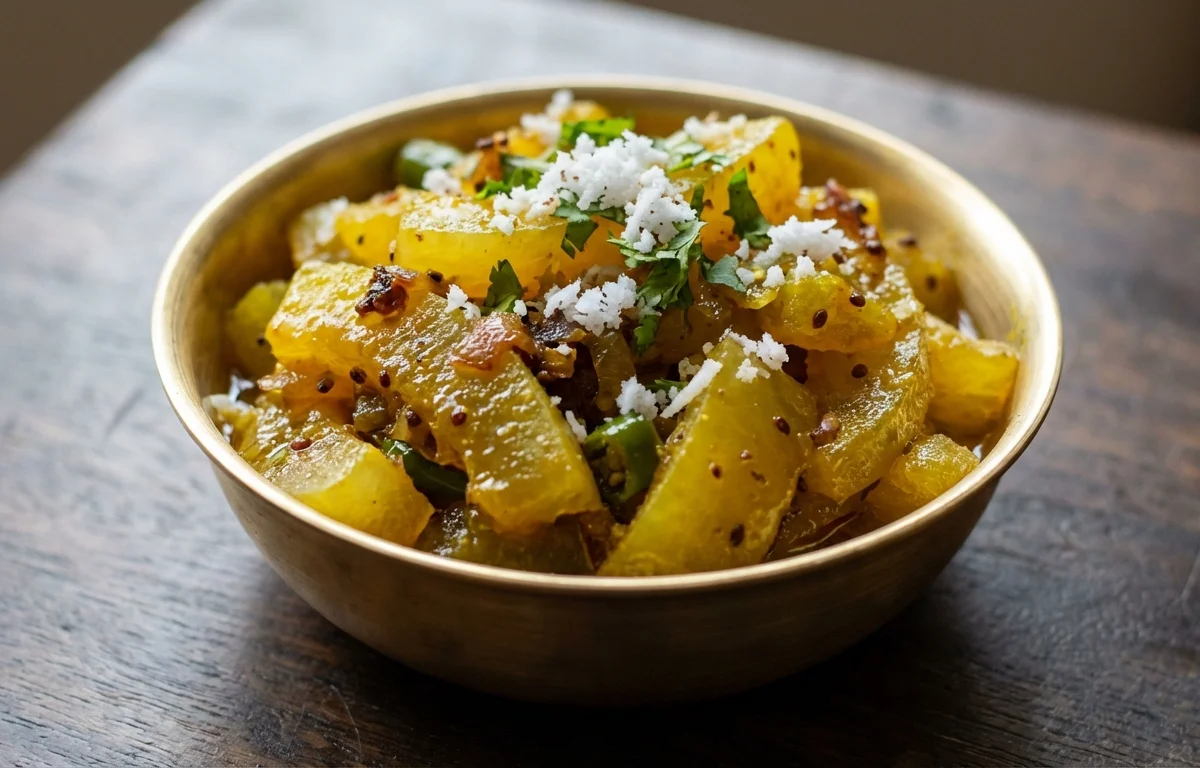
Kalangachi Bhaji
A rustic Maharashtrian-style colocasia stem curry with a lightly tangy, spiced gravy. The stems turn tender as they simmer, giving the bhaji a homely texture that pairs especially well with bhakri or plain rice.
For 4 servings
- prep · ~10 min
Clean and cut the colocasia stems.
1.Wash the colocasia stems well to remove any grit.2.Peel away the tough outer fibers.3.Cut the stems into small, even pieces.TIPWear gloves if the stems irritate your skin. - boil · ~12 min
Boil the stems until just tender.
Add the colocasia stem pieces and 1 cup water to a pot. Boil over medium heat for 10-12 minutes until just tender, then keep aside with any remaining cooking liquid.
TIPDo not overcook them at this stage or the bhaji can turn mushy. - saute · ~7 min
Cook the tempering base.
1.Heat oil in a pan over medium heat.2.Add mustard seeds and let them splutter.3.Add cumin seeds, green chili, and garlic; cook for 30 seconds.4.Add onion and sauté until soft and light golden. - saute · ~1 min
Add the spices.
Add turmeric powder, red chili powder, and goda masala. Mix quickly for a few seconds so the spices bloom without burning.
TIPKeep the heat low once the powdered spices go in. - simmer · ~10 min
Simmer the bhaji.
1.Add the boiled colocasia stems and the reserved cooking liquid.2.Add tamarind paste, jaggery, salt, and the remaining 1 cup water.3.Mix well and simmer uncovered until the flavors blend and the bhaji thickens lightly. - garnish · ~1 min
Finish with coconut and coriander leaves.
Stir in the grated fresh coconut and coriander leaves. Cook for 1 minute more, then turn off the heat.
- serve
Serve hot.
What to keep in mind.
7 tips from the recipe — small details that make a real difference to the final dish.
- 1Peel the stringy outer fibers thoroughly; any tough strands left behind stay chewy even after simmering.
- 2Boil the taro stems only until just tender, since they cook further in the masala and can turn mushy fast.
- 3Keep the reserved boiling liquid for the gravy; it carries the stem flavor and helps the bhaji thicken naturally.
- 4Add tamarind and jaggery, then taste before final simmering so the bhaji stays balanced, not sharply sour.
- 5Once goda masala goes in, keep the flame low and stir quickly to avoid a bitter, burnt spice note.
- 6Stir in coconut right at the end so it stays sweet and fresh instead of getting oily from overcooking.
- 7This bhaji tastes even better after a short rest, when the tangy-spiced gravy settles into the stems.
Adapt it for your goals.
Low-oil
Use 1 tablespoon oil and sauté the onion a little longer on low heat; good if you want a lighter everyday bhaji.
spicierSpicier
Add an extra green chili or a little more red chili powder for a sharper heat that stands up well to bhakri.
peanut coconutPeanut-coconut
Add 1-2 tablespoons roasted peanut powder with the coconut for a nuttier, thicker Maharashtrian-style gravy.
no onionNo-onion
Skip the onion and increase garlic slightly for a simpler version that still keeps the tangy-spiced profile.
Why this is on our healthy list.
Fiber-Rich Vegetable Base
Colocasia stem adds plant fiber, which helps make this rustic bhaji satisfying and well-suited to a simple meal.
Contains Protective Aromatics
Garlic, onion, cumin, mustard, and coriander contribute beneficial plant compounds along with depth of flavor.
Moderate Fat, Good Flavor
A small amount of oil plus fresh coconut gives body and taste without relying on a heavy gravy.
Frequently asked questions
They should be tender enough to bite through easily but still hold their shape. If they collapse completely, they have been overcooked.



.webp)