
Condiment10 recipes
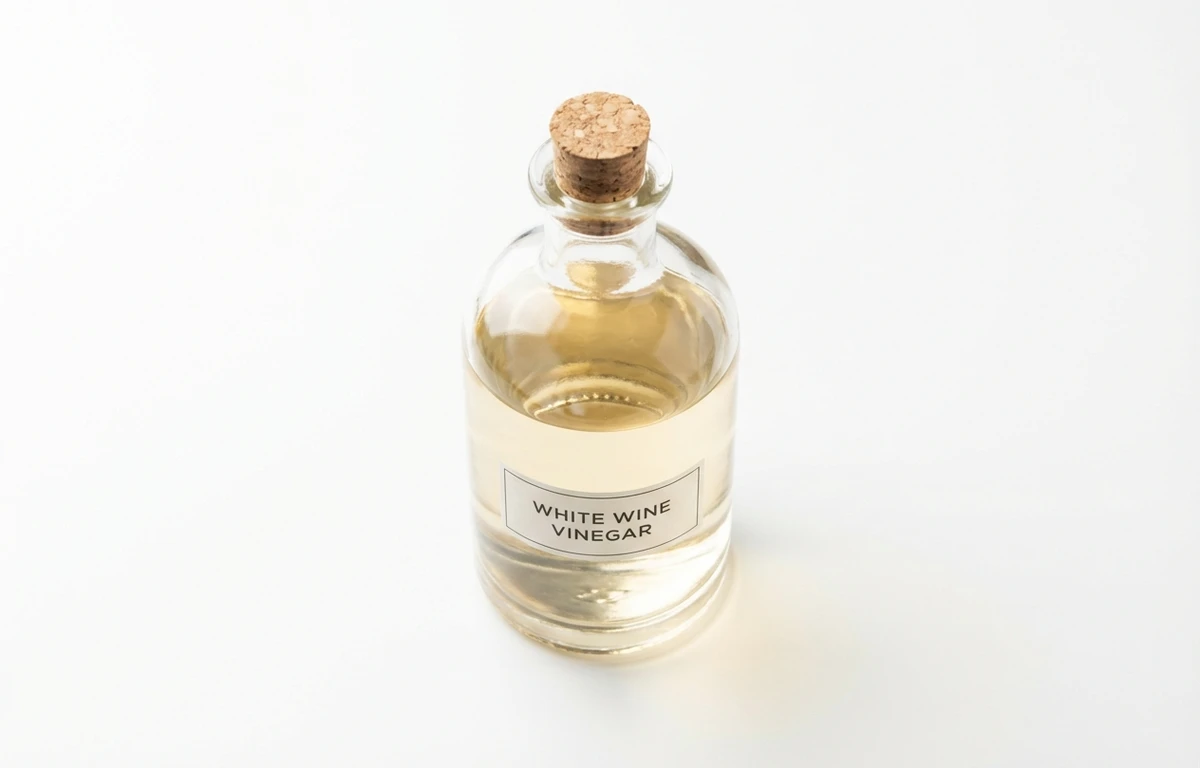
white wine vinegar.
VegetarianVeganGluten-freeDairy-freeNut-freePeanut-freeSoy-freeEgg-freeShellfish-freeHoney-freeAlcohol-freeFermented
SERVING
CALORIES
3
PROTEIN
0g
CARBS
0.10g
FAT
0g
FIBER
0g
NUTRITION PROFILE · per 100 g
Everything in this ingredient.
MACRONUTRIENTS
Calories3.0kcal—
Protein0g0%
Carbohydrates0.10g0%
Fiber0g0%
Sugar0g0%
Total fat0g0%
Saturated fat0g0%
Trans fat0g—
Cholesterol0mg0%
Water94.5g—
MINERALS
Sodium8.0mg0%
Potassium41mg1%
Calcium6.0mg0%
Iron0.20mg1%
Magnesium1.0mg0%
Phosphorus4.0mg0%
Zinc0.01mg0%
Copper0.01mg1%
Manganese0.02mg1%
Selenium0.10µg0%
VITAMINS
Vitamin A0µg0%
Vitamin C0mg0%
Vitamin D0µg0%
Vitamin E0mg0%
Vitamin K0µg0%
Thiamin (B1)0mg0%
Riboflavin (B2)0mg0%
Niacin (B3)0mg0%
Pantothenic acid (B5)0mg0%
Vitamin B60mg0%
Folate (B9)0µg0%
Vitamin B120µg0%
%DV based on a 2,000 cal diet. Source: USDA FoodData Central. A dash in the %DV column means there’s no established Daily Value for that nutrient.
MEASUREMENT CONVERSIONS
How much is what.
1 cup242.4g
1 tablespoon15.2g
1 teaspoon5.1g
1 oz28.4g
1 lb453.6g
1 ml1g
1 liter1010g
HEALTH BENEFITS
Why eat it.
- ✓May help regulate blood sugar levels after meals
- ✓Contains acetic acid which can support weight management
- ✓Possesses antimicrobial properties for food safety
- ✓Low in calories and sodium for heart health
- ✓Contains polyphenols that act as antioxidants
COOKING TIPS
In the kitchen.
- 1Use to deglaze pans after searing meat to create a flavorful sauce
- 2Add a splash to soups or stews at the end of cooking to brighten flavors
- 3Ideal for making light vinaigrettes and pickling delicate vegetables
STORAGE
Keep it fresh.
- Store in a cool, dark place away from direct sunlight
- Keep the bottle tightly sealed to prevent evaporation
- Does not require refrigeration even after opening
FAQ
Frequently asked questions.
How long does white wine vinegar last?
Due to its high acidity, white wine vinegar has an almost indefinite shelf life, though it is best used within 2 years for peak flavor.
What is the best substitute for white wine vinegar?
Rice vinegar or champagne vinegar are the best substitutes. Lemon juice or apple cider vinegar can also work in a pinch.
Does white wine vinegar contain alcohol?
While made from wine, the fermentation process converts the alcohol into acetic acid. Only trace amounts (usually less than 0.5%) remain.
Is white wine vinegar gluten-free?
Yes, white wine vinegar is naturally gluten-free as it is derived from grapes, not grains.
Can I use white wine vinegar for cleaning?
Yes, but distilled white vinegar is usually preferred for cleaning as it is cheaper and has no residual sugars or colors.
Why is my vinegar cloudy?
Cloudiness is usually caused by the 'mother' of vinegar, which is harmless bacteria. It can be strained out if desired.
Is white wine vinegar Halal?
Yes, most Islamic scholars consider vinegar made from wine to be Halal as the chemical transformation removes the intoxicant.
How do I choose a good white wine vinegar?
Look for vinegars that list 'white wine vinegar' as the primary ingredient and avoid those with added caramel color or artificial flavors.
Can white wine vinegar be frozen?
It can be frozen, but there is no need to do so as it is shelf-stable at room temperature.
Is white wine vinegar the same as white distilled vinegar?
No. White wine vinegar is made from fermented white wine and has a milder, fruitier taste, while distilled vinegar is made from grain alcohol and is much harsher.
RECIPES
Cook with white wine vinegar.
10 recipes · sorted by what’s quick



















