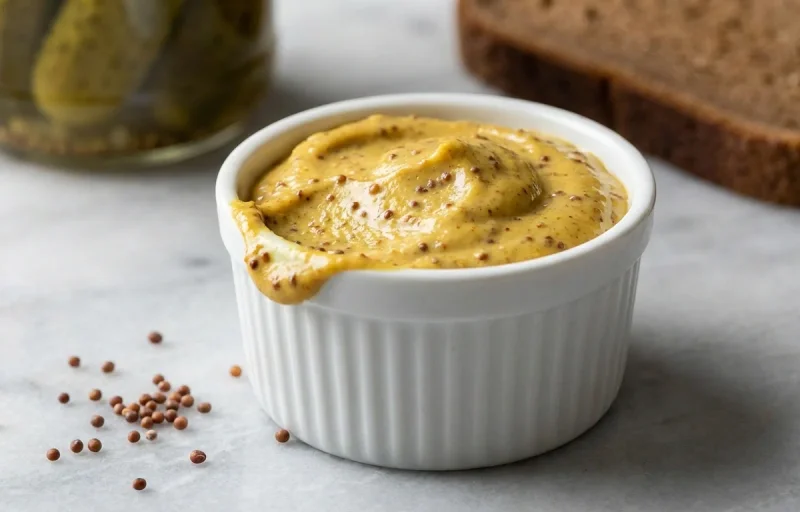
Spice10 recipes
yellow mustard seeds.
VegetarianVeganGluten-freeDairy-freeNut-freePeanut-freeSoy-freeEgg-freeShellfish-freeHoney-freeAlcohol-free
ALSO KNOWN AS
white mustard seedssafed raipeeli sarson
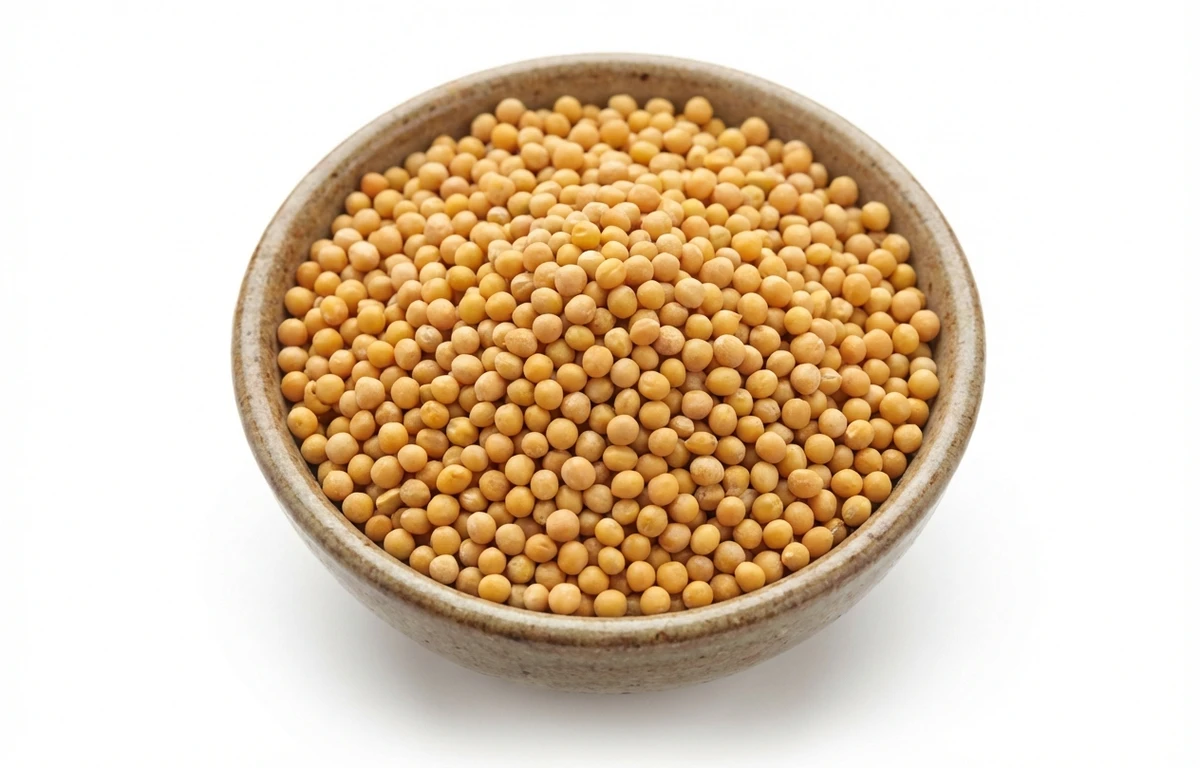
SERVING
CALORIES
508
PROTEIN
26.1g
CARBS
28.1g
FAT
36.2g
FIBER
12.2g
NUTRITION PROFILE · per 100 g
Everything in this ingredient.
MACRONUTRIENTS
Calories508kcal—
Protein26.1g52%
Carbohydrates28.1g10%
Fiber12.2g44%
Sugar6.8g14%
Total fat36.2g46%
Saturated fat1.9g10%
Trans fat0g—
Cholesterol0mg0%
Water5.3g—
MINERALS
Sodium13mg1%
Potassium738mg16%
Calcium266mg20%
Iron9.2mg51%
Magnesium370mg88%
Phosphorus828mg66%
Zinc6.1mg55%
Copper0.64mg71%
Manganese2.5mg107%
Selenium208µg378%
VITAMINS
Vitamin A3.0µg0%
Vitamin C7.1mg8%
Vitamin D0µg0%
Vitamin E5.1mg34%
Vitamin K5.4µg5%
Thiamin (B1)0.81mg68%
Riboflavin (B2)0.26mg20%
Niacin (B3)4.7mg30%
Pantothenic acid (B5)0.81mg16%
Vitamin B60.40mg24%
Folate (B9)162µg41%
Vitamin B120µg0%
%DV based on a 2,000 cal diet. Source: USDA FoodData Central. A dash in the %DV column means there’s no established Daily Value for that nutrient.
MEASUREMENT CONVERSIONS
How much is what.
1 cup180g
1 tablespoon11g
1 teaspoon3.5g
1 oz28.4g
1 lb453.6g
1 ml0.8g
1 liter750g
HEALTH BENEFITS
Why eat it.
- ✓Rich in selenium and magnesium which have anti-inflammatory properties
- ✓Contains glucosinolates that may help inhibit the growth of cancer cells
- ✓Good source of omega-3 fatty acids and antioxidants
- ✓Stimulates the secretion of gastric juices to aid digestion
- ✓High mineral content supports bone health and metabolism
COOKING TIPS
In the kitchen.
- 1Toast seeds in a dry pan or hot oil until they pop to release a nutty aroma
- 2Soak in water or vinegar before grinding to reduce bitterness
- 3Use whole in pickling brines for both flavor and preservative properties
STORAGE
Keep it fresh.
- Store in an airtight glass container to preserve essential oils
- Keep in a cool, dark, and dry place away from direct sunlight
- Whole seeds can last up to 2 years if stored properly
FAQ
Frequently asked questions.
How long do yellow mustard seeds last?
Whole yellow mustard seeds can last for 1 to 2 years when stored in an airtight container in a cool, dark place. Once ground, they lose potency within 6 months.
What is the difference between yellow and brown mustard seeds?
Yellow mustard seeds (also called white) are milder and larger, while brown and black mustard seeds are much hotter and more pungent.
Can I substitute mustard powder for whole seeds?
Yes, use 1 teaspoon of mustard powder for every 1.5 teaspoons of whole seeds, but note that the texture of the dish will change.
Do I need to wash mustard seeds before use?
Generally, no. Mustard seeds are used dry. If you are using them for pickling, ensure they are free of dust, but washing is not standard.
How do I make my own mustard paste from seeds?
Grind the seeds and mix with a cold liquid like water, vinegar, or wine. Let it sit for at least 10-15 minutes for the enzymes to develop the heat.
Why do my mustard seeds taste bitter?
Mustard seeds contain compounds that can be bitter if not cooked or soaked properly. Toasting them or using an acidic liquid like vinegar helps balance the bitterness.
Are yellow mustard seeds gluten-free?
Pure mustard seeds are naturally gluten-free. However, always check labels on pre-packaged spice blends for potential cross-contamination.
What are the best food pairings for yellow mustard seeds?
They pair excellently with cabbage, potatoes, sausages, fish, and in vinaigrettes or pickling liquids for cucumbers and beets.
RECIPES
Cook with yellow mustard seeds.
10 recipes · sorted by what’s quick