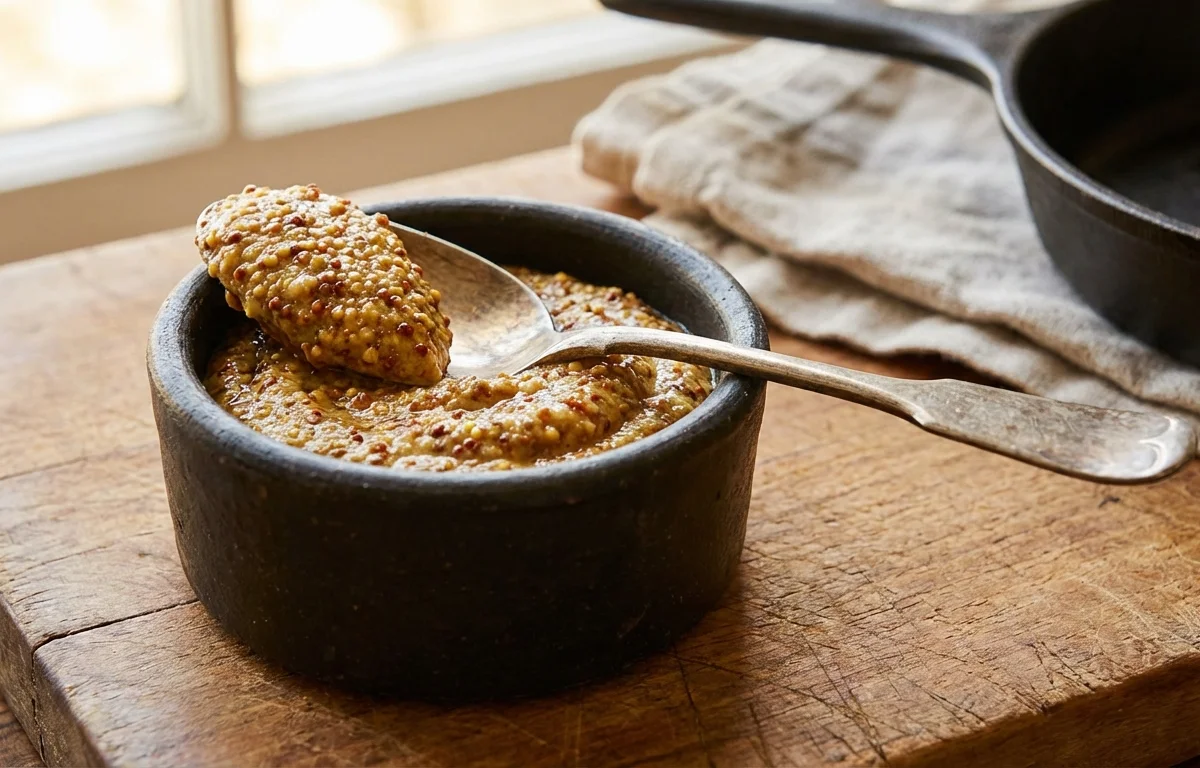
Creole Mustard
A bold, tangy, and spicy brown mustard with a distinct Louisiana kick. Stone-ground mustard seeds mingle with Creole seasoning and a splash of vinegar, creating a rustic condiment that cuts right through fried seafood, po' boys, and andouille sausage. Far punchier than yellow mustard, it's the secret weapon behind real New Orleans flavor.
For 32 servings
- prep
Soak the mustard seeds overnight.
Combine brown and yellow mustard seeds in a mixing bowl. Pour enough cool water to cover seeds by at least 1 inch. Cover the bowl and let seeds soak at room temperature for 8 hours or overnight until they have plumped and softened.
TIPSoaking softens the seeds and removes bitterness — don't skip this step. - prep
Drain the soaked mustard seeds.
Pour the soaked seeds through a fine mesh strainer. Shake off excess water, then transfer the drained seeds to a blender or food processor.
- mix · ~2 min
Blend the mustard with seasonings.
1.Add apple cider vinegar, cold water, honey, minced garlic, Worcestershire sauce, smoked paprika, cayenne pepper, and salt to the blender.2.Pulse 5-6 times, then blend continuously for 1 minute until the mixture is slightly coarse and grainy.3.Scrape down the sides with a spatula and blend again for 30 seconds until the mustard reaches a spoonable, slightly chunky consistency.4.If the mustard is too thick, add water 1 teaspoon at a time and blend briefly until you reach the desired texture.TIPBlend longer for a smoother mustard or keep it short for a rustic, whole-grain texture. - rest
Taste and adjust the seasoning.
Scrape the mustard into a bowl. Taste it — the heat will be sharp and pungent right away. Add an extra pinch of salt or cayenne if desired, keeping in mind the flavor will mellow and meld as it rests.
TIPFreshly blended mustard is aggressively hot. Don't worry — it settles down significantly after resting. - assemble
Transfer the mustard to a jar and refrigerate.
1.Spoon the Creole mustard into a clean airtight jar.2.Seal the jar tightly and place it in the refrigerator.3.Let the mustard rest for at least 24 hours before using. This allows the heat to mellow and the flavors to marry.TIPThe mustard tastes completely different after 24 hours. Fresh, it bites hard; rested, it's balanced and complex.
What to keep in mind.
6 tips from the recipe — small details that make a real difference to the final dish.
- 1Soak mustard seeds for at least 8 hours until plump; this softens their tough outer shell and reduces bitterness.
- 2For a chunkier whole-grain texture, pulse the blender just a few times instead of blending continuously.
- 3Taste the mustard after resting 24 hours — it will be far less harsh and more complex than the initial blend.
- 4Store in a clean airtight jar in the fridge; it will keep for up to 3 months and deepen in flavor over time.
- 5Add a teaspoon of cold water at a time if the final paste is too thick; blending incorporates air and thickens it.
- 6Use a fine-mesh strainer to drain seeds thoroughly; excess soaking water dilutes the vinegar and seasoning balance.
Adapt it for your goals.
Spicy-sweet
Increase honey to 2 tablespoons and add a pinch of cinnamon for a sweet-hot Creole mustard that pairs beautifully with ham or roasted pork.
garlic herbGarlic-herb
Blend in 1 tablespoon fresh chopped thyme and an extra clove of garlic for an herby version perfect for spreading on po' boys or basting grilled chicken.
smokySmoky
Double the smoked paprika to 1/2 teaspoon and add a drop of liquid smoke for a barbecue-friendly mustard that complements brisket and ribs.
veganVegan
Substitute honey with maple syrup or agave nectar to make this mustard fully plant-based without sacrificing sweetness or body.
Why this is on our healthy list.
Rich in Selenium
Mustard seeds are a good source of selenium, a mineral that supports thyroid function and antioxidant defense.
Low in Calories
This condiment is naturally low in calories and fat, making it a smart way to add bold flavor without heavy oil or cream.
Digestive Support
Mustard seeds contain compounds that stimulate digestion and may help reduce bloating and gas when consumed in moderation.
Natural Anti-Inflammatory
The turmeric in yellow mustard seeds and the anti-inflammatory properties of garlic contribute to a recipe that may help reduce inflammation.
Frequently asked questions
Yes, but yellow seeds alone yield a milder, less complex flavor; the brown seeds give Creole mustard its characteristic heat and earthy depth.