Vegetable7 recipes
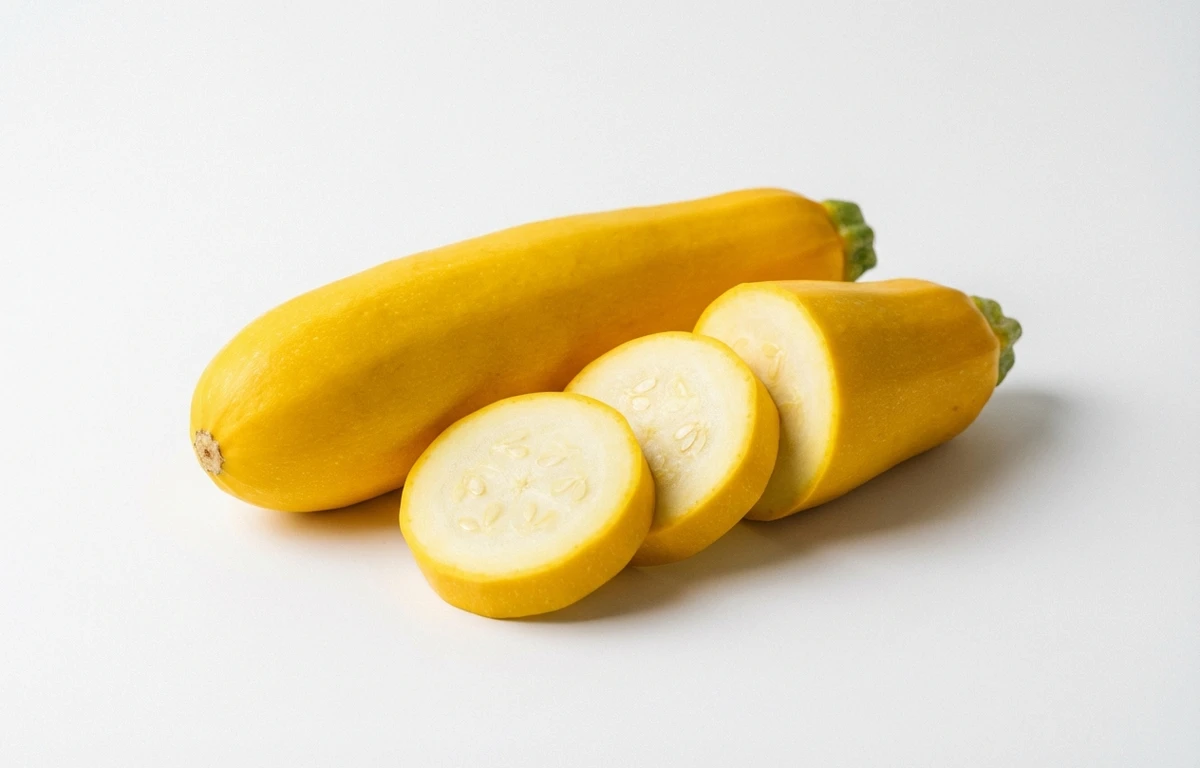
yellow squash.
VegetarianVeganGluten-freeDairy-freeNut-freePeanut-freeSoy-freeEgg-freeShellfish-freeHoney-freeAlcohol-free
ALSO KNOWN AS
summer squashcrookneck squashstraightneck squashpeela kaddu
SERVING
CALORIES
19
PROTEIN
1.2g
CARBS
3.9g
FAT
0.20g
FIBER
1.1g
This ingredient is flagged as naturally gluten-free. Per 100 g, it provides 3.0 µg of vitamin K.
NUTRITION PROFILE · per 100 g
Everything in this ingredient.
MACRONUTRIENTS
Calories19kcal—
Protein1.2g2%
Carbohydrates3.9g1%
Fiber1.1g4%
Sugar2.2g4%
Total fat0.20g0%
Saturated fat0.04g0%
Trans fat0g—
Cholesterol0mg0%
Water94.6g—
MINERALS
Sodium2.0mg0%
Potassium262mg6%
Calcium15mg1%
Iron0.40mg2%
Magnesium19mg5%
Phosphorus32mg3%
Zinc0.20mg2%
Copper0.05mg6%
Manganese0.17mg7%
Selenium0.20µg0%
VITAMINS
Vitamin A10µg1%
Vitamin C17mg19%
Vitamin D0µg0%
Vitamin E0.12mg1%
Vitamin K3.0µg3%
Thiamin (B1)0.05mg4%
Riboflavin (B2)0.04mg3%
Niacin (B3)0.50mg3%
Pantothenic acid (B5)0.16mg3%
Vitamin B60.11mg6%
Folate (B9)24µg6%
Vitamin B120µg0%
%DV based on a 2,000 cal diet. Source: USDA FoodData Central. A dash in the %DV column means there’s no established Daily Value for that nutrient.
MEASUREMENT CONVERSIONS
How much is what.
1 cup113g
1 tablespoon7.1g
1 teaspoon2.4g
1 oz28.4g
1 lb453.6g
1 piece196g
HEALTH BENEFITS
Why eat it.
- ✓Provides manganese which helps in bone formation and blood clotting.
COOKING TIPS
In the kitchen.
- 1Avoid overcooking to prevent the squash from becoming mushy and watery.
- 2Sauté with a small amount of olive oil and garlic for a quick, healthy side dish.
- 3Leave the skin on as it is thin, edible, and contains many of the nutrients.
STORAGE
Keep it fresh.
- Store unwashed in a perforated plastic bag in the refrigerator crisper drawer.
- Use within 4 to 5 days for optimal freshness and texture.
- Avoid storing in the coldest part of the fridge to prevent chill injury.
FAQ
Frequently asked questions.
How long does yellow squash last in the fridge?
Yellow squash typically lasts about 4 to 7 days when stored in a plastic bag in the refrigerator crisper drawer.
Can you eat the skin and seeds of yellow squash?
Yes, the skin is very thin and the seeds are soft and edible, so there is no need to peel or de-seed it before cooking.
How do I pick the best yellow squash?
Look for squash that is firm, heavy for its size, and has bright, unblemished skin. Smaller squash (6-8 inches) tend to be more tender and flavorful.
Can yellow squash be frozen?
Yes, but it should be blanched first. Slice the squash, boil for 2 minutes, cool in ice water, drain, and then freeze in airtight bags for up to 10 months.
What is a good substitute for yellow squash?
Zucchini is the best substitute as it has a similar texture and moisture content. Pattypan squash or eggplant can also work in certain recipes.
Is yellow squash keto-friendly?
Yes, with only about 3-4 grams of net carbs per 100g, it is an excellent low-carb vegetable for ketogenic diets.
What is the difference between yellow squash and zucchini?
While both are summer squashes, yellow squash has a tapered neck (crookneck or straightneck) and a slightly sweeter, milder flavor than the cylindrical green zucchini.
Can you eat yellow squash raw?
Absolutely. It can be thinly sliced or shaved into salads, used as a base for carpaccio, or eaten with dips like hummus.
RECIPES
Cook with yellow squash.
7 recipes · sorted by what’s quick