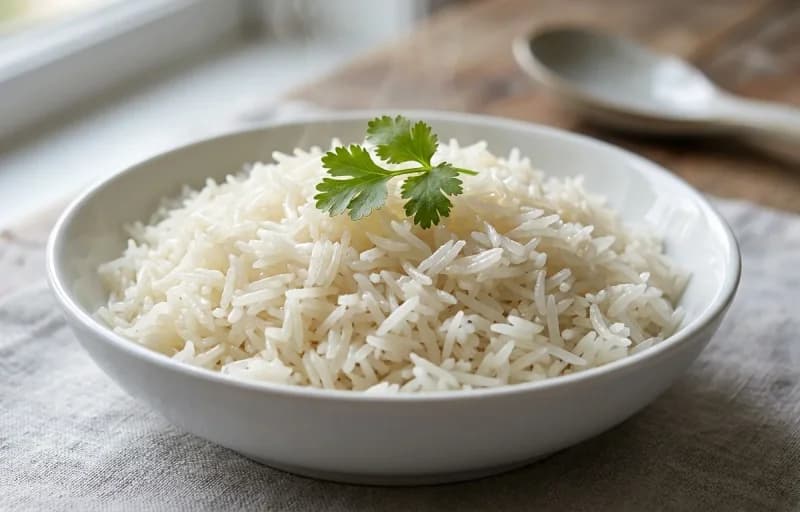
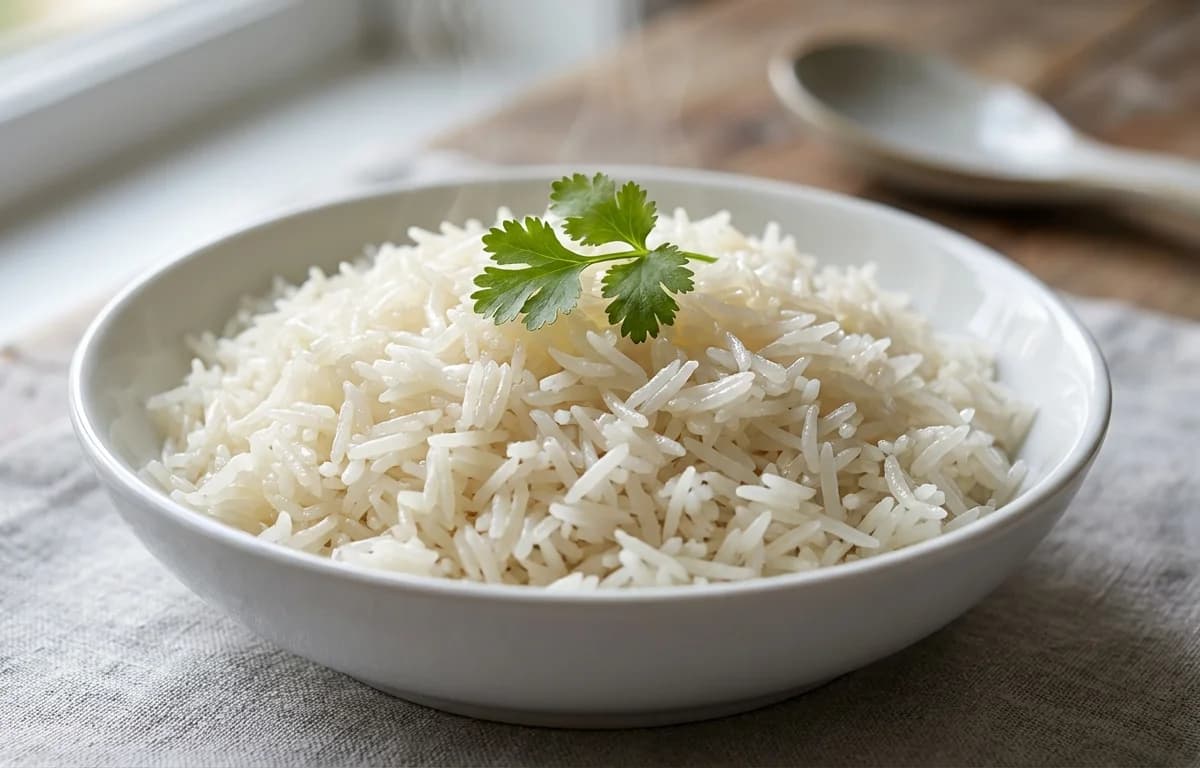
Master the art of cooking perfectly fluffy, separate grains of basmati rice with this foolproof method. An essential foundation for countless Indian meals, this simple recipe yields aromatic, non-sticky rice every time, ready to accompany your favorite curries, dals, and sabzis.
Prep5 min
Cook20 min
Soak30 min
Servings4
Serving size: 1 serving
253cal
5gprotein
55gcarbs
Ingredients
1.5 cup Basmati Rice
2.25 cup Water (For cooking)
0.5 tsp Salt (Optional)
Instructions
1
Place the basmati rice in a fine-mesh sieve and rinse under cold running water. Swirl the rice gently with your fingers until the water runs clear. This removes excess starch and prevents stickiness. For best results, soak the rinsed rice in fresh water for 20-30 minutes, then drain completely.
2
In a medium saucepan with a heavy bottom and a tight-fitting lid, combine the drained rice, 2.25 cups of fresh water, and salt (if using).
3
Bring the water to a rolling boil over medium-high heat. As soon as it boils, give it one gentle stir to prevent the rice from sticking to the bottom.
4
Immediately reduce the heat to the lowest possible setting, cover the saucepan with the lid, and let it simmer for 12-15 minutes. Do not lift the lid during this time, as the steam is crucial for cooking the rice evenly.
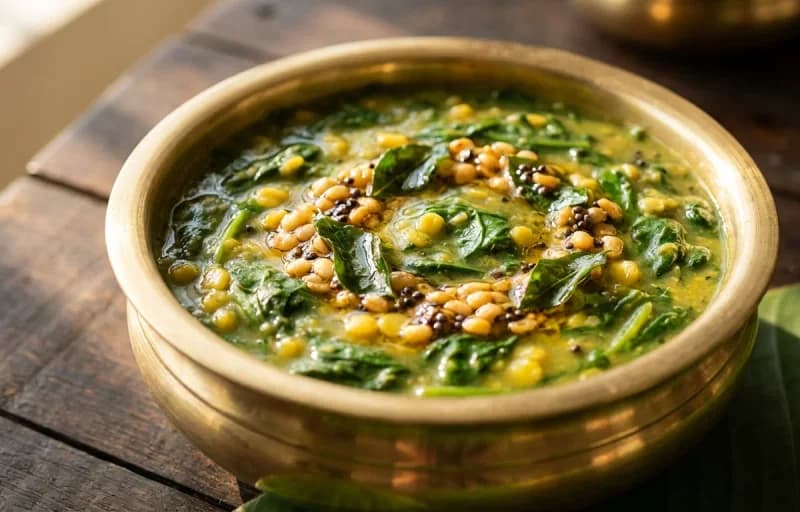
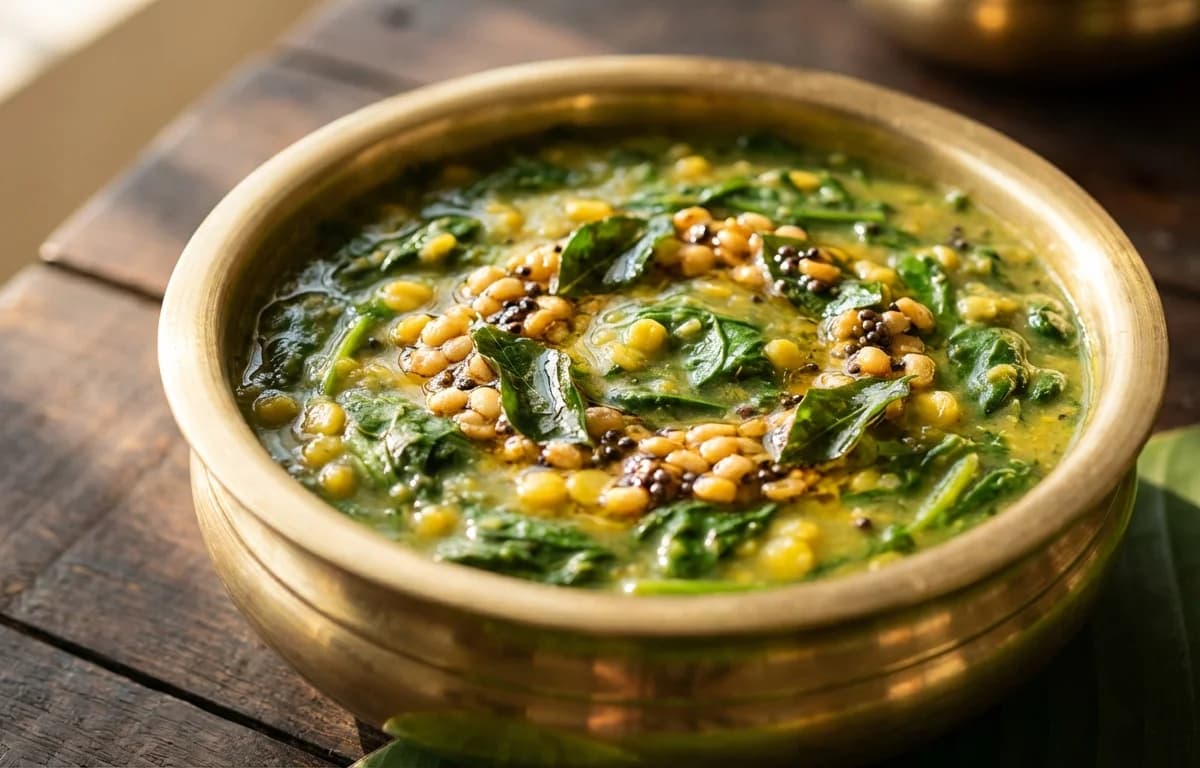
A classic Mangalorean curry made with nutritious Malabar spinach and lentils in a tangy coconut-spice gravy. This comforting dish is a perfect blend of sweet, sour, and spicy flavors, best enjoyed with a bowl of hot steamed rice.
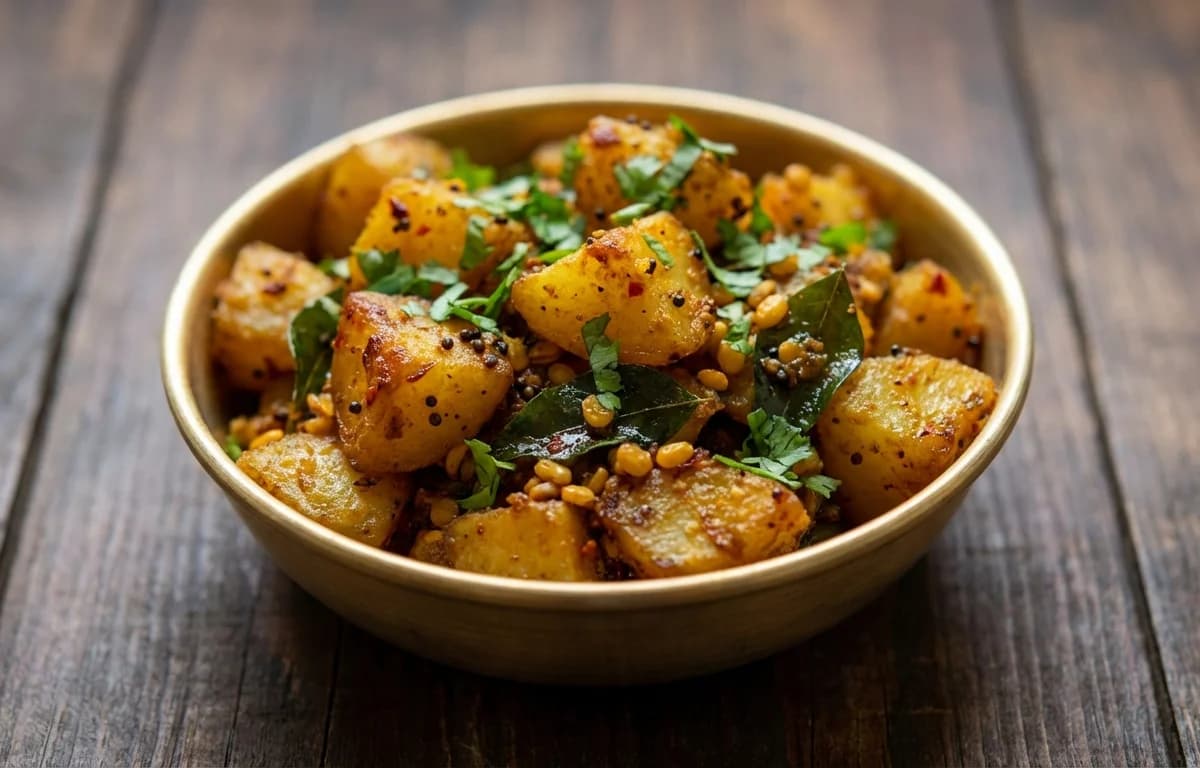
Crispy, golden-brown potato cubes tossed with simple South Indian spices. A perfect and quick side dish that pairs wonderfully with rice, sambar, or rasam, ready in just 30 minutes.
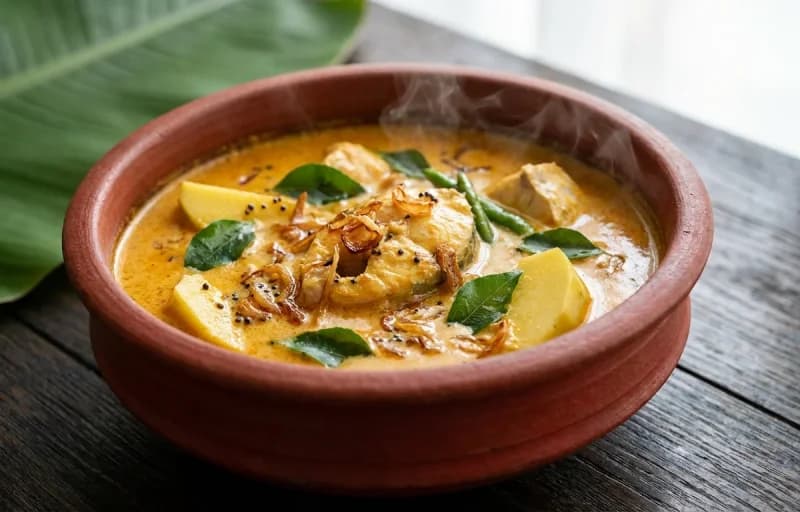
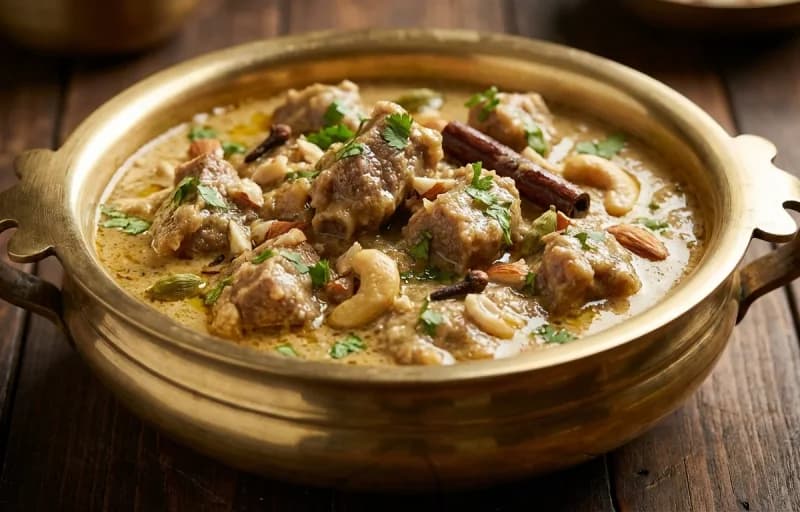
This mangalorean dish is perfect for lunch. With 782.4100000000001 calories and 18.75g of protein per serving, it's a nutritious choice for your meal plan.
0gfat
5
After 12-15 minutes, all the water should be absorbed. Turn off the heat and let the saucepan stand, still covered, for at least 5-10 minutes. This resting period allows the grains to firm up and finish steaming.
6
Uncover the rice and gently fluff the grains with a fork or a spatula to separate them. Serve hot as a perfect accompaniment to any meal.
297cal
11gprotein
36gcarbs
14gfat
Ingredients
0.75 cup toor dal (rinsed thoroughly)
250 g malabar spinach (chopped, including tender stems)
0.5 tsp turmeric powder
0.75 cup grated coconut (fresh or frozen (thawed))
5 pcs dried red chilies (Byadagi variety recommended for color)
1.5 tbsp coriander seeds
1 tsp cumin seeds
1 tsp tamarind paste (adjust to taste)
1 tbsp jaggery (grated or powdered, adjust to taste)
1.5 tsp salt (adjust to taste)
2 tbsp coconut oil (for tempering)
1 tsp mustard seeds
1 tsp urad dal
1 sprig curry leaves
0.25 tsp hing (asafoetida)
3.5 cup water (as needed for cooking and grinding)
Instructions
1
Pressure Cook the Dal
In a pressure cooker, combine the rinsed toor dal, 2 cups of water, and turmeric powder.
Secure the lid and pressure cook on medium heat for 4-5 whistles, or for about 15 minutes, until the dal is completely soft and mushy.
Once the pressure releases naturally, open the cooker and lightly mash the dal with the back of a spoon. Set aside.
2
Prepare the Coconut Masala Paste
While the dal cooks, heat a small pan over low heat. Dry roast the dried red chilies, coriander seeds, and cumin seeds for 1-2 minutes until they become fragrant. Be careful not to burn them.
Allow the roasted spices to cool completely.
Transfer the cooled spices to a blender jar. Add the grated coconut, tamarind paste, and jaggery.
Add approximately 1/2 cup of water and grind to a very smooth, fine paste. Set this masala paste aside.
3
Cook the Spinach and Assemble the Curry
In a large pot or kadai, add the chopped Malabar spinach along with 1/2 cup of water and 0.5 tsp of salt.
500 g Potatoes (About 3-4 medium, peeled and cut into 1/2-inch cubes)
4 cups Water (For soaking the potatoes)
4 tbsp Vegetable Oil (Or any neutral cooking oil)
1 tsp Mustard Seeds
1 tsp Urad Dal (Optional, for added crunch)
10 leaves Curry Leaves (Fresh or dried)
0.25 tsp Hing (Use gluten-free hing for a gluten-free dish)
0.5 tsp Turmeric Powder
1 tsp Red Chili Powder (Adjust to your spice preference)
1 tsp Salt (Adjust to taste)
2 tbsp Coriander Leaves (Freshly chopped, for garnish)
Instructions
1
Prepare the Potatoes
Peel the potatoes and chop them into uniform 1/2-inch cubes.
Place the cubes in a large bowl of cold water and let them soak for 10-15 minutes. This removes excess starch and helps them get crispy.
Drain the potatoes completely using a colander and pat them thoroughly dry with a kitchen towel. This step is crucial to prevent splattering and to ensure they fry well.
2
Temper the Spices
Heat oil in a wide, heavy-bottomed pan or kadai over medium-high heat.
Once the oil is hot, add the mustard seeds and wait for them to splutter, which should take about 30 seconds.
Add the urad dal and fry for about 1 minute until it turns a light golden brown.
Carefully add the curry leaves and hing, and sauté for another 30 seconds until the leaves are crisp and fragrant.
3
Cook the Potatoes
Add the dried potato cubes to the pan. Sprinkle with turmeric powder and salt.
Stir well to ensure all the potato pieces are evenly coated with the oil and spices.
Cover and cook on medium heat for 5-7 minutes, or until the spinach has wilted and the stems are tender but not mushy.
Add the cooked, mashed dal to the pot with the spinach. Stir to combine.
Pour in the ground coconut masala paste. Rinse the blender jar with another 1/2 cup of water and add it to the pot to get all the masala.
Add the remaining 1 tsp of salt. Stir everything together well.
Bring the curry to a gentle boil, then reduce the heat to low. Simmer for 8-10 minutes, stirring occasionally, to allow the flavors to meld beautifully. The gravy will thicken slightly.
4
Prepare the Tempering (Tadka)
In a small tempering pan (tadka pan), heat the coconut oil over medium heat.
Once the oil is hot, add the mustard seeds and let them splutter completely.
Add the urad dal and fry until it turns a light golden brown.
Finally, add the curry leaves and hing. Sauté for about 20 seconds until the curry leaves turn crisp.
5
Finish and Serve
Immediately pour the hot tempering over the simmering curry.
Stir gently to incorporate the tempering. Turn off the heat and cover the pot.
Let the Basale Soppu Koddel rest for at least 5 minutes before serving to allow the flavors to deepen.
Serve hot with steamed rice or neer dosa.
Spread the potatoes in a single layer. Cover the pan and cook on low-medium heat for 5-7 minutes, until they are about 50% cooked and slightly tender when pierced with a fork.
4
Fry Until Crispy
Uncover the pan and increase the heat to medium.
Continue to cook for another 10-12 minutes, stirring gently every 2-3 minutes.
Allow the potatoes to form a golden-brown crust on the bottom before flipping. Avoid stirring too frequently as this will prevent them from becoming crispy.
Cook until the potatoes are tender on the inside and crisp and golden on the outside.
5
Add Final Spices and Serve
Once the potatoes are perfectly cooked, reduce the heat to low.
Sprinkle the red chili powder over the potatoes and mix gently to coat them evenly.
Cook for one more minute, being careful not to burn the chili powder.
Turn off the heat, garnish with freshly chopped coriander leaves, and serve hot.