Basale Soppu Koddel
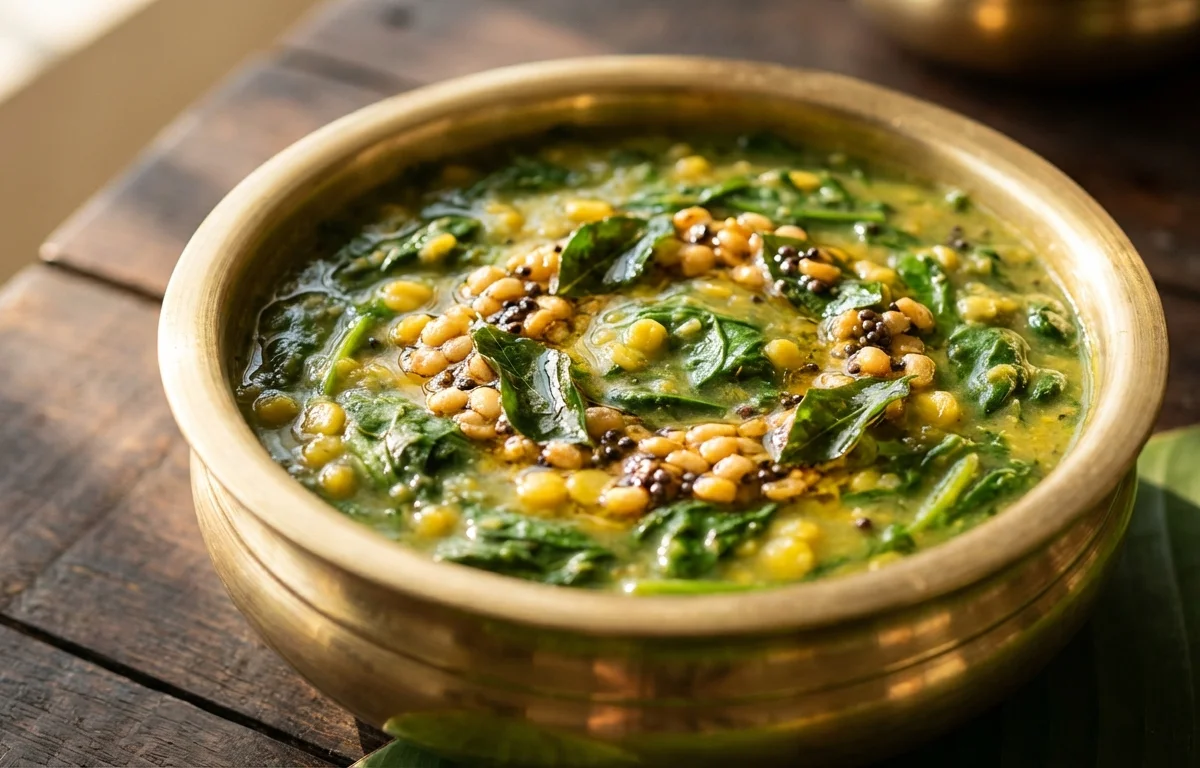
A homestyle coastal Karnataka curry made with tender basale soppu, toor dal, tamarind, and a spiced coconut masala. It turns earthy, lightly tangy, and comforting, with a soft texture that pairs beautifully with hot rice.
For 4 servings
- prep · ~15 min
Prep the greens, dal, and tamarind.
1.Wash the basale soppu well and chop the leaves with tender stems.2.Wash the toor dal and soak it for 15 minutes.3.Soak the tamarind in a little warm water and squeeze out the pulp. - pressure cook · ~15 min
Cook the dal until soft.
Add the soaked toor dal to a pressure cooker with 1 cup water and cook until very soft. Mash it lightly and keep aside.
TIPSoft dal blends into the koddel better, so do not leave it grainy. - saute · ~2 min
Toast the masala ingredients.
Heat a small pan and toast the dried red chili, coriander seeds, cumin seeds, and black peppercorns for 1 to 2 minutes until fragrant. Let them cool slightly.
TIPKeep the heat low so the chilies and spices turn aromatic without burning. - mix · ~3 min
Grind the coconut masala.
Grind the toasted spices with the grated coconut and a little water to a smooth paste.
- boil · ~8 min
Cook the basale soppu.
Add the chopped basale soppu to a pot with 1 cup water and turmeric powder. Cook for 6 to 8 minutes until the greens are soft.
- simmer · ~10 min
Simmer the koddel.
1.Add the mashed dal to the cooked basale soppu and mix well.2.Stir in the ground coconut masala, tamarind pulp, jaggery, salt, and the remaining 0.5 cup water.3.Bring it to a gentle simmer and cook until the raw coconut smell fades and the curry thickens slightly.TIPStir often after adding the coconut masala so it does not catch at the bottom. - temper · ~1 min
Make the tempering.
1.Heat coconut oil in a small pan over medium heat.2.Add mustard seeds and let them splutter.3.Add curry leaves and asafoetida and fry for a few seconds. - assemble · ~1 min
Pour the tempering over the koddel.
Pour the hot tempering into the simmering koddel and mix gently. Cook for 1 more minute.
- serve
Serve hot with rice.
What to keep in mind.
7 tips from the recipe — small details that make a real difference to the final dish.
- 1Chop the tender stems too; they soften nicely and add body to the koddel.
- 2Cook the toor dal until mashable, or the curry will feel coarse instead of silky.
- 3Toast the chilies and whole spices on low heat; burnt red chilies will turn the masala bitter.
- 4Grind the coconut masala very smooth so it blends evenly into the dal and greens.
- 5Add tamarind only after the basale soppu is soft, since souring early can slow softening.
- 6Keep the simmer gentle after adding coconut paste to prevent splitting or sticking at the base.
- 7This koddel thickens as it sits, so loosen leftovers with a splash of hot water before reheating.
Adapt it for your goals.
Spicier
Add 1 to 2 extra dried red chilies or a few more peppercorns for a hotter, more robust koddel.
no onion no garlicNo-onion-no-garlic
This recipe already fits well; just ensure the asafoetida is pure if cooking for strict satvik preferences.
thickerThicker
Use slightly less water in the final simmer for a thicker koddel that sits well with rice or mudde.
moong dalMoong-dal
Swap toor dal with moong dal for a lighter, quicker-cooking version with a softer, gentler taste.
Why this is on our healthy list.
Fiber-Rich Greens and Dal
Basale soppu and toor dal together make the dish filling and support good digestion with natural fiber.
Plant-Based Protein
Toor dal adds satisfying plant protein, making the curry more balanced when served with rice.
Mineral-Rich Ingredients
Malabar spinach, coconut, and spices contribute a range of naturally occurring minerals and phytonutrients.
Gentle Homemade Comfort Food
Cooked greens, soft dal, and a modest tempering make this a nourishing, easy-to-eat homestyle curry.
Frequently asked questions
Yes, but tender fresh leaves and stems give the best texture. Mature stems may need extra cooking, and frozen greens can make the curry slightly looser.