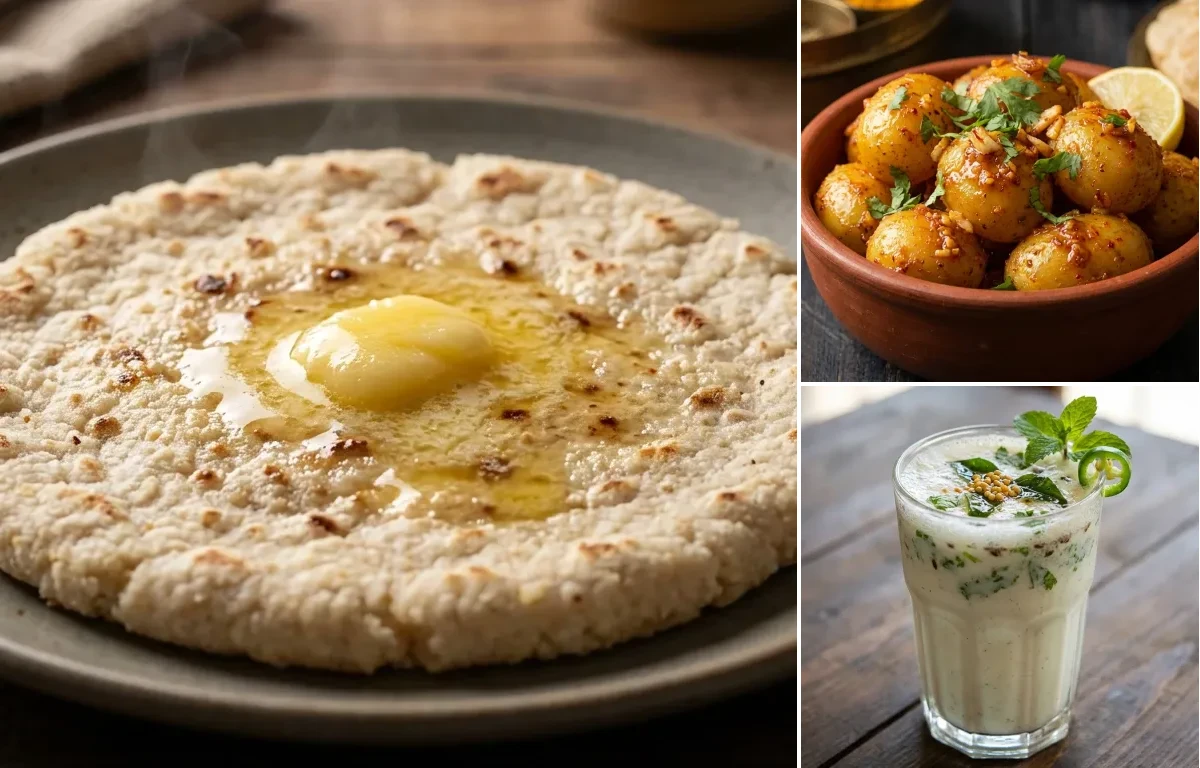
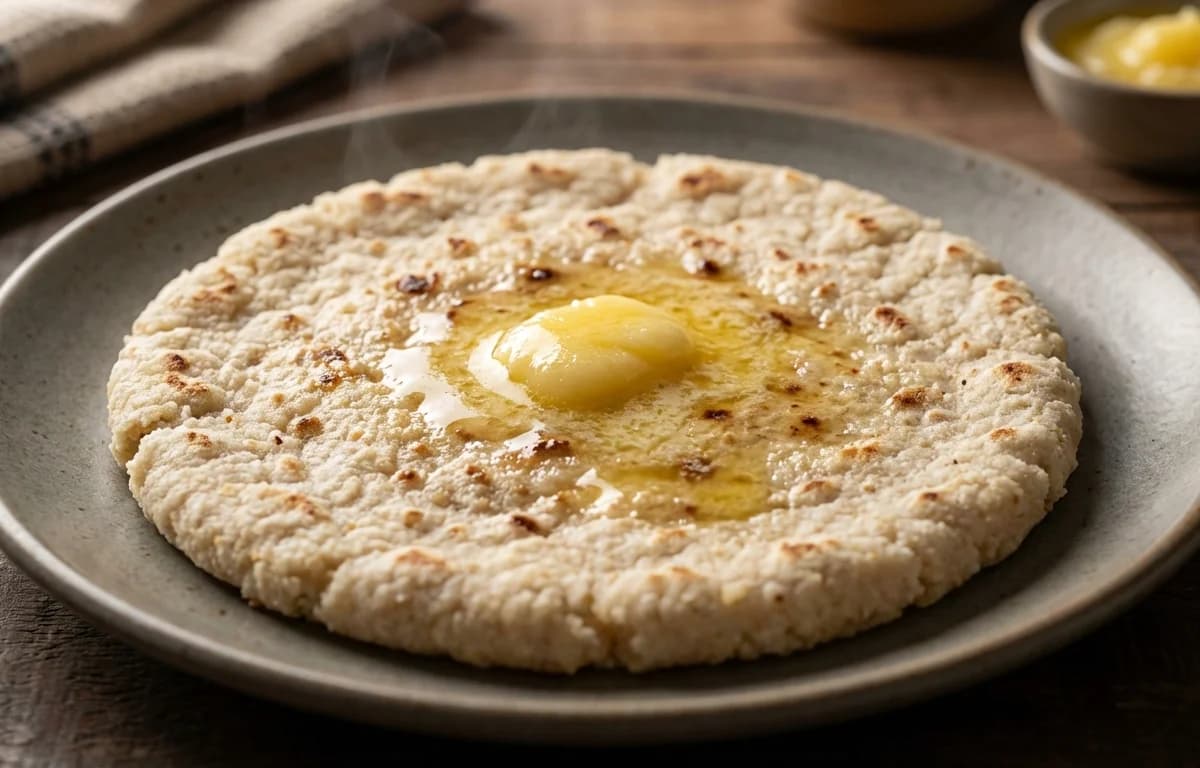
A rustic, gluten-free flatbread from Gujarat made with sorghum flour. This earthy, wholesome bread is traditionally patted by hand and cooked on a griddle, pairing perfectly with sev tameta nu shaak or baingan bharta.
Prep15 min
Cook25 min
Servings4
Serving size: 2 rotlo
277cal
7gprotein
46gcarbs
8g
Ingredients
2 cup Jowar Flour (Also known as sorghum flour)
0.75 tsp Salt (Adjust to taste)
1.5 cup Warm Water (Use as needed)
2 tbsp Ghee (For serving, optional)
Instructions
1
Prepare Dough for One Rotlo
In a wide plate (parat), take about 1/2 cup of jowar flour and a pinch of salt. It's crucial to make the dough for each rotlo individually, just before cooking.
Gradually add a few tablespoons of warm water at a time. Mix the flour and water together.
Begin kneading the dough using the heel of your palm. Push the dough away from you and pull it back. Continue this process for 3-4 minutes.
The dough should become very smooth, soft, and pliable, with no cracks. If it's too dry, add a few drops of water; if sticky, add a pinch of flour. Form it into a smooth ball.
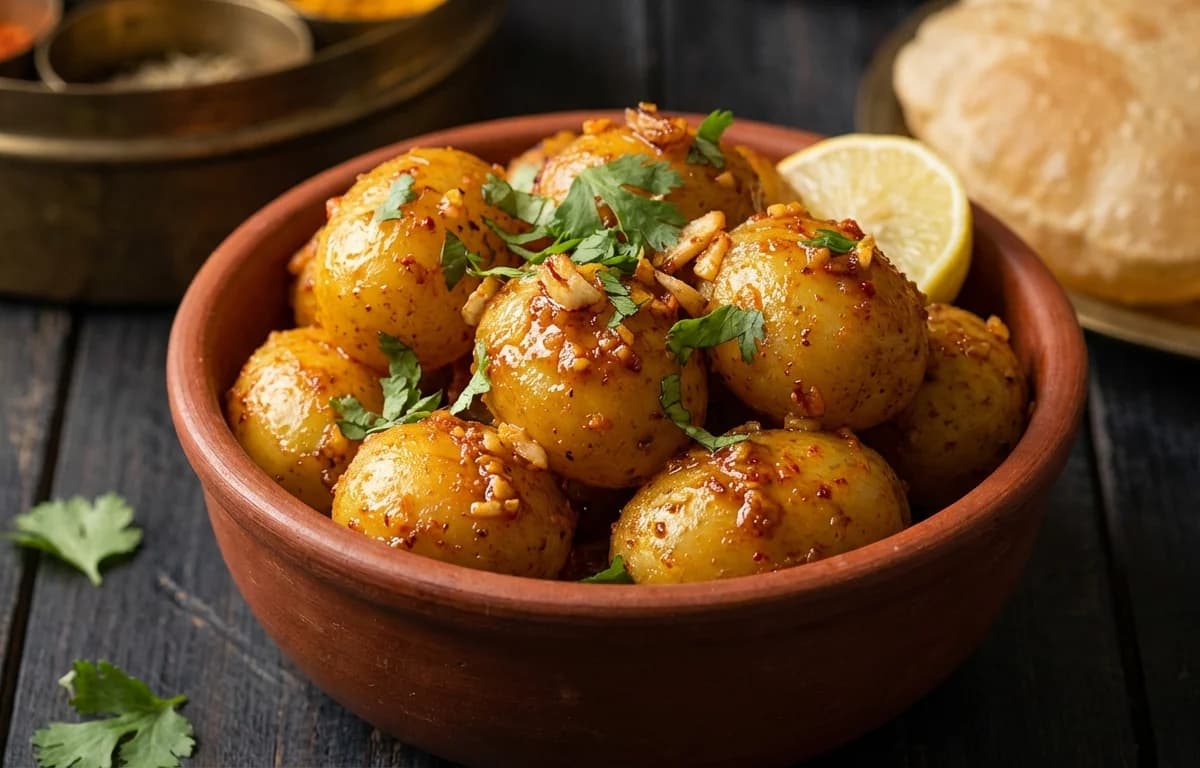
Baby potatoes tossed in a fiery, aromatic garlic and red chili masala. This classic Kathiyawadi dish from Gujarat is packed with bold flavors and pairs perfectly with flatbreads like rotli or bajra no rotlo.
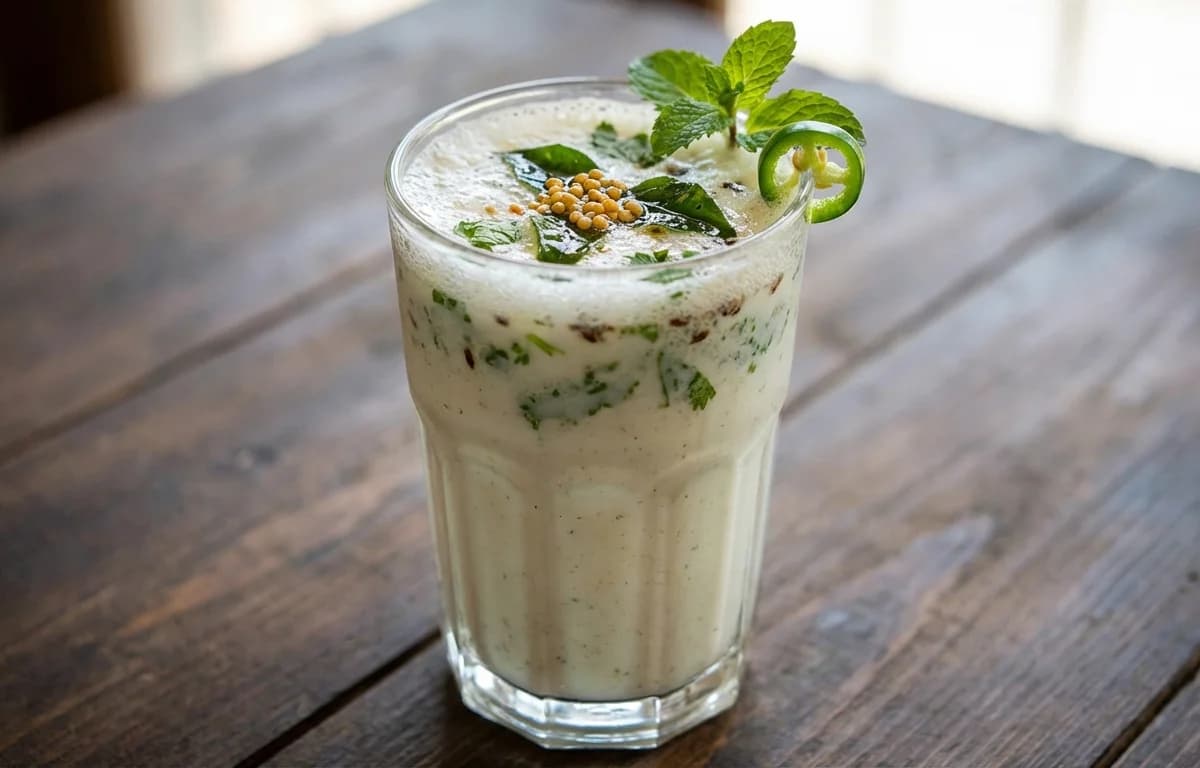
A refreshing and savory yogurt-based drink, spiced with roasted cumin, fresh herbs, and a hint of ginger. This traditional Indian buttermilk is the perfect cooling beverage to aid digestion and beat the summer heat.
About Juwar no Rotlo, Lasaniya Batata and Masala Chaas
Energy-giving Juwar no Rotlo with perfectly spiced garlic potatoes & gut-friendly chaas. Soul-satisfying!
This gujarati dish is perfect for dinner. With 619.14 calories and 15.299999999999999g of protein per serving, it's a high-fiber option for your meal plan.
fat
2
Shape the Rotlo
Sprinkle a little dry jowar flour on a clean, flat surface or a rolling board (chakla).
Place the dough ball on the floured surface and gently flatten it into a 2-inch disc.
Using your palm and fingers, start patting the dough gently while rotating it simultaneously. This takes practice. Keep the pressure even to form a uniform circle.
Continue patting until you have a round rotlo about 5-6 inches in diameter and about 1/4 inch thick. For beginners, you can place the dough ball inside a large ziplock bag or between two sheets of parchment paper and press it evenly with your hands or a flat plate.
3
Cook the Rotlo
Heat a clay or cast-iron tawa (griddle) over medium-high heat. The tawa must be hot before you place the rotlo on it.
Carefully lift the patted rotlo, supporting it with your palm, and place it on the hot tawa.
Cook the first side for about 30-45 seconds, just until the color changes slightly and it sets.
Flip the rotlo with a spatula. Cook the second side for 1-2 minutes, until light brown spots appear.
Flip it one last time. Now, gently press the edges of the rotlo with a folded kitchen towel or a flat spatula. This will help it puff up beautifully.
Alternatively, for a fully puffed rotlo, use tongs to lift the semi-cooked rotlo and place it directly on a medium gas flame for a few seconds until it balloons up. Flip to cook both sides evenly on the flame.
4
Serve Hot
Remove the cooked rotlo from the heat and place it on a serving plate.
Generously apply ghee on the top surface while it's still hot.
Repeat the entire process for the remaining flour to make more rotlos.
Serve immediately with garlic chutney, jaggery (gol), and a dollop of white butter (makhan), or with a sabzi like Baingan Bharta or Sev Tameta nu Shaak.
269cal
5gprotein
32gcarbs
15gfat
Ingredients
500 g Baby Potatoes (About 20-25 potatoes)
4 cups Water (For boiling potatoes)
1 tsp Salt (For boiling potatoes)
20 cloves Garlic (Peeled)
1.5 tbsp Kashmiri Red Chili Powder (For vibrant color)
0.5 tbsp Red Chili Powder (For heat, adjust to taste)
4 tbsp Peanut Oil (Authentic to Kathiyawadi cuisine)
1 tsp Cumin Seeds
0.25 tsp Asafoetida (Hing)
0.5 tsp Turmeric Powder
1 tbsp Lemon Juice (Freshly squeezed)
2 tbsp Coriander Leaves (Freshly chopped, for garnish)
Instructions
1
Prepare the Potatoes
Wash the baby potatoes thoroughly under running water to remove any dirt.
Place the potatoes in a pressure cooker with 4 cups of water and 1 tsp of salt. Cook for 2 whistles on medium heat, then turn off the flame. Allow the pressure to release naturally.
Alternatively, boil them in a pot for 15-20 minutes until they are fork-tender but not mushy.
Once cool enough to handle, peel the skins off. Gently prick each potato 2-3 times with a fork. This helps them absorb the masala flavors.
2
Create the Garlic Masala Paste
In a small grinder jar or using a mortar and pestle, combine the peeled garlic cloves, Kashmiri red chili powder, regular red chili powder, and dhana jeeru powder.
Add 2 tablespoons of water and grind to a smooth, thick paste. Set aside.
3
Sauté the Masala
Heat peanut oil in a heavy-bottomed pan or kadai over medium heat.
Once the oil is hot, add the cumin seeds and let them splutter for about 30 seconds.
0.25 tsp Hing (Asafoetida, for optional tempering)
5 pc Curry Leaves (For optional tempering)
Instructions
1
Blend the Chaas Base
In a large blender jar, combine the curd, chilled water, chopped coriander leaves, mint leaves, ginger, and green chili (if using).
Add the roasted cumin powder, kala namak, chaat masala, and salt.
Blend on high for 45-60 seconds until the mixture is completely smooth and slightly frothy on top.
2
Prepare the Tempering (Tadka - Optional)
Heat ghee in a small tadka pan over medium heat. The ghee is ready when a mustard seed sizzles upon contact.
Add the mustard seeds and allow them to splutter completely, which takes about 30 seconds.
Turn off the heat and immediately add the hing and curry leaves. Be cautious as the leaves will crackle. Swirl the pan for 10 seconds until the leaves are crisp.
3
Combine and Chill
Pour the hot tempering directly into the blended chaas. You will hear a satisfying sizzle. Stir well to incorporate the aromatic flavors.
For the best taste, cover and refrigerate the chaas for at least 30 minutes. This allows the flavors to meld together beautifully.
Add the asafoetida (hing), then immediately add the prepared garlic masala paste.
Lower the heat to low-medium and sauté the paste for 3-4 minutes, stirring constantly. Cook until it becomes fragrant, darkens slightly, and you see oil separating from the sides. This step is crucial for developing flavor.
4
Combine and Finish
Add the boiled and peeled baby potatoes to the pan with the cooked masala.
Sprinkle the turmeric powder and salt over the potatoes.
Gently toss everything together, ensuring each potato is evenly coated with the masala without breaking them.
Cook for another 3-4 minutes on low heat, allowing the potatoes to heat through and absorb the aromatic flavors.
5
Garnish and Serve
Turn off the heat. Drizzle with fresh lemon juice and garnish with chopped coriander leaves.
Give it a final gentle mix.
Serve Lasaniya Batata hot with bajra no rotlo (pearl millet flatbread), rotli, or paratha.
4
Serve
Give the chilled chaas a final stir before serving.
Pour into glasses and garnish with a fresh mint sprig or a sprinkle of roasted cumin powder.
Serve immediately as a refreshing drink alongside a meal or on its own.