
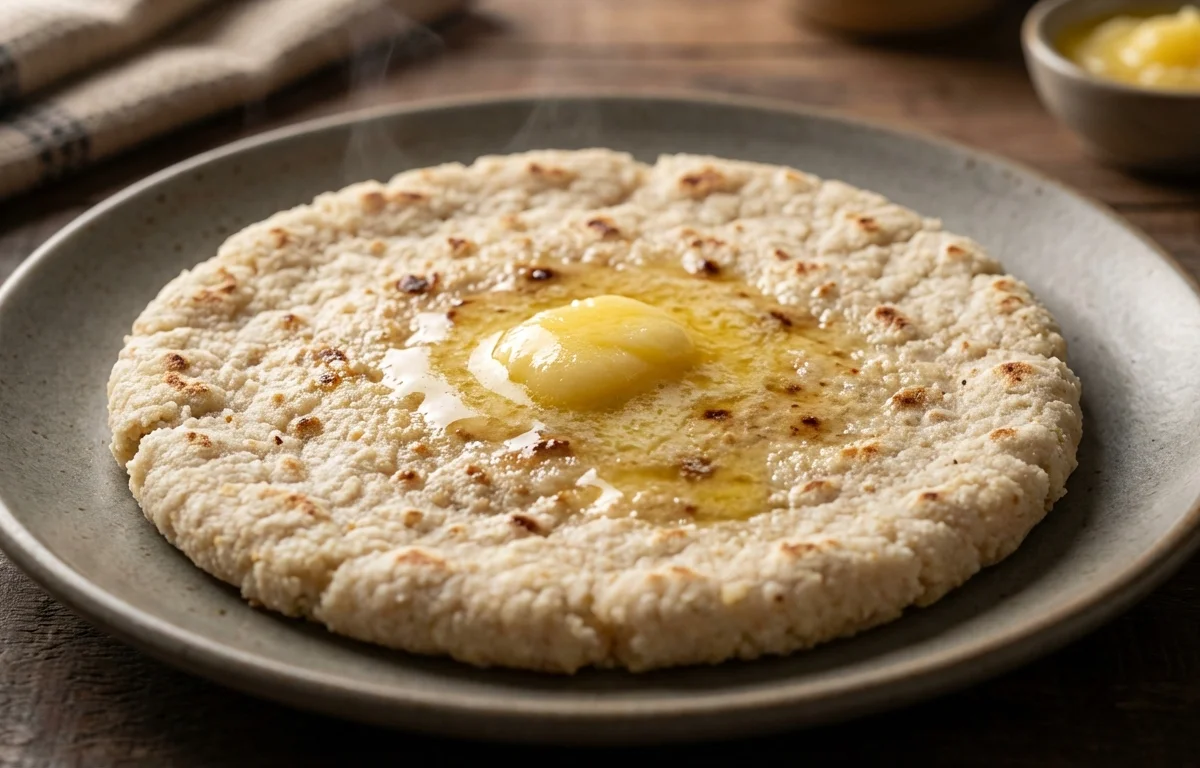
Juwar no Rotlo
A rustic, gluten-free flatbread from Gujarat made with hearty sorghum flour. Soft yet sturdy with a beautifully earthy flavor, it's patted by hand and cooked on a hot tawa. Best enjoyed with jaggery, fresh white butter, or a fiery garlic chutney.
For 4 servings
- prep · ~5 min
Prepare the dough.
1.In a mixing bowl, combine 2 cups jowar flour and a pinch of salt.2.Slowly pour in hot water, a little at a time, and mix with a wooden spoon.3.Once cool enough to handle, knead by hand for 3-4 minutes until you get a soft, pliable dough. Add more flour or water as needed.TIPJowar has no gluten, so the dough will not be stretchy. Knead gently and work while it's still warm for best results. - prep · ~3 min
Divide and shape the dough.
1.Divide the dough into 4 equal-sized balls.2.Dust a clean surface with dry jowar flour.3.Place one ball down and flatten gently with your palm.4.Using your fingers, pat and rotate the dough to form a circle about 5-6 inches in diameter. Use the dry flour to prevent sticking.TIPAvoid using a rolling pin. The dough is too delicate. Gentle patting with your palm and fingers creates the signature rustic texture. - fry · ~3 min
Cook the rotlo on the tawa.
1.Heat the tawa over medium-high heat until hot.2.Carefully lift the patted rotlo and place it on the hot, dry tawa.3.Cook for 30-40 seconds until you see small bubbles. Flip to the other side.4.Cook for another 30 to 45 seconds. Press down lightly with a spatula if needed.5.Flip again directly over an open flame using tongs to puff slightly. Remove quickly and smear with a little ghee.TIPThe open flame puff gives it an authentic smoky flavor, but you can press it down firmly on the tawa for the same effect. - garnish
Serve hot with a dollop of white butter or jaggery.
Stack the cooked rotlos one on top of another, smearing each layer with a touch more ghee to keep them soft.
What to keep in mind.
6 tips from the recipe — small details that make a real difference to the final dish.
- 1Use very hot water to knead the jowar dough; it helps the flour absorb moisture and prevents cracking.
- 2Keep a bowl of dry jowar flour nearby while patting the rotlo — dust your palms often to avoid sticking.
- 3Do not over-knead; jowar dough firms up as it cools, so shape the rotlos while the dough is still warm.
- 4If the edges of the patted rotlo crack, dip your fingers in water and smooth them out gently.
- 5Cook the rotlo on a medium-hot tawa; too low a heat makes it dry, too high burns it before it cooks through.
- 6For a softer rotlo, stack them on a plate and cover with a clean cloth immediately after cooking.
Adapt it for your goals.
With leafy greens
Add ½ cup finely chopped spinach or methi (fenugreek) leaves to the dough for a nutritious, colorful rotlo with a mild vegetal flavor.
spicedSpiced
Mix in ½ tsp crushed ajwain (carom seeds), ¼ tsp red chili powder, and a pinch of asafoetida into the flour for a savory, aromatic rotlo that pairs beautifully with pickle.
stuffedStuffed
Shape the dough into a cup, fill with a spiced potato or grated bottle gourd mixture, seal, and pat into a rotlo for a hearty stuffed version.
Why this is on our healthy list.
Rich in Dietary Fiber
Sorghum flour is high in insoluble fiber, which supports digestive health and helps maintain steady blood sugar levels.
Gluten-Free Grain
Jowar is naturally gluten-free, making this rotlo a safe and wholesome option for those with celiac disease or gluten sensitivity.
Packed with Antioxidants
Sorghum contains phenolic compounds and tannins that help fight oxidative stress and inflammation in the body.
Good Source of Essential Minerals
Jowar flour provides iron, magnesium, and phosphorus, which support bone health, energy production, and oxygen transport.
Frequently asked questions
The dough likely cooled too much or is too dry. Use hot water during kneading and shape the rotlos while the dough is still warm. If it cracks, dip your fingers in water and gently seal the edges.


