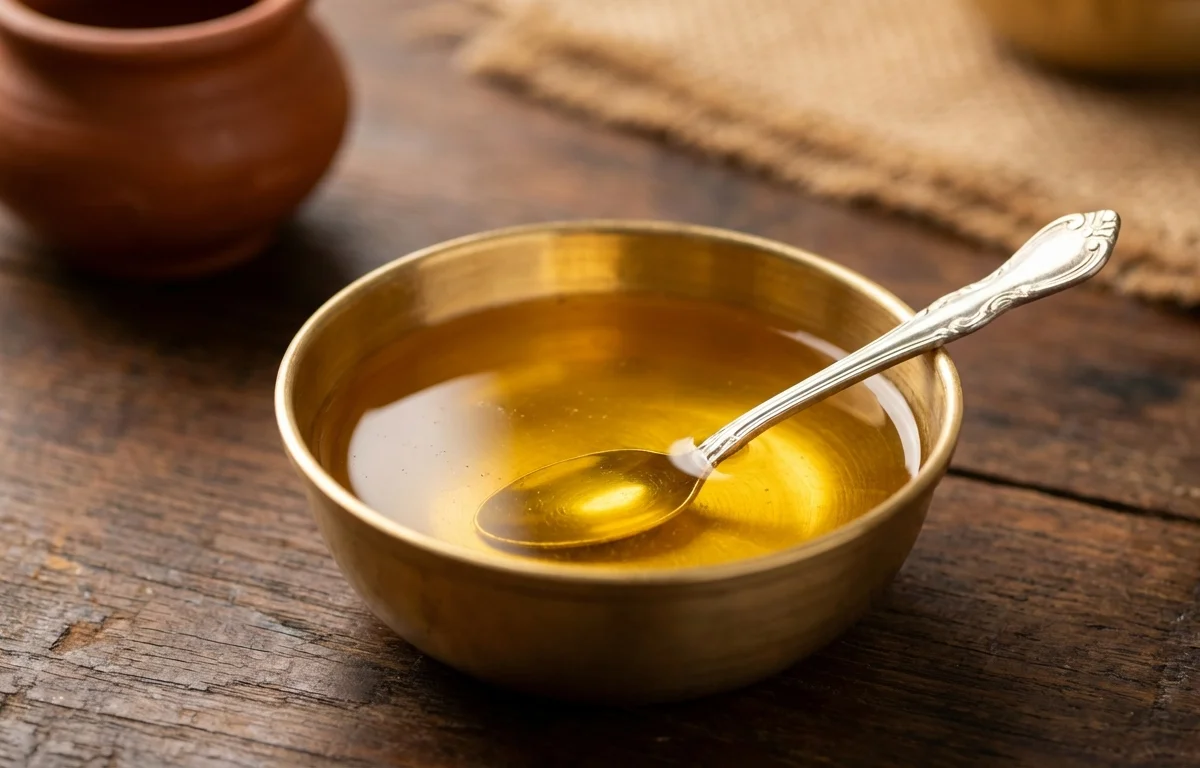
Ghee
Golden, nutty ghee is made by slowly simmering butter until the milk solids separate and turn lightly toasted. Strained and cooled, it keeps well and adds rich flavor to everyday Indian cooking.
For 8 servings
- prep
Cut the butter and set up a clean jar.
Cut the butter into even cubes so it melts steadily. Keep a clean, dry glass jar and a fine strainer ready for storing the ghee.
- boil · ~5 min
Melt the butter over low heat.
Add the butter to a heavy pan and let it melt slowly over low heat. Do not stir once it has fully melted.
TIPLow heat keeps the milk solids from burning before the butterfat clears. - simmer · ~15 min
Simmer until the milk solids separate.
1.Let the melted butter come to a gentle simmer.2.Skim off any foam from the top if needed.3.Cook until the bubbling slows and the liquid turns clear golden.4.Watch for the milk solids at the bottom to turn light brown and smell nutty.TIPTurn off the heat as soon as the solids are light brown; darker solids can make the ghee taste burnt. - rest · ~5 min
Cool the ghee slightly.
Let the hot ghee stand for 5 minutes so the browned solids settle and the liquid is safer to strain.
- assemble
Strain the ghee into the jar.
Pour the clear ghee through a fine strainer into the clean jar, leaving the browned milk solids behind in the pan.
- serve
Cool fully and store.
Let the ghee cool completely before sealing the jar. Store at room temperature in a cool, dry place and use with a clean dry spoon.
What to keep in mind.
7 tips from the recipe — small details that make a real difference to the final dish.
- 1Use a heavy-bottomed pan so the milk solids brown evenly instead of scorching in hot spots.
- 2Once the butter has fully melted, avoid stirring; it helps the solids settle so the ghee stays clear.
- 3The best doneness cue is aroma: switch off the heat when it smells distinctly nutty and the bottom solids are light brown.
- 4If the foam is thick, skim just enough to see the surface clearly, but do not disturb the solids at the bottom.
- 5Let the ghee rest briefly before straining so the browned bits settle and are easier to leave behind.
- 6Make sure the storage jar and spoon are completely dry, since moisture shortens shelf life and can spoil the ghee.
- 7Save the toasted milk solids from the pan and stir them into rice, dal, or roti dough for extra flavor.
Adapt it for your goals.
Cultured-butter
Use cultured unsalted butter for a tangier, more complex ghee that pairs especially well with rice and simple dals.
small batchSmall-batch
Halve the butter if you want fresher ghee more often; it is easier to monitor and less likely to overbrown.
herb infusedHerb-infused
After straining, briefly steep a curry leaf or a small piece of dried ginger, then remove it for a subtle flavored finishing ghee.
Why this is on our healthy list.
Lactose Reduced Fat
Because the milk solids are separated and strained off, ghee contains less lactose and casein than regular butter.
High-Heat Cooking Fat
Pure butterfat is well suited to sautéing and tadka, making it useful for Indian cooking methods that use direct heat.
Rich, Satisfying Flavor
Its concentrated nutty taste can help a small spoonful add plenty of richness to dal, roti, or rice.
Frequently asked questions
It is ready when the bubbling slows, the liquid looks clear golden, and the milk solids at the bottom are light brown with a nutty aroma.