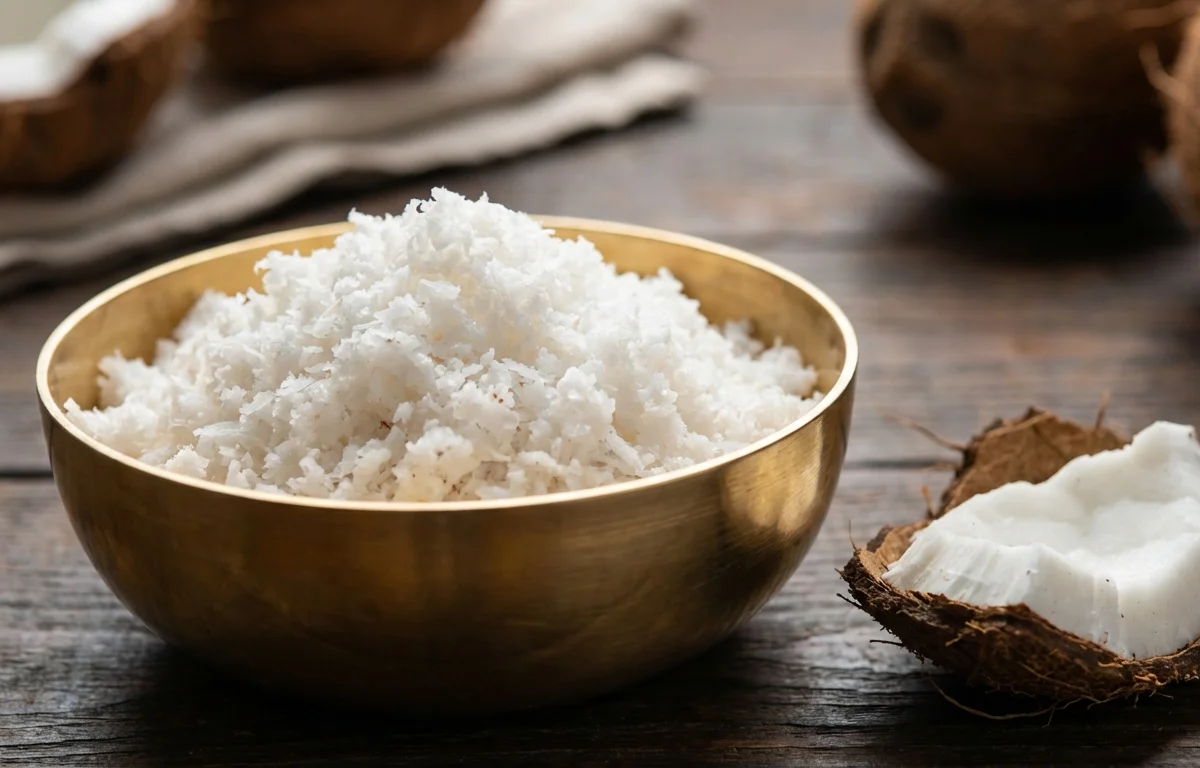
Grated Coconut
Fresh, tender coconut grated into fine shreds, ready to be used as a garnish, in chutneys, or as an accompaniment. A simple yet essential preparation in Indian kitchens, adding natural sweetness and texture to any meal.
For 4 servings
- prep · ~3 min
Break open the coconut.
1.Hold the coconut firmly and tap around its equator with the back of a heavy knife or cleaver, rotating as you go.2.Crack it into two halves and collect the coconut water in a bowl (save for drinking or cooking).3.If the flesh doesn't separate easily, gently pry it away from the shell with a butter knife.TIPA few firm, even taps work better than one hard strike — patience prevents shattered shell pieces in the flesh. - prep · ~5 min
Remove the brown skin.
1.Use a vegetable peeler or paring knife to peel away the thin brown skin from each piece of coconut flesh.2.Rinse the white flesh under cold water and pat dry with a clean kitchen towel.TIPRemoving all the brown skin gives you pure white shreds — any bits left will show as dark flecks. - prep · ~2 min
Grate the coconut flesh.
1.Fit the serrated scraper or rotary grater securely over a bowl.2.Press a piece of coconut flesh against the grating surface and rotate or scrape with steady pressure to produce fine shreds.3.Continue until all the white flesh is grated — the coconut should be fluffy and moist.TIPGrate just before using — fresh coconut dries out and loses its natural oils within a few hours at room temperature. - serve
Serve fresh or use as needed.
Use the grated coconut immediately as a garnish for poha, upma, or curries, or as the base for coconut chutney. If not using right away, cover tightly and refrigerate for up to 24 hours.
TIPFor longer storage, spread the grated coconut on a tray and freeze. Once frozen, transfer to an airtight bag — it keeps for up to 3 months.
What to keep in mind.
6 tips from the recipe — small details that make a real difference to the final dish.
- 1Choose a mature brown coconut — the sound when tapped should be hollow, indicating the flesh has thickened.
- 2Chill the coconut for 30 minutes before cracking to make the flesh contract, so it separates more cleanly from the shell.
- 3For the whitest shreds, remove every trace of brown skin with a gentle but thorough peeling motion.
- 4Use a sharp rotary grater (nariyal kaddu) for long, fluffy shreds — box graters work but produce shorter, wetter pieces.
- 5Grind leftover coconut water into smoothies or sorbet — it never lasts long in the fridge.
- 6Toss grated coconut with a pinch of salt if you plan to refrigerate — it slows moisture loss and keeps the shreds plump.
Adapt it for your goals.
Toasted coconut
Spread the fresh shreds on a baking sheet and toast at 160°C (320°F) for 5–7 minutes, stirring halfway, until golden. Use as a crunchy topping for desserts, granola, or chaat.
frozen coconutFrozen coconut
Portion the grated coconut into 1/2-cup freezer bags, press flat, and freeze. Thaw in the fridge overnight — still excellent for curries and chutneys for up to 3 months.
coconut milk from grated fleshCoconut milk from grated flesh
Blend the fresh shreds with 1/2 cup warm water, strain through a muslin cloth, and squeeze firmly. The resulting thick milk can be used in curries, smoothies, or desserts.
Why this is on our healthy list.
Rich in Medium-Chain Triglycerides
Fresh coconut provides MCTs, a type of fat that may be used quickly for energy rather than stored as body fat.
High in Dietary Fiber
The unsweetened grated flesh is a good source of fiber, which supports digestion and helps you feel full longer.
Naturally Low in Sugar
Fresh coconut contains only trace amounts of natural sugars, making it a tooth-friendly option for sweetening dishes.
Contains Manganese and Copper
Coconut flesh is a source of manganese and copper, trace minerals involved in bone health and antioxidant defense systems.
Frequently asked questions
Young green coconuts have soft jelly-like flesh that won't grate into shreds — use mature brown coconuts specifically for this recipe.