
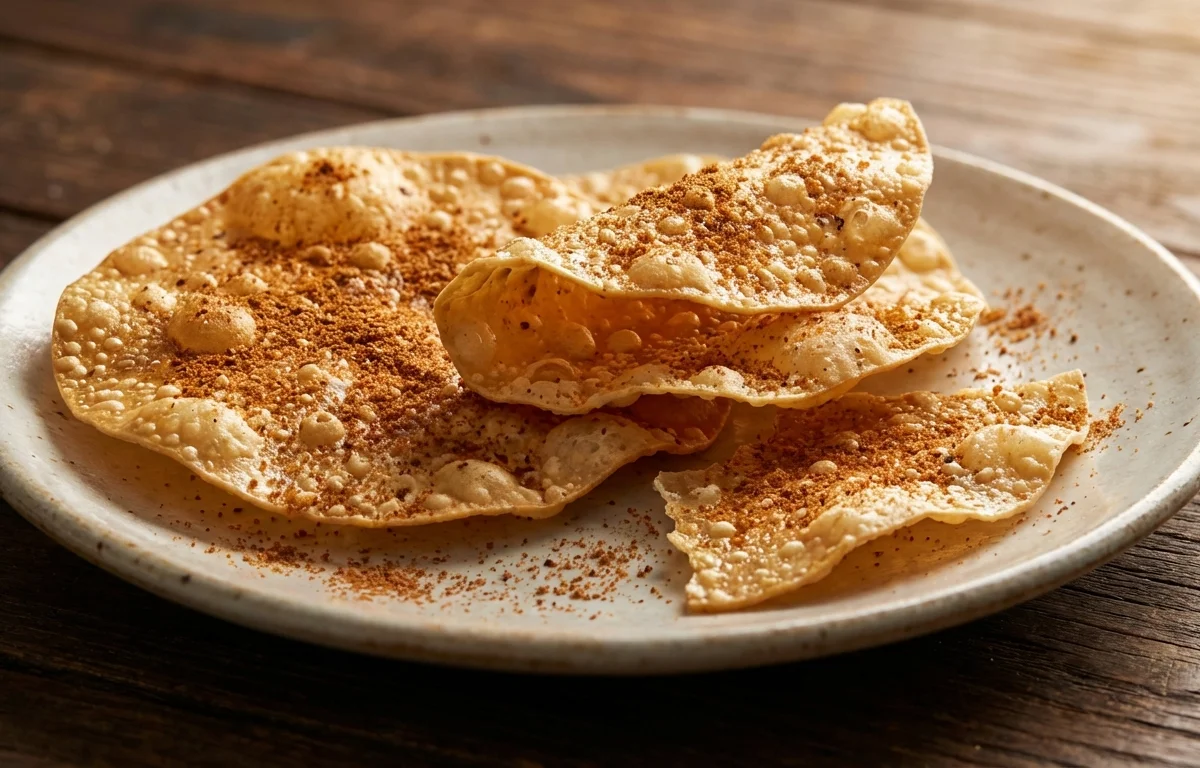
Papad Bhaja
A quick Bengali-style roasted papad that turns crisp and lightly charred in minutes. It adds crunch and a toasty, savory bite to a simple meal of rice, dal, or khichuri.
For 4 servings
- prep
Keep the papad ready for roasting.
Separate the papad gently and keep them nearby so you can roast one at a time without breaking them.
- roast · ~4 min
Roast the papad over low flame.
1.Hold one papad with tongs over a low open flame.2.Move it constantly so it roasts evenly and does not burn.3.Flip as needed until it puffs in spots and gets light brown char marks.4.Roast the remaining papad the same way.TIPKeep the flame low and keep the papad moving for even blistering without black burnt patches. - serve
Serve the papad hot and crisp.
Serve immediately as a crunchy side with rice, dal, khichuri, or a simple Bengali meal.
What to keep in mind.
6 tips from the recipe — small details that make a real difference to the final dish.
- 1Use metal tongs and grip the edge lightly so the papad stays flat and doesn't crack before roasting.
- 2Keep the flame low; high heat scorches one spot before the rest of the papad has time to blister.
- 3Rotate and wave the papad constantly over the flame for even puffing and light brown speckles instead of black patches.
- 4Roast one papad at a time and serve right away; it loses crispness quickly if left out in humid air.
- 5If a papad curls while roasting, briefly press the unroasted side closer to the flame to help it flatten and crisp.
- 6Store any leftovers in an airtight container only after they cool completely, then re-crisp for a few seconds over flame if needed.
Adapt it for your goals.
Stovetop-tawa
Roast the papad on a dry tawa instead of open flame for easier control in kitchens without a gas burner.
microwaveMicrowave
Microwave each papad briefly for a faster no-flame version, though it will have less smoky char.
masala papad styleMasala-papad-style
Top the roasted papad with chopped onion, tomato, green chili, and a squeeze of lemon for a snack version rather than a plain side.
black pepperBlack-pepper
Use a black pepper papad variety if you want a spicier, sharper bite with dal and khichuri.
Why this is on our healthy list.
Low-Oil Crunch
Because the papad is dry-roasted over flame, you get a crisp side without the added oil used in deep frying.
Legume-Based Bite
Urad dal papad is made from lentils, adding a savory pulse-based element to a simple rice and dal meal.
Portion-Friendly Side
Papad bhaja is typically served as a small crunchy accompaniment, making it an easy way to add texture without turning it into a heavy dish.
Frequently asked questions
The flame was likely too high or the papad stayed in one spot too long. Roast over low flame and keep it moving constantly.



-curry.webp)
.webp)