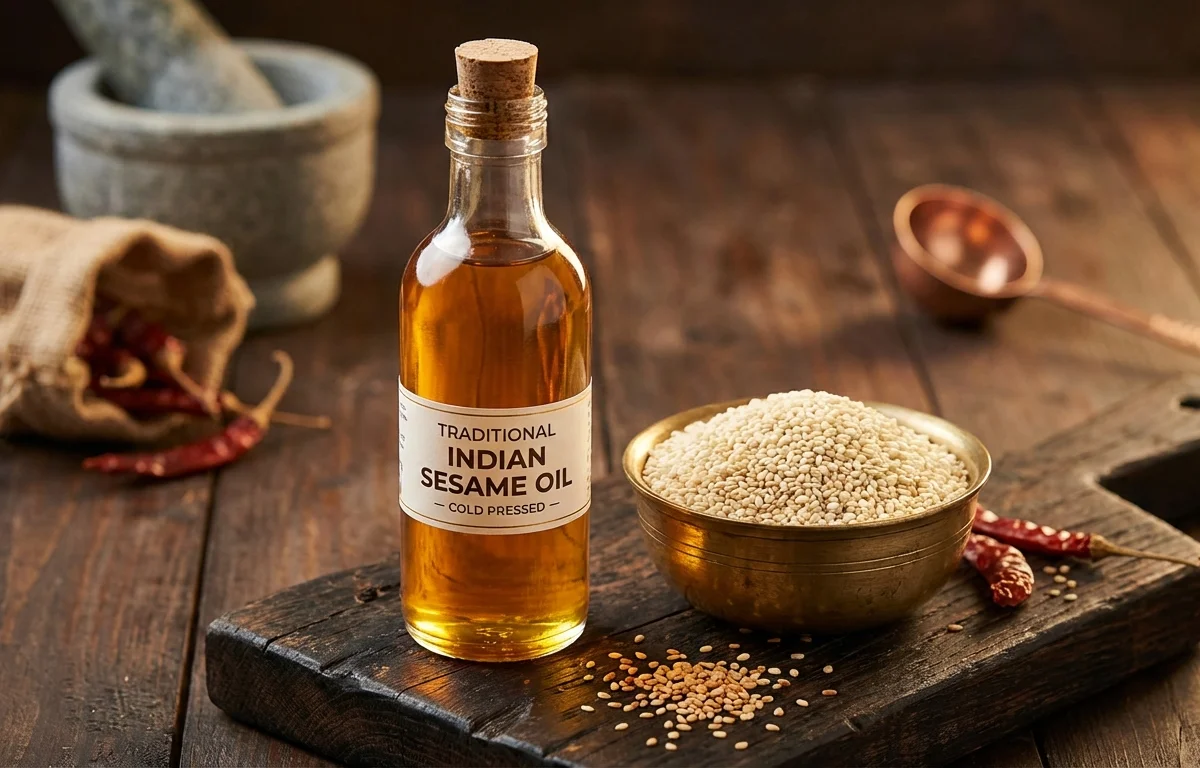
Sesame Oil
Nutty, aromatic sesame oil made by gently roasting sesame seeds and pressing out their rich natural oil. It is a pantry staple in many Indian kitchens, especially for finishing, tempering, and traditional cooking.
For 8 servings
- prep
Clean and sort the sesame seeds.
Spread the sesame seeds on a plate and remove any stones, husk, or debris. Wipe them with a dry cloth if needed, but do not wash them or the oil yield will drop.
- roast · ~10 min
Roast the sesame seeds gently.
Heat a heavy pan over low heat and roast the sesame seeds, stirring often, until they smell nutty and turn lightly golden. Do not let them brown too much or the oil will taste bitter.
- rest · ~5 min
Cool the roasted seeds slightly.
Take the pan off the heat and let the sesame seeds cool until warm, not hot. Warm seeds release oil better during grinding and pressing.
- mix · ~5 min
Grind the seeds into a thick paste.
Transfer the warm sesame seeds to a strong grinder and pulse until they break down into a thick, oily paste. Scrape the sides a few times so the grinding stays even.
- other
Press and collect the oil.
Place the sesame paste in a clean muslin cloth and press firmly to extract as much oil as possible into a bowl. Let the oil rest for a few minutes so any fine sediment settles.
- assemble
Strain and bottle the sesame oil.
Strain the collected oil through a fine cloth or sieve into a clean, dry glass bottle. Store in a cool dark place and use for tempering, pickles, or finishing dishes.
What to keep in mind.
7 tips from the recipe — small details that make a real difference to the final dish.
- 1Use a heavy kadai or thick pan so the sesame seeds roast evenly without scorching.
- 2Keep the flame low and stir constantly once the seeds start popping lightly and smelling nutty.
- 3Stop roasting at light golden; dark brown seeds will make the oil taste bitter.
- 4Grind while the seeds are still warm, not fully cold, for easier oil release.
- 5If your grinder heats up, pulse in short bursts so the paste does not develop a burnt taste.
- 6Let the strained oil settle before bottling, then pour off gently to leave fine sediment behind.
- 7Store the bottle away from sunlight and always use a dry spoon or pourer to protect flavor.
Adapt it for your goals.
Unhulled
Use unhulled sesame seeds for a darker, earthier oil with a more robust traditional flavor.
mild flavorMild-flavor
Use white hulled sesame seeds and roast very lightly for a softer, cleaner oil suited to finishing dishes.
small batchSmall-batch
Make a smaller quantity if using a home grinder with limited capacity; it grinds more evenly and can improve extraction.
Why this is on our healthy list.
Naturally Plant-Based Fat
Sesame oil provides plant-derived fats that are commonly used for cooking, tempering, and finishing meals.
Contains Sesame Antioxidants
Sesame seeds naturally contain compounds such as sesamol and related antioxidants that are retained in the oil to some extent.
Seed-Derived Micronutrients
Because it is extracted from sesame seeds, the oil carries some of the seed's naturally occurring beneficial compounds.
Frequently asked questions
It is better not to wash them for this recipe, because added moisture reduces oil yield and makes roasting harder to control.