Spice3 recipes
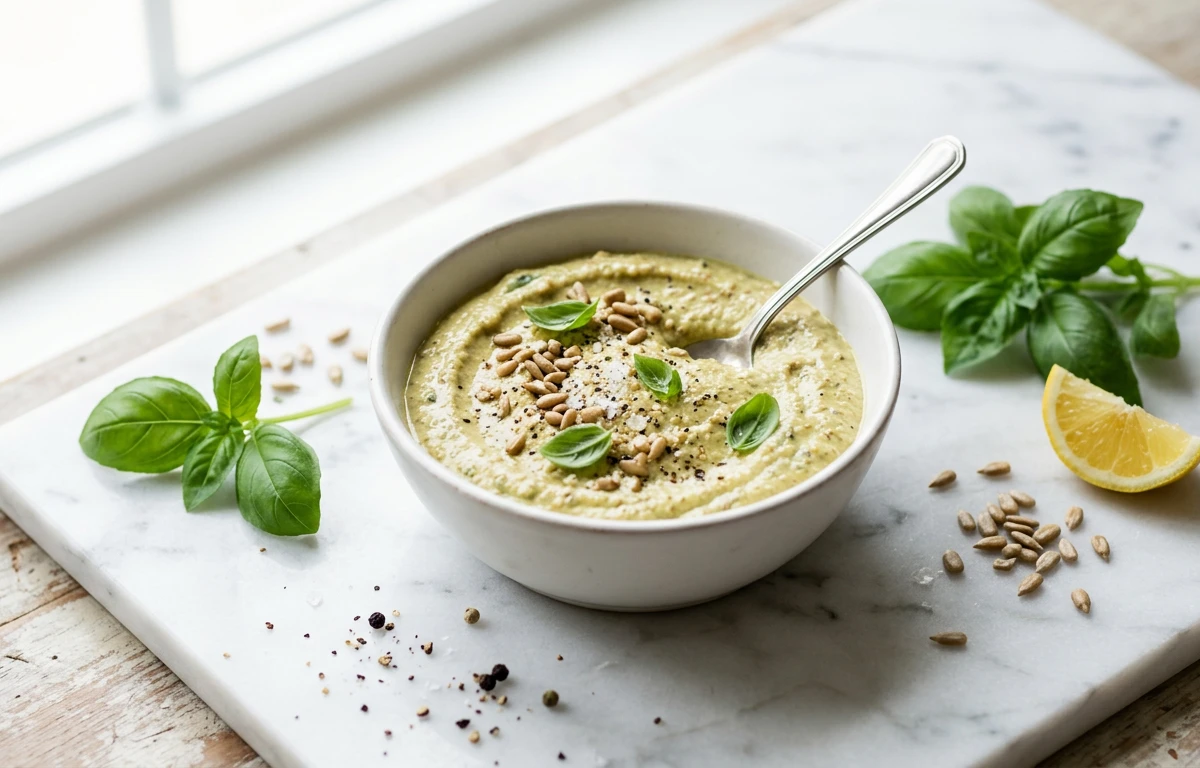
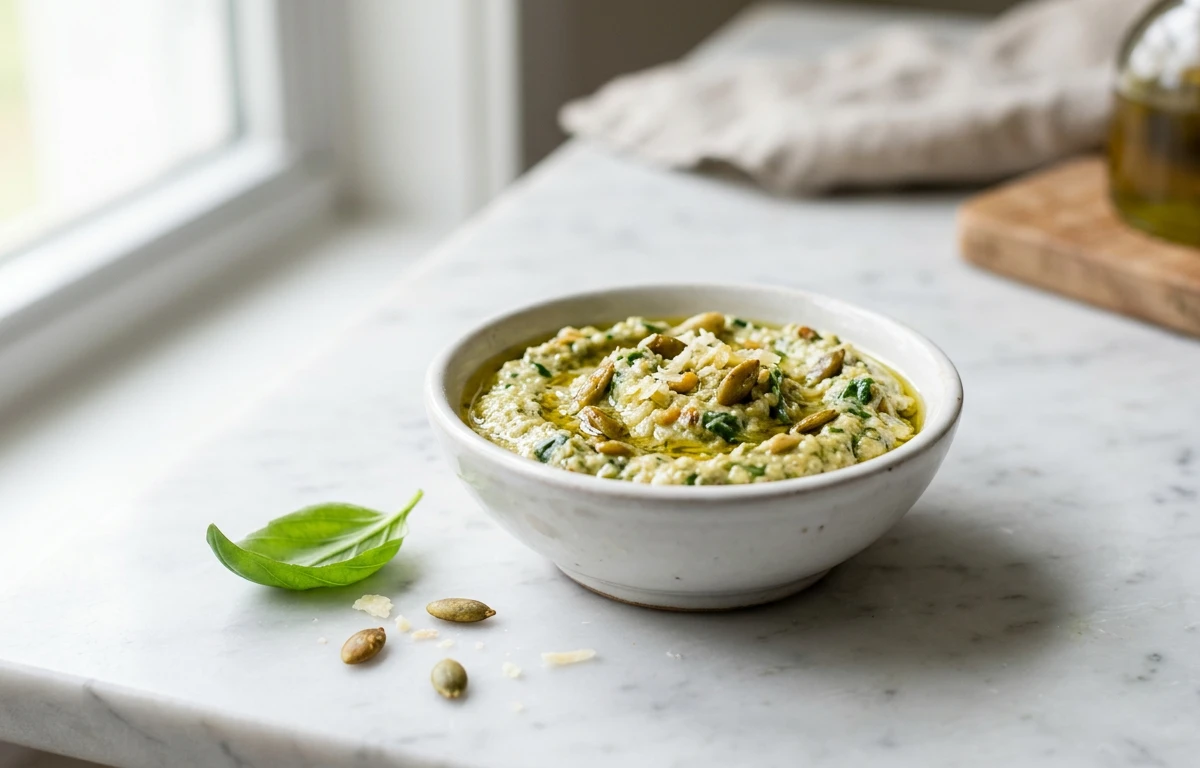
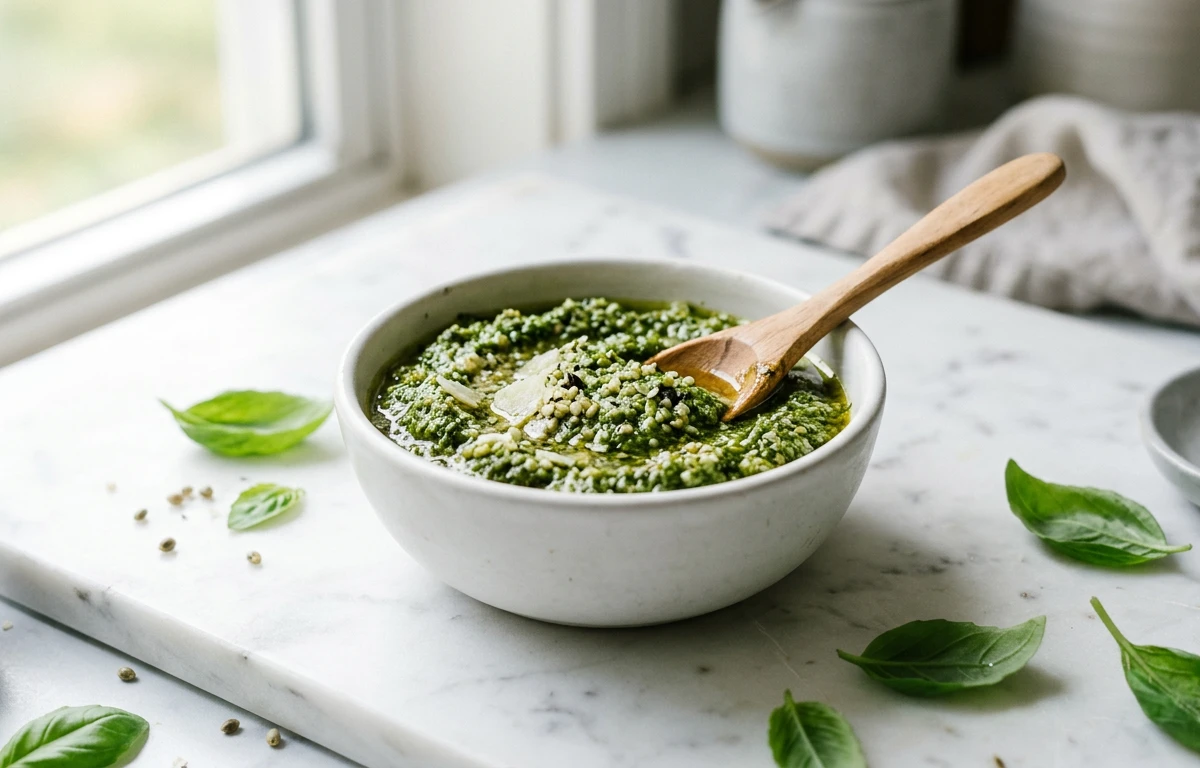
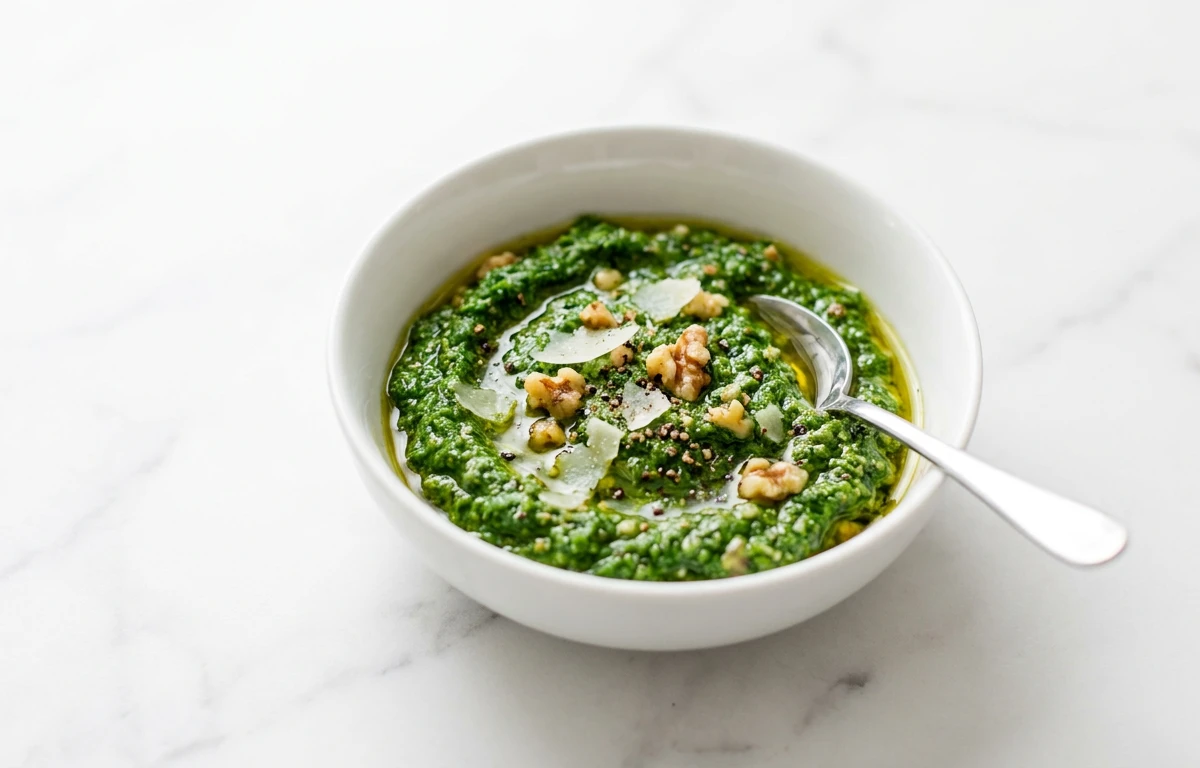
basil pesto.
VegetarianVeganGluten-freeDairy-freeNut-freePeanut-freeSoy-freeEgg-freeShellfish-freeHoney-freeAlcohol-freeFermented
ALSO KNOWN AS
pesto alla genovesepesto
SERVING
CALORIES
514
PROTEIN
5.2g
CARBS
6.8g
FAT
52g
FIBER
2.4g
NUTRITION PROFILE · per 100 g
Everything in this ingredient.
MACRONUTRIENTS
Calories514kcal—
Protein5.2g10%
Carbohydrates6.8g2%
Fiber2.4g9%
Sugar1.2g2%
Total fat52g67%
Saturated fat8.5g43%
Trans fat0g—
Cholesterol12mg4%
Water32.5g—
MINERALS
Sodium1020mg44%
Potassium210mg4%
Calcium180mg14%
Iron1.5mg8%
Magnesium45mg11%
Phosphorus120mg10%
Zinc1.1mg10%
Copper0.20mg22%
Manganese0.40mg17%
Selenium2.5µg5%
VITAMINS
Vitamin A120µg13%
Vitamin C5.0mg6%
Vitamin D0µg0%
Vitamin E6.5mg43%
Vitamin K280µg233%
Thiamin (B1)0.05mg4%
Riboflavin (B2)0.12mg9%
Niacin (B3)0.80mg5%
Pantothenic acid (B5)0.20mg4%
Vitamin B60.10mg6%
Folate (B9)25µg6%
Vitamin B120.20µg8%
%DV based on a 2,000 cal diet. Source: USDA FoodData Central. A dash in the %DV column means there’s no established Daily Value for that nutrient.
MEASUREMENT CONVERSIONS
How much is what.
1 cup230g
1 tablespoon15g
1 teaspoon5g
1 oz28.4g
1 lb453.6g
1 ml1.1g
1 liter1050g
HEALTH BENEFITS
Why eat it.
- ✓Rich in heart-healthy monounsaturated fats from olive oil
- ✓High in Vitamin K which supports bone health and blood clotting
- ✓Contains potent antioxidants from fresh basil and garlic
- ✓Provides essential minerals like calcium and magnesium from nuts and cheese
- ✓Garlic components offer natural antimicrobial properties
COOKING TIPS
In the kitchen.
- 1Avoid heating pesto directly over high heat as it can make the basil bitter
- 2Toss with pasta off the heat, using a little pasta water to create a creamy emulsion
- 3Use as a flavorful marinade for chicken or a spread for gourmet sandwiches
STORAGE
Keep it fresh.
- Store in the refrigerator for 5-7 days in an airtight container
- Pour a thin layer of olive oil over the top to prevent oxidation and browning
- Can be frozen in ice cube trays for up to 6 months for easy portioning
FAQ
Frequently asked questions.
How long does store-bought pesto last after opening?
Once opened, refrigerated pesto typically lasts 5 to 7 days. Always check for signs of mold or an off-smell.
Can I freeze basil pesto?
Yes, pesto freezes very well. Freezing it in ice cube trays allows you to defrost only the amount you need for a single meal.
Why did my pesto turn brown?
Pesto turns brown due to oxidation when the basil is exposed to air. Covering the surface with olive oil or plastic wrap can prevent this.
Is pesto vegan?
Traditional pesto is not vegan because it contains Parmesan or Pecorino cheese. However, vegan versions using nutritional yeast are common.
What can I use as a substitute for pine nuts in pesto?
Walnuts, cashews, or sunflower seeds are excellent substitutes that provide a similar texture and nutty flavor.
Is pesto gluten-free?
Yes, standard basil pesto made with basil, oil, nuts, cheese, and garlic is naturally gluten-free.
How do I pick a high-quality store-bought pesto?
Look for pesto with a bright green color and extra virgin olive oil listed as a primary ingredient rather than sunflower or canola oil.
Can pesto be used as a salad dressing?
Yes, you can thin pesto with a little extra olive oil or lemon juice to create a vibrant dressing for pasta salads or greens.
Does pesto contain common allergens?
Yes, pesto typically contains tree nuts (pine nuts or walnuts) and dairy (cheese), which are major allergens.
What are the best food pairings for basil pesto?
Pesto pairs perfectly with pasta, grilled chicken, white fish, roasted vegetables, and fresh mozzarella cheese.
RECIPES
Cook with basil pesto.
3 recipes · sorted by what’s quick