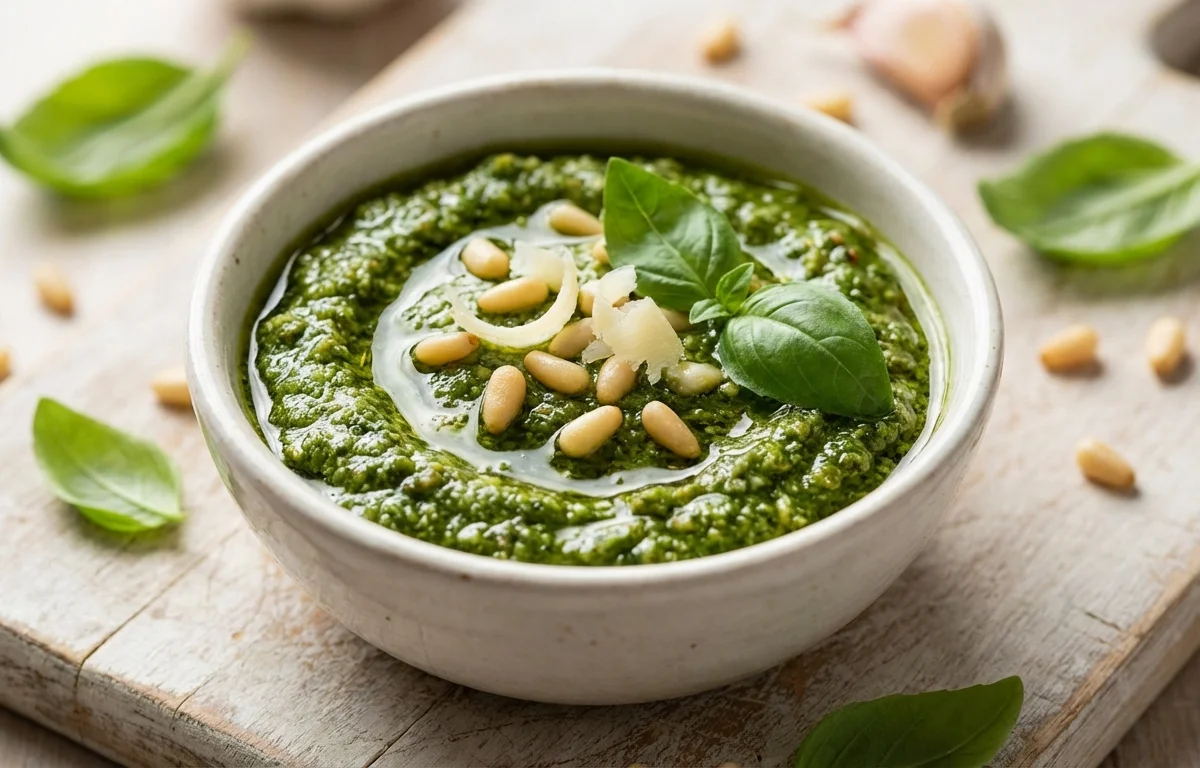
Basil Pesto
A vibrant, no-cook sauce bursting with fresh basil, nutty pine nuts, and sharp parmesan. This classic Italian condiment comes together in minutes in a food processor, coating pasta beautifully or elevating everything from sandwiches to grilled vegetables with its bright, garlicky punch.
For 4 servings
- prep · ~3 min
Toast the pine nuts.
Place pine nuts in a small dry skillet over medium-low heat. Toast, shaking the pan frequently, until golden and fragrant, about 2 to 3 minutes. Transfer immediately to a plate to cool.
TIPWatch closely — pine nuts burn in seconds. The moment you smell them, they're done. - mix · ~1 min
Pulse the base ingredients.
In the bowl of a food processor, combine the cooled pine nuts, garlic cloves, and salt. Pulse several times until coarsely chopped.
- mix · ~1 min
Add basil and cheese.
Add the packed basil leaves and grated parmesan to the food processor. Pulse in short bursts until the basil is broken down and the mixture looks like a coarse green paste.
TIPDon't over-process at this stage — you want texture, not a smooth puree. - mix · ~1 min
Stream in the olive oil.
With the food processor running, slowly pour the olive oil through the feed tube in a steady stream. Blend until the pesto is emulsified and reaches your desired consistency — stop as soon as it looks uniform.
- mix
Finish with lemon juice and adjust seasoning.
Scrape down the sides, add the lemon juice, and pulse once to combine. Taste and add an extra pinch of salt if needed.
- serve
Transfer to a jar and use immediately or store.
Scrape the pesto into a clean jar. If storing, press plastic wrap directly onto the surface to prevent browning, then seal with a lid. Refrigerate for up to 5 days.
TIPDrizzle a thin layer of olive oil on top before sealing — it locks out air and keeps the pesto bright green.
What to keep in mind.
6 tips from the recipe — small details that make a real difference to the final dish.
- 1Toast pine nuts in a dry pan until just golden, then cool completely to avoid pulverizing them into paste.
- 2Wash and thoroughly dry basil leaves before using; excess water will make the pesto watery and dull.
- 3Pulse the food processor in short bursts rather than running continuously to keep a pleasing texture.
- 4Add olive oil in a slow, steady stream while the processor runs to create a creamy emulsion.
- 5Press plastic wrap directly onto the surface of stored pesto to stop air from turning it brown.
- 6For brighter color and tang, stir in fresh lemon juice right before serving, not during storage.
Adapt it for your goals.
Vegan pesto
Replace parmesan with 2 tablespoons of nutritional yeast or a handful of soaked cashews for a dairy-free version that still delivers umami and creaminess.
Nut free pestoNut-free pesto
Swap pine nuts for toasted sunflower seeds or pumpkin seeds to avoid allergens while keeping a similar rich, nutty texture and flavor.
Kale spinach blendKale-spinach blend
Substitute half the basil with equal parts blanched kale or baby spinach for a milder, more affordable green sauce that retains a vibrant color.
Spicy chili pestoSpicy chili pesto
Add 1 small deseeded red chili or 1/2 teaspoon red pepper flakes when pulsing the garlic for a fiery kick that pairs well with grilled meats.
Why this is on our healthy list.
Rich in heart-healthy fats
Extra virgin olive oil and pine nuts provide monounsaturated fats that support cardiovascular health when used in moderation.
Source of vitamin K from basil
Fresh basil leaves supply vitamin K, which plays a key role in bone health and normal blood clotting.
Antioxidant boost from garlic
Garlic contains allicin, a sulfur compound with antioxidant properties that may help support the immune system.
Calcium from parmesan cheese
Parmesan is naturally high in calcium, which is essential for strong bones and teeth.
Frequently asked questions
Pesto darkens when basil oxidizes due to air exposure. Press plastic wrap directly onto the surface before refrigerating, and drizzle a thin layer of olive oil on top to create a seal.