Protein
bone-in chicken.
VegetarianVeganGluten-freeDairy-freeNut-freePeanut-freeSoy-freeEgg-freeShellfish-freeHoney-freeAlcohol-free
ALSO KNOWN AS
chicken on the bone
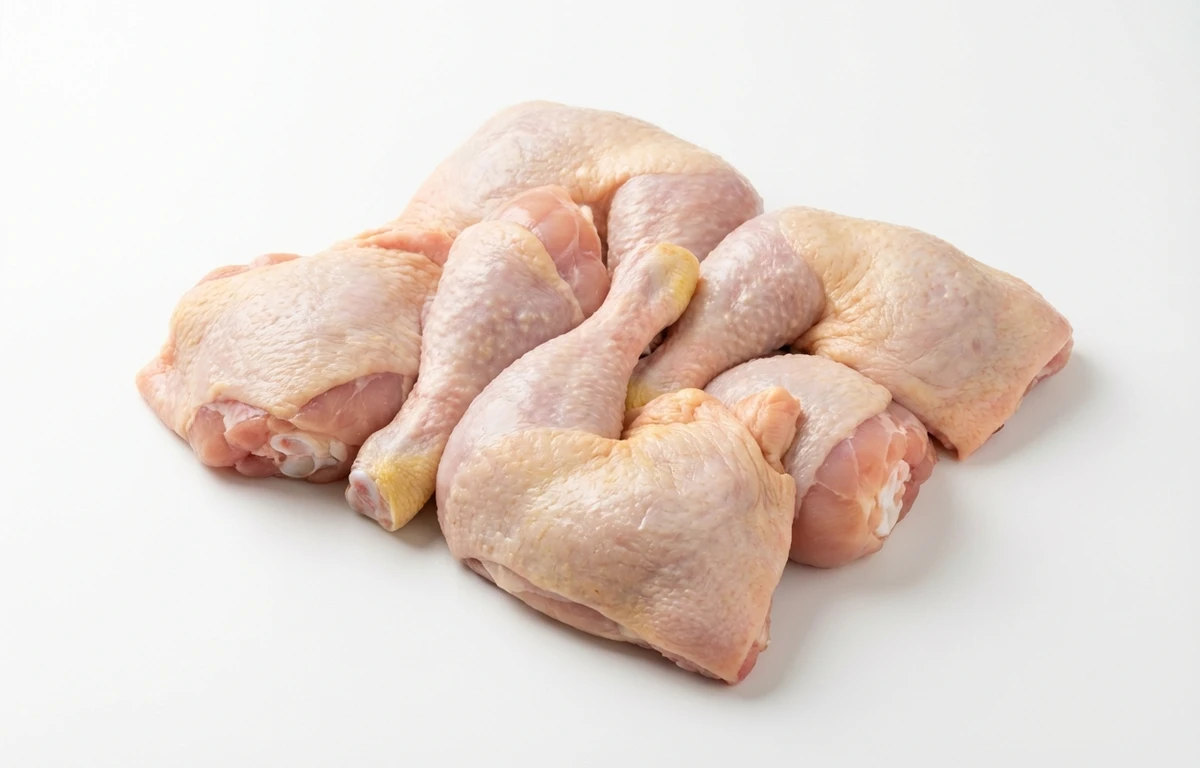
SERVING
CALORIES
215
PROTEIN
18.6g
CARBS
0g
FAT
15.1g
FIBER
0g
NUTRITION PROFILE · per 100 g
Everything in this ingredient.
MACRONUTRIENTS
Calories215kcal—
Protein18.6g37%
Carbohydrates0g0%
Fiber0g0%
Sugar0g0%
Total fat15.1g19%
Saturated fat4.3g22%
Trans fat0.10g—
Cholesterol75mg25%
Water65.4g—
MINERALS
Sodium70mg3%
Potassium223mg5%
Calcium11mg1%
Iron0.90mg5%
Magnesium20mg5%
Phosphorus147mg12%
Zinc1.3mg12%
Copper0.05mg6%
Manganese0.01mg0%
Selenium17.8µg32%
VITAMINS
Vitamin A21µg2%
Vitamin C0mg0%
Vitamin D0.10µg1%
Vitamin E0.30mg2%
Vitamin K1.5µg1%
Thiamin (B1)0.06mg5%
Riboflavin (B2)0.12mg9%
Niacin (B3)6.4mg40%
Pantothenic acid (B5)0.90mg18%
Vitamin B60.35mg21%
Folate (B9)4.0µg1%
Vitamin B120.30µg13%
%DV based on a 2,000 cal diet. Source: USDA FoodData Central. A dash in the %DV column means there’s no established Daily Value for that nutrient.
MEASUREMENT CONVERSIONS
How much is what.
1 cup140g
1 tablespoon8.8g
1 teaspoon2.9g
1 oz28.4g
1 lb453.6g
1 ml0.6g
1 liter583.3g
1 piece150g
HEALTH BENEFITS
Why eat it.
- ✓Excellent source of high-quality, complete protein essential for muscle growth, repair, and overall body function.
- ✓The bones provide collagen, gelatin, and minerals like calcium and phosphorus, which support joint health and bone density, especially when used for broth.
- ✓Rich in B vitamins, particularly niacin (B3) and B6, which are crucial for energy metabolism, brain function, and red blood cell formation.
- ✓Contains essential minerals like selenium, a powerful antioxidant that supports immune function, and phosphorus, which is vital for healthy bones and teeth.
COOKING TIPS
In the kitchen.
- 1Always cook bone-in chicken to a safe internal temperature of 165°F (74°C), using a meat thermometer inserted into the thickest part of the meat, avoiding contact with the bone.
- 2The bone acts as an insulator, helping the meat cook more evenly and retain moisture, resulting in a more tender and flavorful final product. Account for slightly longer cooking times than boneless cuts.
- 3Pat the skin dry with paper towels and season generously before cooking to achieve a crispy, golden-brown skin when roasting, grilling, or pan-searing.
- 4Utilize the bones after eating the meat to make a nutritious and flavorful chicken stock or broth, which can be used as a base for soups, stews, and sauces.
STORAGE
Keep it fresh.
- Store raw chicken in the refrigerator at or below 40°F (4°C) on the bottom shelf to prevent cross-contamination. Use within 1-2 days.
- For long-term storage, freeze at 0°F (-18°C) in an airtight, freezer-safe bag or container for up to 9 months.
- Thaw frozen chicken safely in the refrigerator over 24-48 hours, in a leak-proof bag submerged in cold water (changed every 30 minutes), or in the microwave.
FAQ
Frequently asked questions.
Is bone-in chicken healthy?
Yes, bone-in chicken is a nutrient-dense source of high-quality protein and essential B vitamins like Niacin and B6. The presence of bones also provides minerals such as calcium and phosphorus, which support bone density and joint health.
How much protein and calories are in bone-in chicken?
A 100g serving of bone-in chicken contains approximately 215 calories and 18.6g of protein. It is a complete protein source, providing all essential amino acids necessary for muscle growth and repair.
Is bone-in chicken keto-friendly?
Yes, bone-in chicken is excellent for keto and low-carb diets because it contains 0g of carbohydrates. Its fat content of 15.1g per 100g also helps those on a ketogenic diet meet their daily fat intake requirements.
Is bone-in chicken gluten-free?
Plain bone-in chicken is naturally gluten-free. However, you should always check the labels on pre-marinated or breaded chicken products, as those often contain wheat-based thickeners or coatings.
Why should I cook chicken with the bone in?
Cooking chicken with the bone in helps the meat stay moist and flavorful, as the bone acts as a heat conductor and prevents the meat from drying out. Additionally, the bones release collagen and gelatin during slow cooking, which enhances the texture and nutritional value of the dish.
How do you know when bone-in chicken is fully cooked?
The most accurate method is using a meat thermometer to ensure the internal temperature reaches 165°F (74°C) at the thickest part, avoiding the bone. Visually, the juices should run clear and the meat should no longer be pink at the bone.
How long does raw bone-in chicken last in the fridge?
Raw bone-in chicken should be stored in the coldest part of the refrigerator and used within 1 to 2 days. For longer storage, it should be wrapped tightly in airtight packaging and kept in the freezer.
Can you freeze bone-in chicken?
Yes, bone-in chicken freezes very well and can maintain its quality for up to 9 months if stored at 0°F or lower. To prevent freezer burn, ensure it is sealed in heavy-duty freezer bags or vacuum-sealed packaging.
What can I do with the bones after eating the meat?
Leftover chicken bones are perfect for making homemade bone broth, as they are rich in collagen and minerals. Simmering the bones with water and vegetables extracts nutrients that support joint health and immune function.
Is bone-in chicken halal or kosher?
Chicken is naturally permissible in both diets, but it must be slaughtered and processed according to specific religious guidelines to be certified. Look for official Halal or Kosher symbols on the packaging to ensure it meets these requirements.
RECIPES
Cook with bone-in chicken.
0 recipes · sorted by what’s quick