
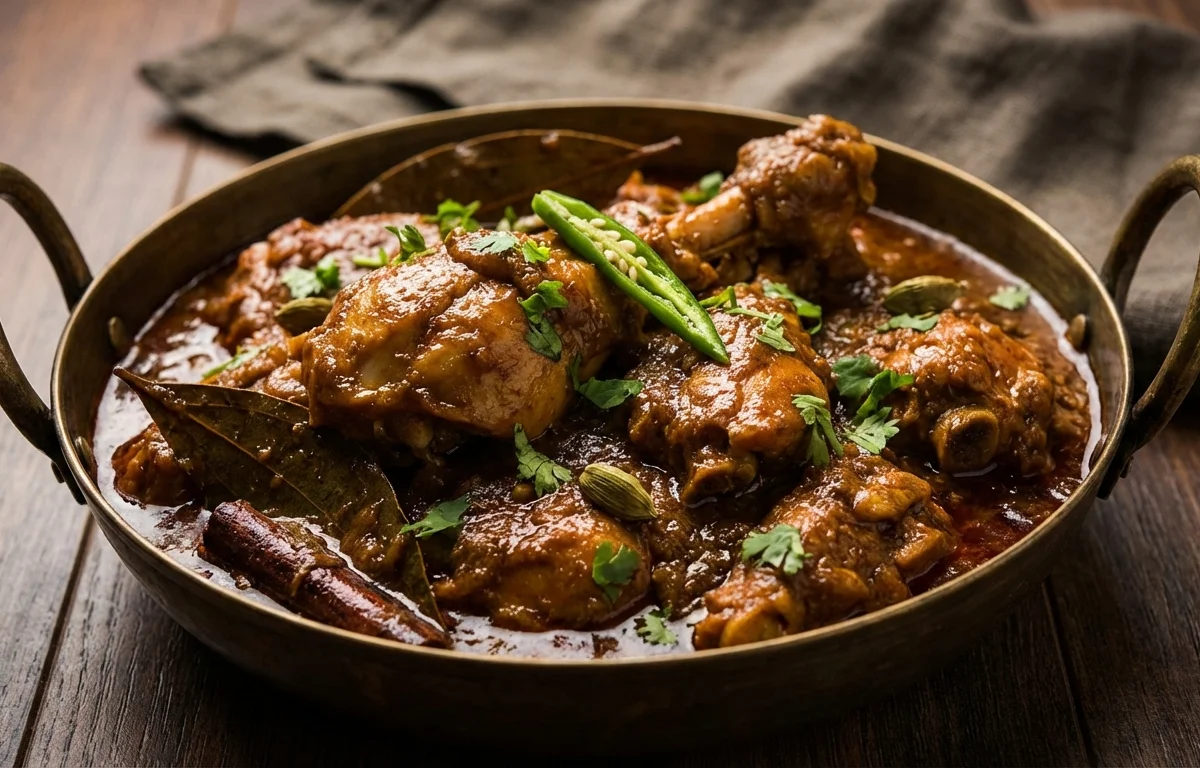
Bengali Chicken Kassa
A rich, slow-cooked Bengali chicken curry with a dark, bhuna-style masala and plenty of onion. The gravy turns thick, glossy, and full of warm spices, making it perfect with rice or luchi.
For 4 servings
- prep · ~20 min
Marinate the chicken.
1.Add chicken to a large bowl.2.Mix in yogurt, 1 tbsp ginger-garlic paste, turmeric powder, red chili powder, and 0.25 tsp salt.3.Rub well so every piece is coated.4.Set aside for 20 minutes.TIPA short rest helps the chicken stay juicy and lets the spices soak in. - fry · ~5 min
Brown the potatoes.
1.Heat 1 tbsp mustard oil in a heavy pan over medium heat.2.Add the potato halves and fry until lightly golden on the cut sides, 4 to 5 minutes.3.Take them out to a plate. - saute · ~11 min
Cook the whole spices and onions.
1.Add the remaining mustard oil to the same pan.2.Add bay leaf, cinnamon, green cardamom, cloves, and black peppercorns.3.Let them sizzle for 30 seconds until fragrant.4.Add the sliced onion and sugar, then cook until deep golden, 8 to 10 minutes.TIPKeep the heat medium and stir often so the onions brown evenly without burning. - saute · ~7 min
Build the kassa masala.
1.Add the remaining ginger-garlic paste and cook for 1 minute.2.Add tomato, coriander powder, cumin powder, and the remaining salt.3.Cook, stirring often, until the tomatoes break down and the masala turns thick and glossy, 5 to 7 minutes. - saute · ~10 min
Bhuna the chicken.
1.Add the marinated chicken to the pan.2.Cook over medium-high heat, stirring and turning well, until the chicken loses its raw color and the masala clings to it, 8 to 10 minutes.3.Scrape the bottom of the pan as you cook so the browned bits mix back into the gravy.TIPThis bhuna stage gives chicken kassa its deep color and bold flavor, so do not rush it. - simmer · ~20 min
Simmer until the chicken is tender.
1.Add the fried potatoes, green chili, and hot water.2.Mix well and bring to a gentle simmer.3.Cover and cook on low heat for 18 to 20 minutes, stirring once or twice, until the chicken is cooked through and the potatoes are tender.TIPCook the chicken until it reaches 165°F at the thickest part near the bone. - garnish · ~3 min
Finish with garam masala and ghee.
Uncover the pan and cook a few more minutes if needed so the gravy stays thick rather than watery. Stir in garam masala and ghee for the final aroma.
- serve
Serve hot.
What to keep in mind.
7 tips from the recipe — small details that make a real difference to the final dish.
- 1Let the mustard oil smoke lightly first, then reduce the heat before adding spices to tame its raw sharpness.
- 2Slice the onions evenly and take them to a deep golden brown; this color is what gives kassa its dark, rich body.
- 3During the bhuna stage, keep scraping up the fond from the pan so those browned bits melt back into the masala.
- 4Use hot water, not cold, when simmering so the chicken keeps cooking gently and the oil does not seize.
- 5Do not overcook the potatoes while frying; they should only be lightly golden because they finish cooking in the gravy.
- 6If the yogurt looks like it may split, lower the heat when adding the chicken and stir continuously for the first minute.
- 7This curry tastes even better after a few hours of rest, when the onion-heavy masala settles into the chicken and potatoes.
Adapt it for your goals.
Low-oil
Reduce the mustard oil slightly and skip frying the potatoes separately; simmer them directly in the curry for a lighter everyday version.
bonelessBoneless
Use boneless chicken thighs for faster cooking and easier serving, though the gravy will be a little less rich than with bone-in pieces.
spicierSpicier
Add an extra green chili or a little more red chili powder if you want the kassa hotter without changing its core flavor.
no potatoNo-potato
Omit the potatoes for a more meat-focused curry with a thicker, more concentrated gravy.
Why this is on our healthy list.
Protein-Rich Main Dish
Chicken and yogurt make this curry filling and satisfying, with plenty of protein in each serving.
Digestive Spice Base
Ginger, garlic, cumin, coriander, and black pepper bring flavor while also making the rich gravy feel more balanced.
Cooked Onion and Tomato Benefits
The onion- and tomato-based masala contributes plant compounds and depth without relying on cream or heavy nuts.
Frequently asked questions
The color mostly comes from properly browning the onions and patiently bhuna-ing the masala. If the onions stay pale or the masala is rushed, the curry will taste good but look lighter.


-curry.webp)
.webp)