Grain4 recipes
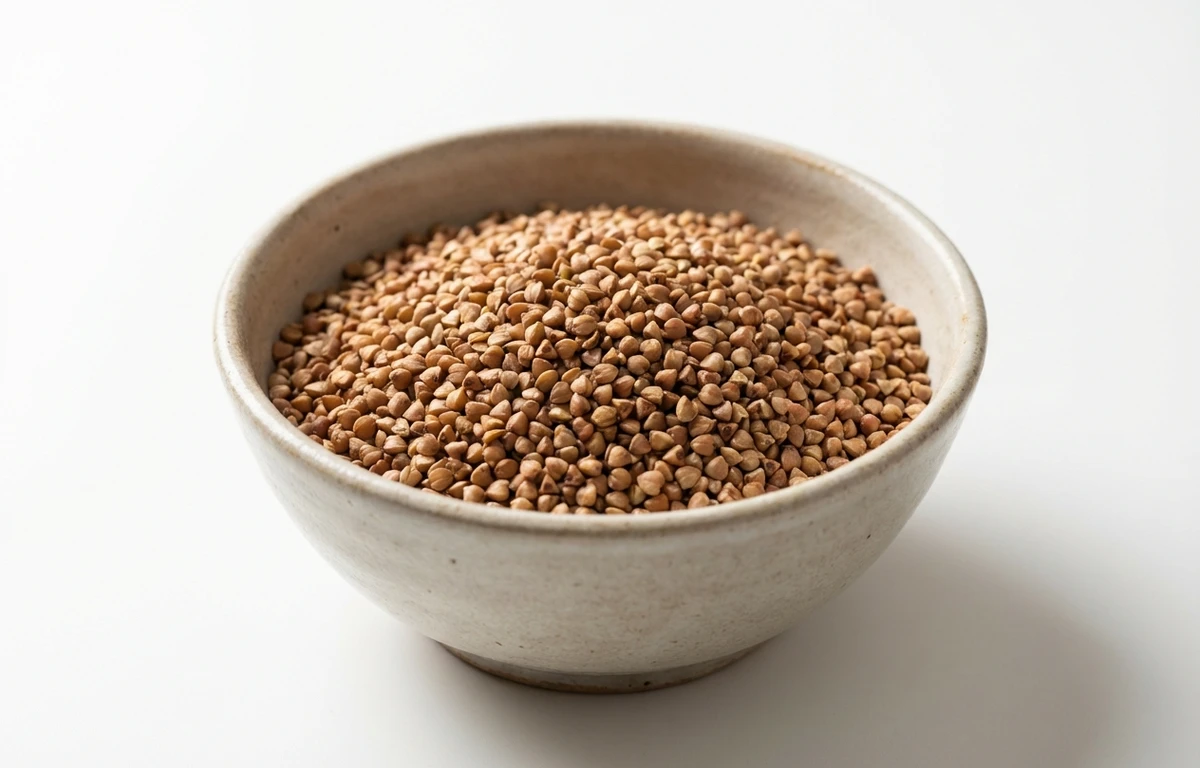
buckwheat groats.
VegetarianVeganGluten-freeDairy-freeNut-freePeanut-freeSoy-freeEgg-freeShellfish-freeHoney-freeAlcohol-freeWhole grain
ALSO KNOWN AS
buckwheat kernels
SERVING
CALORIES
343
PROTEIN
13.3g
CARBS
71.5g
FAT
3.4g
FIBER
10g
NUTRITION PROFILE · per 100 g
Everything in this ingredient.
MACRONUTRIENTS
Calories343kcal—
Protein13.3g27%
Carbohydrates71.5g26%
Fiber10g36%
Sugar0g0%
Total fat3.4g4%
Saturated fat0.74g4%
Trans fat0g—
Cholesterol0mg0%
Water9.8g—
MINERALS
Sodium1.0mg0%
Potassium460mg10%
Calcium18mg1%
Iron2.2mg12%
Magnesium231mg55%
Phosphorus347mg28%
Zinc2.4mg22%
Copper1.1mg122%
Manganese1.3mg57%
Selenium8.3µg15%
VITAMINS
Vitamin A0µg0%
Vitamin C0mg0%
Vitamin D0µg0%
Vitamin E0mg0%
Vitamin K7.0µg6%
Thiamin (B1)0.10mg8%
Riboflavin (B2)0.40mg31%
Niacin (B3)7.0mg44%
Pantothenic acid (B5)1.2mg24%
Vitamin B60.20mg12%
Folate (B9)30µg8%
Vitamin B120µg0%
%DV based on a 2,000 cal diet. Source: USDA FoodData Central. A dash in the %DV column means there’s no established Daily Value for that nutrient.
MEASUREMENT CONVERSIONS
How much is what.
1 cup164g
1 tablespoon10.3g
1 teaspoon3.4g
1 ml0.7g
1 liter683.3g
HEALTH BENEFITS
Why eat it.
- ✓Rich in minerals like manganese, magnesium, and copper, and a good source of dietary fiber.
- ✓Contains all nine essential amino acids, making it a complete protein source, beneficial for muscle repair and growth.
- ✓May improve heart health by lowering cholesterol and blood pressure, partly due to its high content of the flavonoid rutin.
- ✓Helps manage blood sugar levels due to its low-to-medium glycemic index and the presence of D-chiro-inositol.
COOKING TIPS
In the kitchen.
- 1For a nuttier flavor and fluffier texture, toast the dry groats in a skillet for 4-5 minutes before adding liquid.
- 2Use a standard ratio of 1 part groats to 2 parts water or broth. Bring to a boil, then reduce heat, cover, and simmer for about 15-20 minutes until the liquid is absorbed.
- 3To make traditional kasha, coat the toasted groats in a beaten egg and cook until dry before adding liquid. This helps keep the grains separate.
- 4Avoid over-stirring while cooking, as this can release starches and make the groats mushy.
STORAGE
Keep it fresh.
- Store raw buckwheat groats in an airtight container in a cool, dark pantry for up to one year.
- For longer-term storage, especially in humid climates, keep the airtight container in the refrigerator or freezer to prevent rancidity.
- Cooked buckwheat should be refrigerated in a sealed container and consumed within 3-5 days.
FAQ
Frequently asked questions.
Is buckwheat healthy?
Yes, buckwheat is highly nutritious and considered a functional food. It is rich in essential minerals like manganese, magnesium, and copper, and contains heart-healthy antioxidants like rutin which can help lower blood pressure and cholesterol.
Is buckwheat a complete protein?
Yes, buckwheat is one of the few plant-based sources that provides a complete protein profile. It contains all nine essential amino acids, including lysine, which is often missing in other grains, making it excellent for muscle repair and growth.
Is buckwheat gluten-free?
Despite its name, buckwheat is not a type of wheat and is naturally gluten-free. It is actually a pseudocereal related to rhubarb and sorrel, making it a safe and nutritious choice for those with celiac disease or gluten intolerance.
How do you cook buckwheat groats?
To cook buckwheat, rinse the groats and use a ratio of 1 part buckwheat to 2 parts water or broth. Bring to a boil, then reduce heat and simmer covered for 10–15 minutes until the liquid is absorbed and the groats are tender.
Can diabetics eat buckwheat?
Yes, buckwheat is an excellent choice for managing blood sugar levels. It has a low-to-medium glycemic index and contains a unique compound called D-chiro-inositol, which has been shown to help improve insulin sensitivity.
What do buckwheat groats taste like?
Buckwheat has a distinct, robust, and earthy flavor with nutty undertones. Raw green buckwheat is mild, while toasted buckwheat (often called kasha) has a much deeper, smokier, and more intense flavor profile.
Is buckwheat keto-friendly?
No, buckwheat is not considered keto-friendly as it is high in carbohydrates, containing about 71.5g of carbs per 100g. While it is a healthy complex carbohydrate, it exceeds the daily carb limit for a strict ketogenic diet.
How do you store buckwheat groats?
Store dry buckwheat in an airtight container in a cool, dark, and dry pantry for up to one year. Because of its natural oil content, it is best to store it in the refrigerator or freezer if you live in a warm climate to prevent it from becoming rancid.
Is buckwheat good for weight loss?
Buckwheat can be beneficial for weight loss due to its high fiber and protein content, which increases satiety and keeps you feeling full longer. Its complex carbohydrates provide sustained energy without causing rapid blood sugar spikes.
What is the difference between green buckwheat and kasha?
Green buckwheat is the raw, untoasted groat with a subtle flavor and soft texture. Kasha is buckwheat that has been roasted, resulting in a dark brown color, a much stronger nutty flavor, and a firmer texture that holds its shape better during cooking.
RECIPES
Cook with buckwheat groats.
4 recipes · sorted by what’s quick