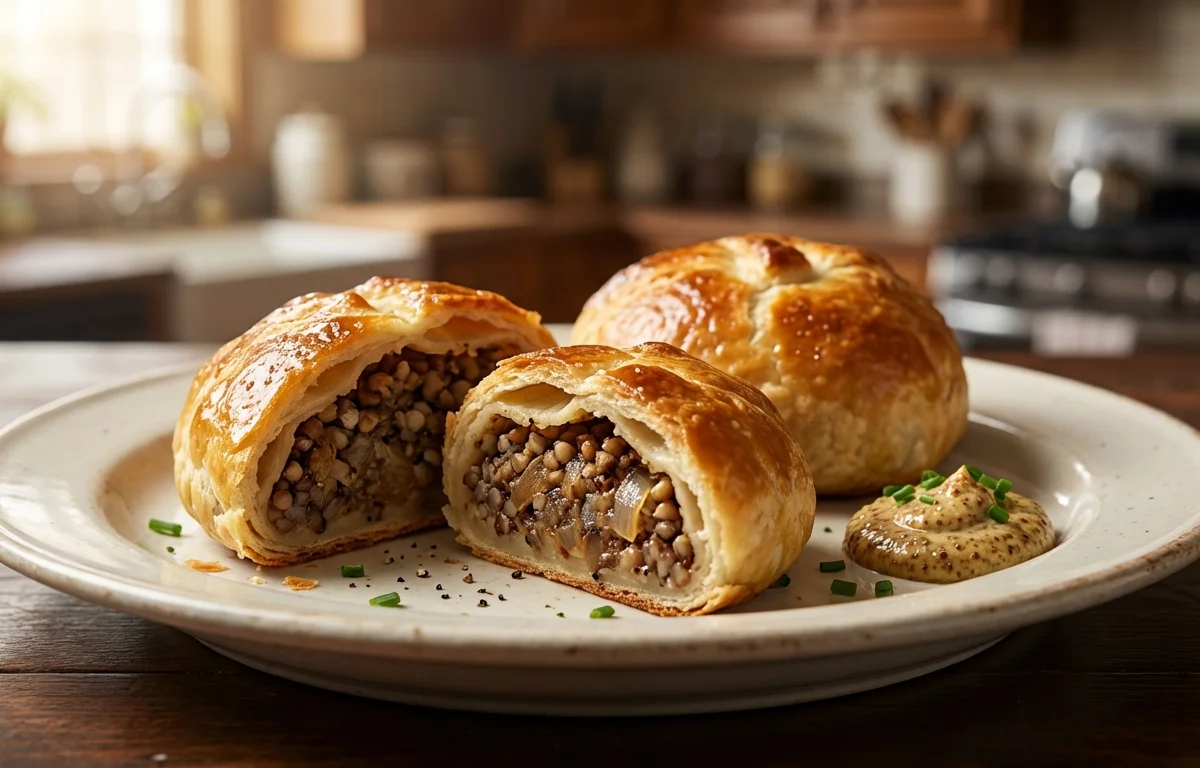
Kasha Knishes
Flaky, golden pastry pockets stuffed with a savory filling of nutty kasha, caramelized onions, and earthy mushrooms. A classic Jewish comfort food that's crisp on the outside and deeply satisfying inside—perfect as a hearty snack or side.
For 8 servings
- prep · ~10 min
Make the dough.
1.In a large bowl, whisk together flour, baking powder, and salt.2.Add oil, water, and 1 beaten egg. Mix with a fork until a shaggy dough forms.3.Turn onto a floured surface and knead gently until smooth, about 3 minutes.4.Cover with a clean towel and rest at room temperature.TIPDon't over-knead—the dough should be soft and pliable, not tough. - boil · ~10 min
Cook the kasha.
1.Bring 2 cups of water and a pinch of salt to a boil in a saucepan.2.Add kasha, stir once, reduce heat to low, and cover.3.Simmer until water is absorbed and kasha is tender, about 10 minutes.4.Fluff with a fork and let cool slightly. - saute · ~23 min
Caramelize the onions and mushrooms.
1.Heat 3 tablespoons oil in a large skillet over medium heat.2.Add chopped onions and cook, stirring often, until deep golden brown, about 15 minutes.3.Add chopped mushrooms and black pepper. Cook until mushrooms release water and start to brown, about 8 minutes.4.Remove from heat and let cool slightly.TIPThe deeper the onions caramelize, the richer the knish filling tastes. - mix · ~2 min
Combine the filling.
1.In a large bowl, mix the cooked kasha with the caramelized onion-mushroom mixture.2.Stir well until everything is evenly distributed. Taste and adjust seasoning if needed. - assemble · ~15 min
Shape the knishes.
1.Preheat oven to 375°F. Line baking sheets with parchment paper.2.Divide dough in half. Roll one half on a floured surface into a very thin rectangle, about 12x16 inches.3.Spread half the filling along one long edge of the dough in a compact log shape.4.Roll the dough tightly around the filling, like a jelly roll. Pinch seam to seal.5.Cut the log into 2-inch pieces. Place seam-side down on baking sheet. Repeat with remaining dough and filling.TIPStretch the dough as you roll—it should be almost translucent for the flakiest results. - bake · ~35 min
Bake until golden and crisp.
1.Brush the top and sides of each knish with remaining beaten egg.2.Bake for 30-35 minutes, until deeply golden brown and crisp all over.3.Let cool on the baking sheet for 5 minutes before serving.TIPRotate the baking sheets halfway through for even browning.
What to keep in mind.
6 tips from the recipe — small details that make a real difference to the final dish.
- 1Let the dough rest for at least 10 minutes after kneading; this relaxes the gluten and makes rolling easier.
- 2Cook the kasha just until the water is absorbed and the groats are fluffy — don't stir while simmering or they'll turn gummy.
- 3Caramelize the onions low and slow until deeply mahogany for maximum savory sweetness in the filling.
- 4Roll the dough as thin as possible — almost translucent — to achieve the crispiest, flakiest knish crust.
- 5Make the filling a day ahead and refrigerate; it will be easier to roll and the flavors meld beautifully.
- 6To store baked knishes, keep them in an airtight container at room temperature for up to 2 days, or freeze for up to a month.
Adapt it for your goals.
Cheesy
Add 1/2 cup of grated sharp cheddar or feta to the filling for extra richness and a tangy contrast to the earthy kasha and onions.
herbyHerby
Stir in 2 tablespoons of chopped fresh dill or parsley with the filling for a bright, fresh note that complements the mushrooms.
gluten free doughGluten-free dough
Replace the all-purpose flour with a 1:1 gluten-free baking flour blend and add 1/2 teaspoon xanthan gum for structure, making the knishes suitable for celiac diners.
veganVegan
Use a flax egg (1 tablespoon ground flaxseed + 3 tablespoons water) for the dough and replace the egg wash with a mix of plant-based milk and a pinch of sugar for browning.
Why this is on our healthy list.
High in Fiber from Kasha
Buckwheat groats (kasha) are a whole grain rich in dietary fiber, which supports healthy digestion and helps maintain steady blood sugar levels.
Rich in B Vitamins from Mushrooms
Mushrooms are a good source of B vitamins like niacin and riboflavin, which play a role in energy metabolism and skin health.
Antioxidant Properties
Onions contain quercetin, a powerful antioxidant that may help reduce inflammation and support immune function.
Gluten-Friendly Option
Kasha is naturally gluten-free, making the filling suitable for those with gluten sensitivity when served without the traditional wheat dough.
Frequently asked questions
Yes, you can prepare the dough up to 1 day in advance, wrap it tightly in plastic wrap, and refrigerate. Let it come to room temperature before rolling.