Kasha Varnishkes
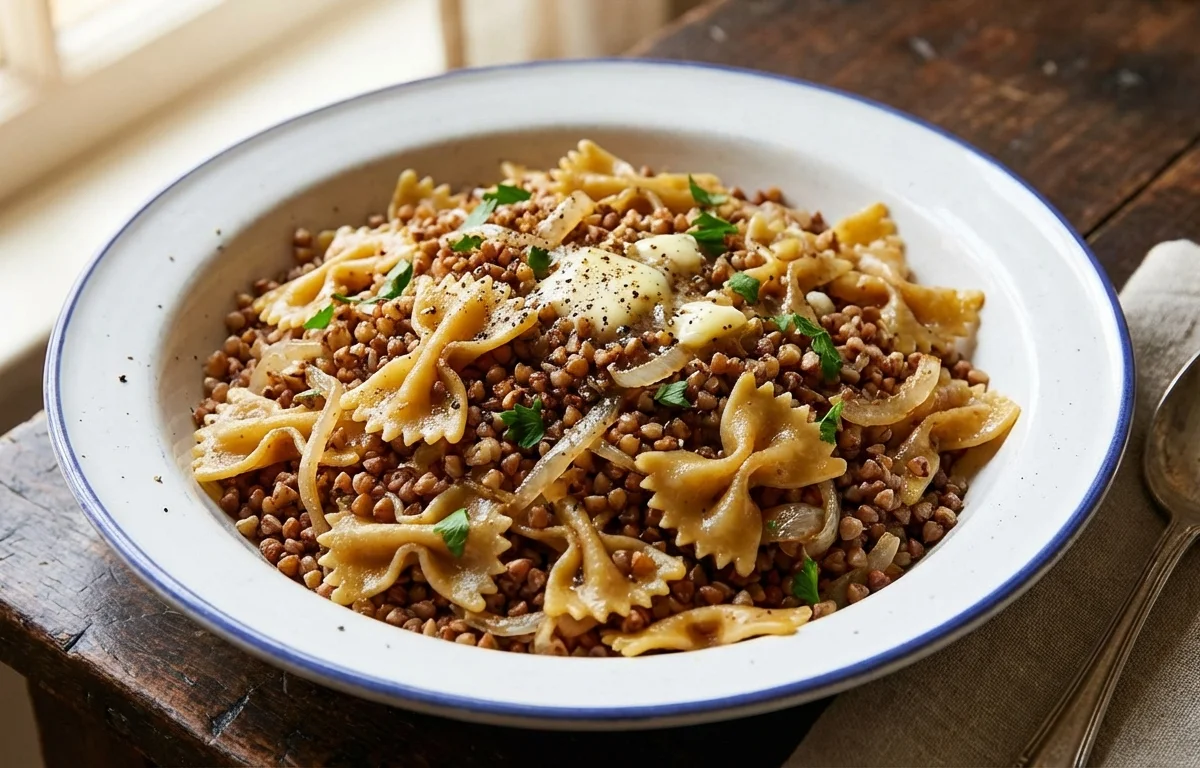
Nutty, toasted buckwheat groats tossed with caramelized onions and tender bowtie pasta. This classic Jewish comfort dish is hearty, satisfying, and surprisingly simple to put together. A staple of Ashkenazi cuisine that pairs beautifully with brisket or roasted chicken.
For 4 servings
- prep
Coat the kasha with egg.
1.In a medium bowl, combine the kasha with the beaten egg.2.Stir well until every grain is coated and glistening.3.Set aside while you heat the pan.TIPDon't skip the egg coating — it seals each grain so the kasha stays separate and fluffy instead of turning into a mushy porridge. - saute · ~5 min
Toast the coated kasha.
1.Heat a large dry skillet over medium heat.2.Add the egg-coated kasha and spread it out evenly.3.Cook, stirring constantly, until the grains are dry, separate, and smell nutty — about 4 to 5 minutes.4.If any clumps form, break them up with the back of a wooden spoon.TIPKeep the kasha moving. It can scorch quickly once the egg dries. - boil · ~12 min
Cook the kasha.
1.Carefully pour 2 cups of water into the skillet with the toasted kasha.2.Add 1 pinch of salt and a pinch of black pepper.3.Bring to a boil, then reduce heat to low, cover tightly, and simmer for 10 to 12 minutes.4.Check at 10 minutes — the water should be fully absorbed and the grains tender.TIPResist the urge to lift the lid. Keeping the steam in is what makes the kasha tender. - boil · ~10 min
Boil the pasta.
While the kasha cooks, bring a large pot of salted water to a rolling boil. Add the bowtie pasta and cook according to package directions until al dente. Drain well.
TIPReserve about half a cup of pasta water before draining — you can use it to loosen the final dish if it looks too dry. - saute · ~18 min
Caramelize the onions.
1.Heat 2 tablespoons of oil in a second large skillet or the same skillet after transferring the cooked kasha to a bowl.2.Add the diced onions and a pinch of salt.3.Cook over medium-low heat, stirring occasionally, until deeply golden and sweet, about 15 to 18 minutes.TIPLow and slow is the key. Deeply browned onions are what give Kasha Varnishkes its rich, savory backbone. - mix · ~2 min
Combine everything.
1.Add the cooked kasha and drained farfalle to the skillet with the caramelized onions.2.Gently toss everything together until well mixed and heated through — about 2 minutes.3.Taste and season with remaining salt and pepper as needed. - serve
Serve warm.
Transfer to a serving bowl and bring to the table immediately. Kasha Varnishkes is best enjoyed hot, alongside roast chicken, brisket, or a simple green salad.
TIPIf the mixture sits and thickens, revive it with a splash of warm water or schmaltz.
What to keep in mind.
6 tips from the recipe — small details that make a real difference to the final dish.
- 1Coating kasha with egg before toasting keeps grains separate and prevents mushiness.
- 2Toast the egg-coated kasha in a dry pan until fragrant to unlock its nutty flavor.
- 3Caramelize onions low and slow for 15-18 minutes to develop deep sweetness.
- 4Reserve pasta water before draining to loosen the dish if it dries out.
- 5Fluff the cooked kasha with a fork after simmering to keep it light.
- 6Revive leftovers with a splash of warm water or schmaltz when reheating.
Adapt it for your goals.
Mushroom-lover
Sauté 8 oz of sliced mushrooms along with the onions for an earthy, umami-rich version that pairs beautifully with the toasted kasha.
high proteinHigh-protein
Add shredded roasted chicken or diced leftover brisket when combining everything, turning the side dish into a complete meal.
gluten freeGluten-free
Replace bowtie pasta with gluten-free fusilli or cooked rice to accommodate gluten sensitivities while keeping the classic flavor profile.
veganVegan
Skip the egg coating and toast the kasha dry (it will be slightly less fluffy); use olive oil instead of schmaltz and a plant-based pasta.
Why this is on our healthy list.
Rich in Complex Carbs
Buckwheat groats provide slow-digesting carbohydrates that offer sustained energy without blood sugar spikes.
Good Source of Fiber
Both buckwheat and whole-grain pasta supply dietary fiber, supporting healthy digestion and satiety.
Packed with Minerals
Buckwheat is naturally high in magnesium, manganese, and copper, which are essential for bone health and metabolic function.
Gluten-Free Grain Base
Kasha is naturally gluten-free, making this dish accessible for those with gluten intolerance (just swap the pasta).
Frequently asked questions
Yes, but whole groats take longer to cook and may have a chewier texture. Adjust simmering time to about 15-18 minutes and check for tenderness.