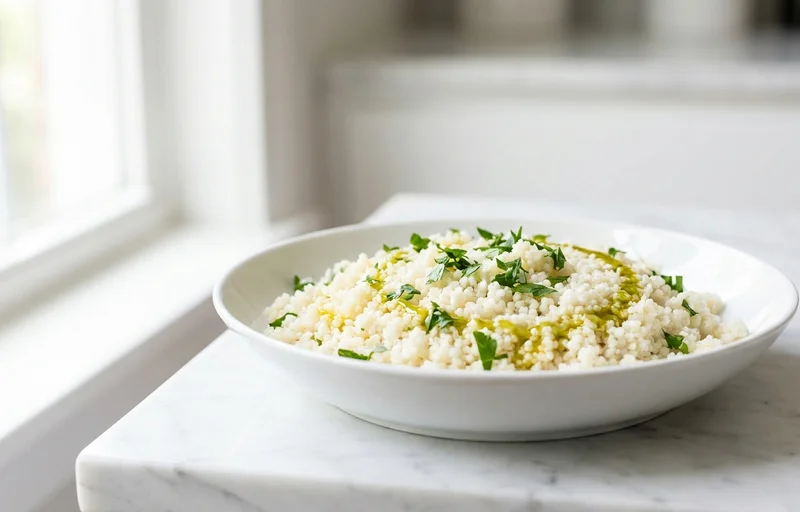
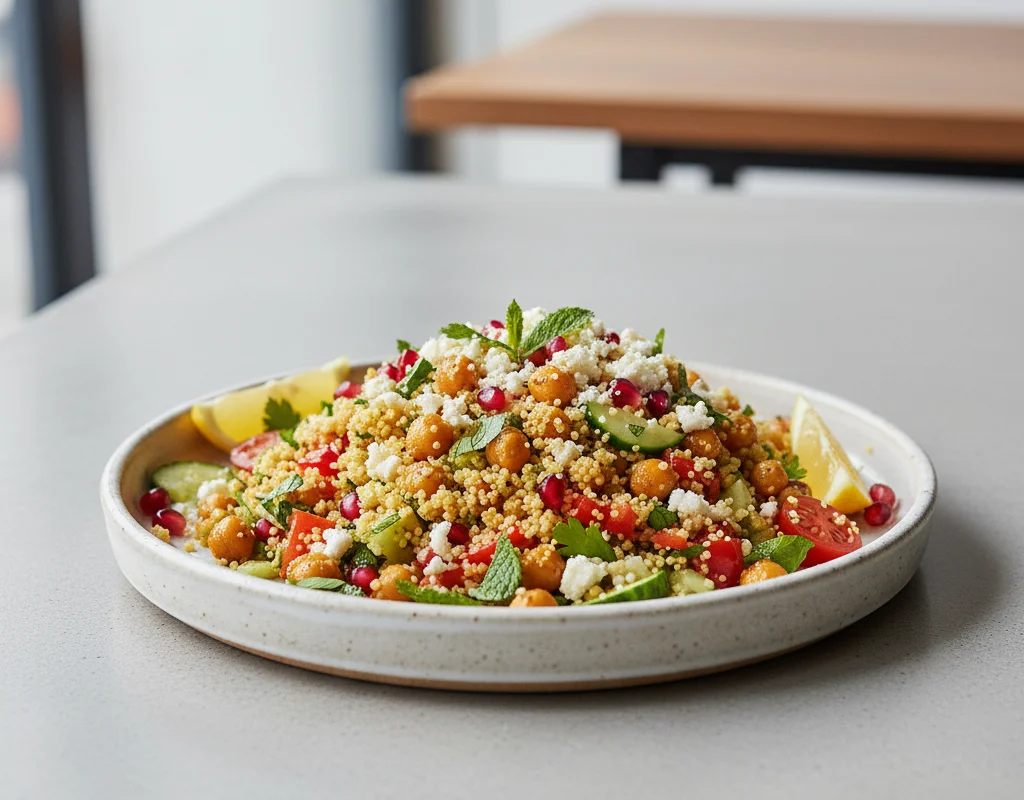
Other10 recipes
couscous.
VegetarianVeganGluten-freeDairy-freeNut-freePeanut-freeSoy-freeEgg-freeShellfish-freeHoney-freeAlcohol-free
ALSO KNOWN AS
kus kusinstant couscoussemolina couscoussteamed semolinakuskus
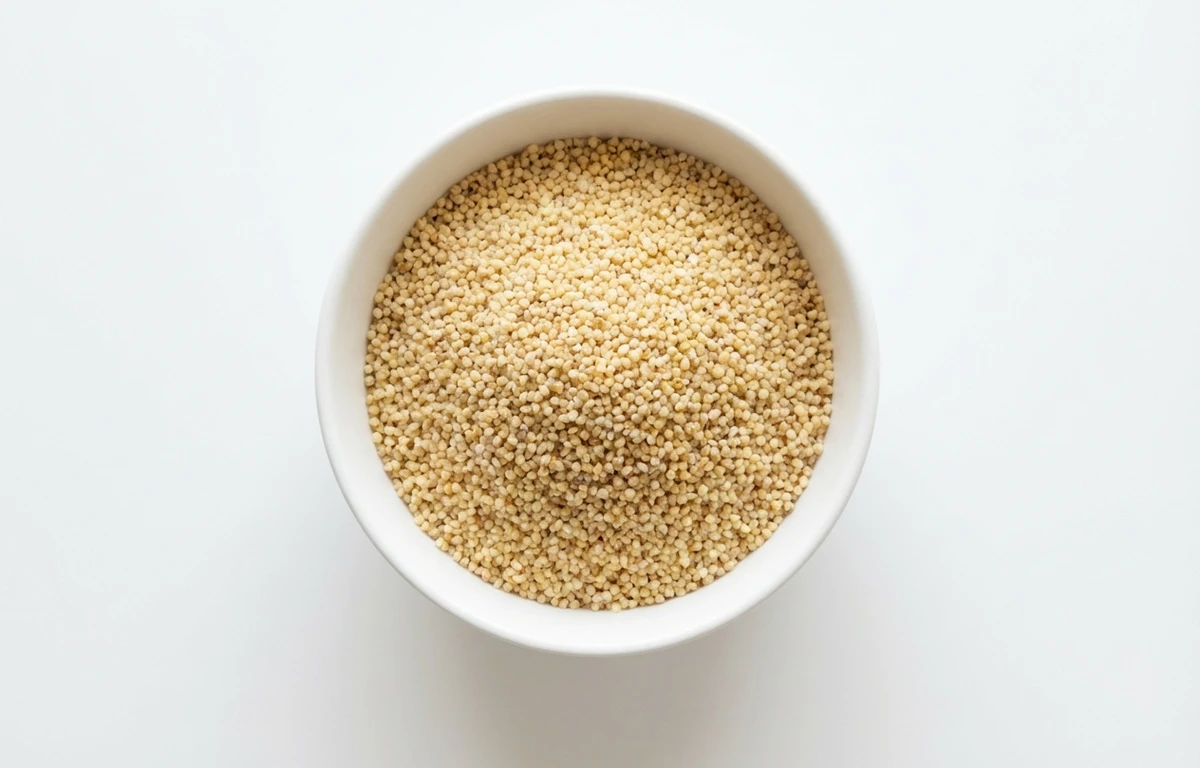
SERVING
CALORIES
376
PROTEIN
12.8g
CARBS
77.4g
FAT
0.60g
FIBER
5.0g
Per 100 g, it provides 0.10 µg of vitamin K.
NUTRITION PROFILE · per 100 g
Everything in this ingredient.
MACRONUTRIENTS
Calories376kcal—
Protein12.8g26%
Carbohydrates77.4g28%
Fiber5.0g18%
Sugar0.10g0%
Total fat0.60g1%
Saturated fat0.10g1%
Trans fat0g—
Cholesterol0mg0%
Water8.6g—
MINERALS
Sodium10mg0%
Potassium166mg4%
Calcium24mg2%
Iron1.1mg6%
Magnesium44mg10%
Phosphorus170mg14%
Zinc0.80mg7%
Copper0.20mg22%
Manganese0.80mg35%
Selenium27.5µg50%
VITAMINS
Vitamin A0µg0%
Vitamin C0mg0%
Vitamin D0µg0%
Vitamin E0.10mg1%
Vitamin K0.10µg0%
Thiamin (B1)0.16mg13%
Riboflavin (B2)0.08mg6%
Niacin (B3)3.5mg22%
Pantothenic acid (B5)0.40mg8%
Vitamin B60.10mg6%
Folate (B9)20µg5%
Vitamin B120µg0%
%DV based on a 2,000 cal diet. Source: USDA FoodData Central. A dash in the %DV column means there’s no established Daily Value for that nutrient.
MEASUREMENT CONVERSIONS
How much is what.
1 cup173g
1 tablespoon10.8g
1 teaspoon3.6g
1 ml0.7g
1 liter720.8g
HEALTH BENEFITS
Why eat it.
- ✓Provides a good source of plant-based protein, contributing to muscle repair and maintenance.
- ✓Offers carbohydrates for a quick and sustained energy boost.
COOKING TIPS
In the kitchen.
- 1For perfectly fluffy couscous, use a 1:1 or 1:1.5 ratio of couscous to boiling liquid (water or broth).
- 2After adding the boiling liquid, cover the pot, remove it from the heat, and let it steam for 5-10 minutes before fluffing with a fork.
- 3Enhance flavor by toasting the dry couscous in a bit of olive oil or butter for a minute before adding liquid.
- 4Infuse couscous with flavor by using vegetable or chicken broth instead of water and adding spices like turmeric, cumin, or cinnamon.
STORAGE
Keep it fresh.
- Store dry, uncooked couscous in an airtight container in a cool, dark, and dry place like a pantry for up to 12 months.
- Keep cooked couscous in a sealed container in the refrigerator for up to 4 days.
FAQ
Frequently asked questions.
How much protein and calories are in couscous?
Per 100g of dry couscous, there are approximately 376 calories and 12.8g of protein. It is a high-energy food with 77.4g of carbohydrates and very little fat, making it an efficient fuel source.
Is couscous keto-friendly?
Couscous is not keto-friendly because it is very high in carbohydrates, containing over 77g per 100g serving. It is better suited for individuals following a high-carb or balanced diet rather than a ketogenic one.
How do you cook couscous?
Couscous is incredibly easy to prepare; simply pour boiling water or broth over the dry grains in a 1:1 ratio. Cover the bowl and let it sit for about 5 minutes, then fluff it with a fork to separate the granules.
Is couscous vegan?
Yes, couscous is naturally vegan as it is traditionally made from just two ingredients: semolina wheat and water. It is a popular staple in plant-based diets due to its protein content.
What does couscous taste like?
Couscous has a very mild, slightly nutty flavor and a light, fluffy texture. Because its flavor is neutral, it is excellent at absorbing the tastes of spices, sauces, and stocks used during cooking.
How do you store cooked couscous?
Cooked couscous should be stored in an airtight container in the refrigerator, where it will stay fresh for 3 to 5 days. You can also freeze cooked couscous for up to 3 months.
Is couscous a grain or a pasta?
Technically, couscous is a type of pasta because it is made from semolina flour mixed with water. However, it is nutritionally and culinarily treated more like a grain because of its small size and preparation method.
RECIPES
Cook with couscous.
10 recipes · sorted by what’s quick