Condiment6 recipes
creole mustard.
VegetarianVeganGluten-freeDairy-freeNut-freePeanut-freeSoy-freeEgg-freeShellfish-freeHoney-freeAlcohol-freeFermented
ALSO KNOWN AS
louisiana mustardcreole-style mustard
SERVING
CALORIES
130
PROTEIN
7.0g
CARBS
8.0g
FAT
8.0g
FIBER
4.0g
NUTRITION PROFILE · per 100 g
Everything in this ingredient.
MACRONUTRIENTS
Calories130kcal—
Protein7.0g14%
Carbohydrates8.0g3%
Fiber4.0g14%
Sugar2.0g4%
Total fat8.0g10%
Saturated fat0.50g3%
Trans fat0g—
Cholesterol0mg0%
Water65g—
MINERALS
Sodium2500mg109%
Potassium150mg3%
Calcium60mg5%
Iron1.5mg8%
Magnesium40mg10%
Phosphorus120mg10%
Zinc0.80mg7%
Copper0.10mg11%
Manganese0.40mg17%
Selenium30µg55%
VITAMINS
Vitamin A5.0µg1%
Vitamin C1.0mg1%
Vitamin D0µg0%
Vitamin E1.5mg10%
Vitamin K0µg0%
Thiamin (B1)0.10mg8%
Riboflavin (B2)0.10mg8%
Niacin (B3)0.80mg5%
Pantothenic acid (B5)0.20mg4%
Vitamin B60.10mg6%
Folate (B9)10µg3%
Vitamin B120µg0%
%DV based on a 2,000 cal diet. Source: USDA FoodData Central. A dash in the %DV column means there’s no established Daily Value for that nutrient.
MEASUREMENT CONVERSIONS
How much is what.
1 cup250g
1 tablespoon15g
1 teaspoon5g
1 oz28.4g
1 lb453.6g
1 ml1.1g
1 liter1100g
HEALTH BENEFITS
Why eat it.
- ✓Low-calorie way to add significant flavor to meals
- ✓Contains selenium and magnesium which have anti-inflammatory properties
- ✓Mustard seeds contain glucosinolates which may provide antioxidant benefits
- ✓Vinegar content can help stabilize blood sugar levels
- ✓Zero cholesterol and very low in saturated fat
COOKING TIPS
In the kitchen.
- 1Essential ingredient for authentic Louisiana remoulade sauce
- 2Use as a binder for breadcrumbs when crusting fish or chicken
- 3Whisk into vinaigrettes to act as a natural emulsifier
STORAGE
Keep it fresh.
- Store unopened jars in a cool, dark pantry for up to 18 months
- Refrigerate after opening to preserve the pungent heat of the mustard seeds
- Ensure the rim of the jar is clean before sealing to prevent the lid from sticking
FAQ
Frequently asked questions.
How long does Creole mustard last after opening?
When kept refrigerated, it maintains its best quality for about 6 to 12 months. It remains safe to eat longer, but will lose its characteristic 'bite'.
What is the difference between Creole mustard and regular mustard?
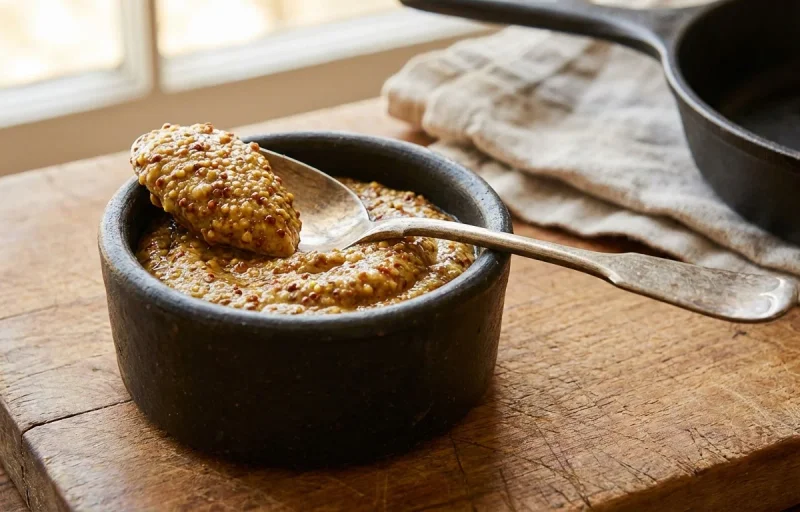
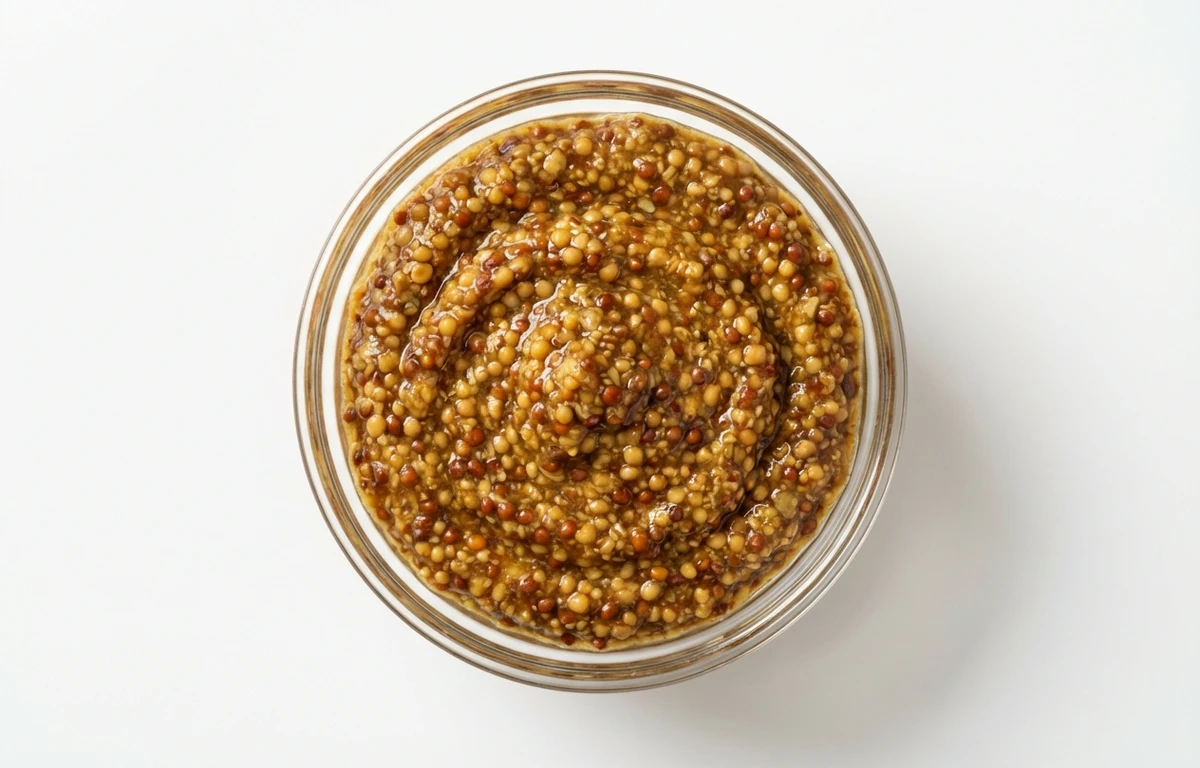
Creole mustard is made with brown mustard seeds (rather than yellow) and is much coarser, often containing whole or partially cracked seeds, giving it a grainier texture and spicier kick.
What can I use as a substitute for Creole mustard?
The best substitute is a coarse-ground or stone-ground mustard. Spicy brown mustard is also a good alternative, though it has a smoother texture.
Is Creole mustard gluten-free?
Most brands are naturally gluten-free as they use distilled vinegar, but always check the label for malt vinegar or wheat-based thickeners.
Can Creole mustard be frozen?
Freezing is not recommended as it can cause the emulsion to break and the texture of the seeds to become mushy upon thawing.
How do I identify a high-quality Creole mustard?
Look for a thick, grainy consistency with visible dark mustard seeds and a short ingredient list consisting mainly of seeds, vinegar, and spices.
Is Creole mustard vegan?
Yes, traditional Creole mustard is vegan as it is made from plant-based seeds, vinegar, and spices. Some variations might add honey, so check the label.
What are the most common uses for Creole mustard?
It is a staple in Po' boy sandwiches, remoulade sauces, marinades for grilled meats, and as a condiment for pretzels or cheese boards.
RECIPES
Cook with creole mustard.
6 recipes · sorted by what’s quick