
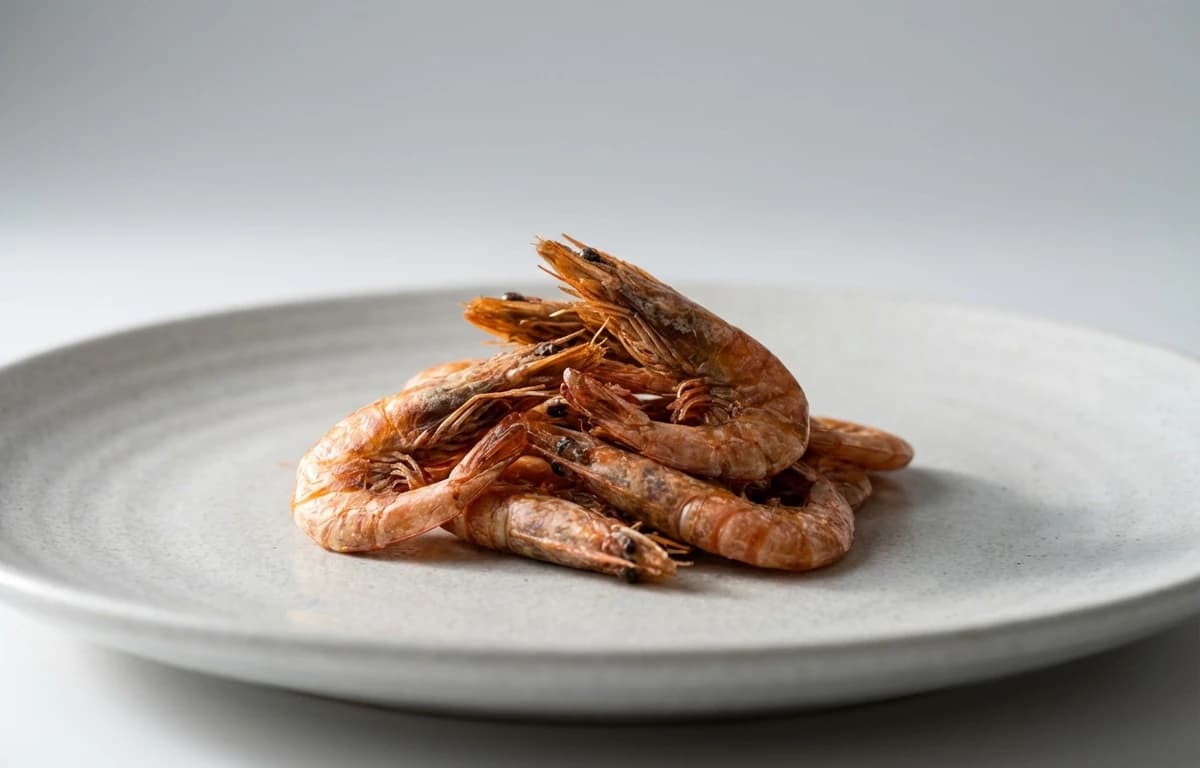
dried shrimp
Also known as: dried prawns, sukha jhinga
Loading...
Also known as: dried prawns, sukha jhinga
Per 100g
Nutrition data source: USDA FoodData Central
Common measurement equivalents in grams
A light and comforting Vietnamese soup (Canh Bí Đao) featuring tender winter melon, savory minced pork, and umami-rich dried shrimp in a clear, flavorful broth. This classic, refreshing dish is a staple in Vietnamese family meals and is ready in under 40 minutes.
A light, refreshing Vietnamese soup featuring tender winter melon, savory ground pork, and umami-rich dried shrimp. This comforting classic is a staple in family meals, perfect for balancing richer dishes and cleansing the palate.

A fiery and savory Maharashtrian dry chutney made from tiny dried shrimp, onions, and garlic. This coastal delicacy packs a punch of flavor and is a perfect accompaniment to bhakri or rice.
Yes, dried shrimp is very healthy. It's an excellent source of concentrated protein, essential for muscle building and repair. It's also rich in minerals like selenium and phosphorus, and contains astaxanthin, an antioxidant beneficial for skin and heart health.
100g of dried shrimp contains an impressive 52.4g of protein, making it a highly concentrated protein source. It's also low in carbohydrates (1.2g) and fat (3.5g), providing 253 calories per 100g.
Due to its high protein content and low fat/carb profile, dried shrimp can be beneficial for weight loss when consumed in moderation. Protein helps with satiety, potentially reducing overall calorie intake. However, its sodium content should be considered.
Yes, dried shrimp itself is naturally gluten-free, as it consists solely of dried shrimp. However, always check product labels if it's part of a mix or seasoned, as cross-contamination or added ingredients could introduce gluten.
Yes, dried shrimp is very keto-friendly. With only 1.2g of carbohydrates per 100g and a high protein content (52.4g/100g), it fits well into a ketogenic diet. It can add a significant umami boost to low-carb dishes.
Absolutely not. Dried shrimp is a shellfish product and will trigger allergic reactions in individuals with shellfish allergies. It should be strictly avoided by anyone with this allergy.
Dried shrimp typically needs to be rehydrated before use. Soak it in warm water for 15-30 minutes until softened, then drain. It can then be stir-fried, added to soups, curries, or ground into a powder for seasoning.
dried shrimp is a versatile ingredient found in cuisines around the world. With 253 calories per 100g and 52.4 grams of protein, it's a nutritious addition to many dishes.
Explore more ingredients in the protein category with complete nutrition information.
View all protein →Discover 0 recipes featuring dried shrimp with step-by-step instructions.
Browse recipes →Dried shrimp has an intense, savory, and salty umami flavor with a distinct seafood aroma. When rehydrated, it has a chewy texture. It's often used to add depth and a pungent, briny kick to dishes.
Dried shrimp should be stored in an airtight container in a cool, dry place away from direct sunlight. For longer shelf life, especially in humid climates, it's best to store it in the refrigerator or freezer.
Good quality dried shrimp should have a reddish-orange color and a firm, dry texture. Avoid any that appear excessively discolored, moldy, or have a strong, unpleasant ammonia-like odor, which indicates spoilage.