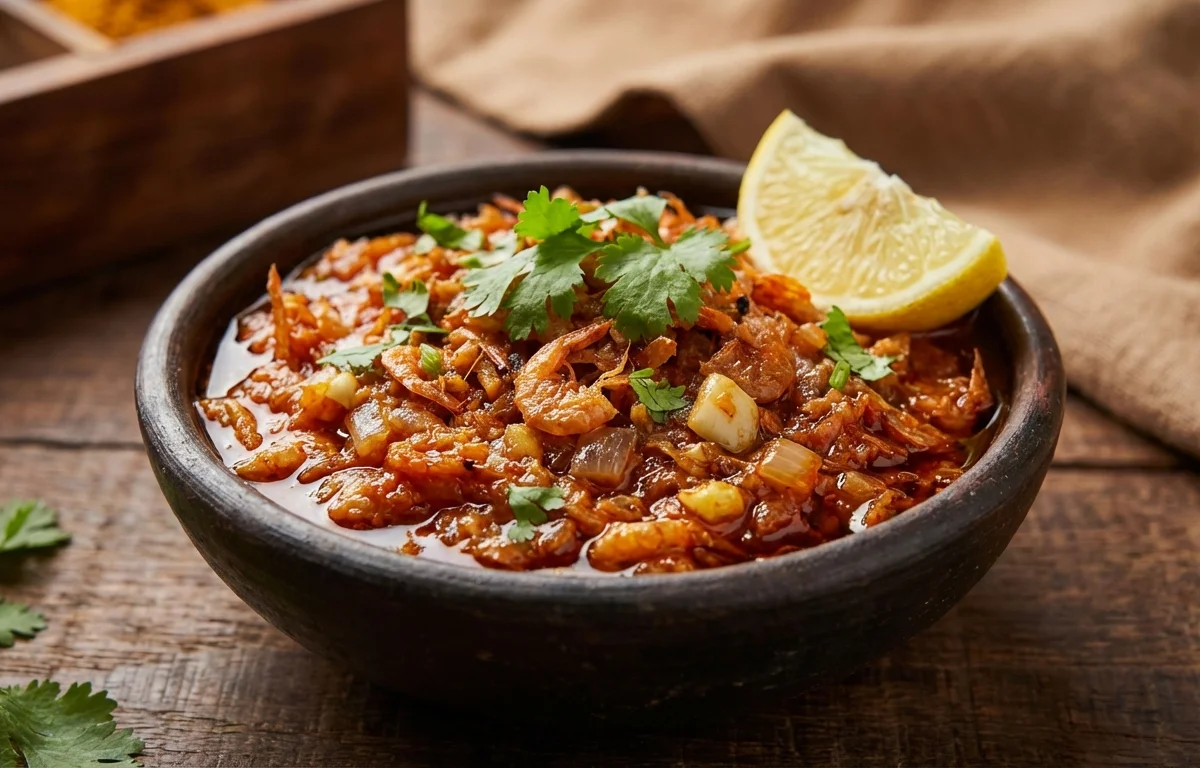
Galmbyachi Chutney
A fiery coastal Maharashtrian chutney made with tiny dried shrimp, coconut, garlic, and red chili. It is bold, smoky, and deeply savory, served in small spoonfuls with bhakri, rice, or simple village-style meals.
For 8 servings
- prep
Clean and sort the dried shrimp.
Pick through the dried shrimp and remove any grit or hard bits. Keep the cleaned shrimp ready with the garlic, coconut, chilies, coriander leaves, tamarind, and salt.
- roast · ~7 min
Roast the dried shrimp and aromatics.
1.Heat a heavy pan over low to medium heat.2.Dry roast the dried shrimp for 2-3 minutes until fragrant and lightly crisp.3.Add the garlic and dry red chili and roast for 1-2 minutes.4.Add the grated coconut and roast just until it loses rawness and turns lightly golden.TIPKeep the heat moderate so the coconut browns gently and the dried shrimp do not turn bitter. - rest · ~5 min
Cool the roasted mixture.
- mix
Grind the chutney.
Transfer the cooled roasted mixture to a grinder jar. Add coriander leaves, tamarind, and salt, then pulse to a coarse chutney. Do not add water; the texture should stay dry and crumbly.
- serve
Serve with bhakri, rice, or a simple meal.
What to keep in mind.
6 tips from the recipe — small details that make a real difference to the final dish.
- 1Roast the dried shrimp first so they turn crisp and aromatic before the coconut goes in.
- 2Keep the flame low once the coconut is added; it should go lightly golden, not dark brown.
- 3Cool the roasted mix fully before grinding, or the chutney can turn pasty instead of crumbly.
- 4Pulse in short bursts rather than running the grinder continuously to keep the traditional coarse texture.
- 5Taste for salt only after grinding, since dried shrimp already bring natural salinity.
- 6Store it refrigerated in a dry, airtight jar and always use a dry spoon to keep it fresh longer.
Adapt it for your goals.
Extra-spicy
Add 2-3 more dry red chilies or use hotter coastal chilies for a sharper, fierier chutney to serve with plain rice or bhakri.
smokierSmokier
Roast the shrimp a little longer, just to the edge of crispness, for a more pronounced smoky seafood flavor.
milderMilder
Reduce the chilies and increase coconut slightly for a softer, nuttier chutney that is easier for children or spice-sensitive eaters.
onion garlic forwardOnion-garlic-forward
Add a small amount of lightly roasted onion with the garlic for a sweeter, fuller chutney that pairs especially well with bhakri.
Why this is on our healthy list.
Protein-Rich Seafood Base
Dried shrimp adds concentrated seafood protein, making this chutney more nourishing than a typical condiment.
Contains Healthy Fats
Fresh coconut contributes satisfying natural fats that help carry the chutney's bold roasted flavors.
Aromatic Digestive Ingredients
Garlic, red chili, and tamarind bring pungency and tang that can make simple meals feel more lively and appetizing.
Frequently asked questions
If they are very gritty, rinse quickly and dry them thoroughly before roasting. Excess moisture will steam them and spoil the dry chutney texture.


.webp)